
You're staring at a house you want, the kind with a deadline in front of it and a stack of competing offers behind it. The agent says the seller wants a letter, and now you're deciding whether to write something heartfelt, something professional, or something that won't get you in trouble. In California, that's the right question, because a good offer letter template for house is part persuasion and part transaction control.
The bad advice says to “write from the heart” and hope the seller falls in love with you. That's cute, and it loses to buyers who understand the game. A strong letter is short, clean, compliant, and tied to the actual offer package. The seller is judging whether you're serious, organized, and likely to close. That's what matters.
Why Your Offer Letter Matters in California
The moment usually looks the same. You've found the right place, maybe in San Diego, the Bay Area, or Sacramento, and the listing agent comes back with the part nobody likes hearing, the seller has multiple offers and wants a letter. At that point, the letter stops being a sentimental extra and becomes one more signal in a competitive file review. It sits next to your preapproval, your earnest money, and your contingency profile.
A solid house offer letter matters because it helps the seller see the person behind the paperwork. A strong house offer letter is typically kept to one page or about 1,000 words, and one major real-estate guide recommends using only one to three paragraphs so the seller can absorb it quickly. That same guidance says the letter should include a greeting, a personal connection to the home, a clear explanation of the offer, and a concise statement of financing strength such as a mortgage preapproval or proof of funds, while remembering the letter is not the purchase contract itself. The format grew more common as digital templates and online mortgage education standardized it across markets in the 2010s and 2020s, including the U.S. and the U.K. [U.S. News Real Estate guide]
Who actually reads it
Usually the seller does, the listing agent does, and sometimes counsel gets involved if the transaction is touchy. They are not reading for poetry. They are reading for trust, clean execution, and whether your offer looks like it will survive to closing without drama.
That's why the best letters reinforce the parts sellers care about most. A letter that shows you know the home, understand the terms, and can fund the deal can help break a tie when price and structure are close. A letter that sounds needy or vague does the opposite.
Practical rule: if your letter doesn't make the seller feel safer, it probably isn't helping you.
There's one honest exception. If you're already the cleanest, fully priced, all-cash buyer in the pile, the letter often won't move the needle much. In that case, the letter is fine to include, but your real advantage is still the strength of the offer itself.
The Building Blocks Every California Letter Needs
A seller does not read your offer letter like an essay. They scan it in a sequence, and your structure should match that habit. Build the letter in the same order a seller's brain uses to judge it, identity first, then connection, then terms, then financing, then a clean close.
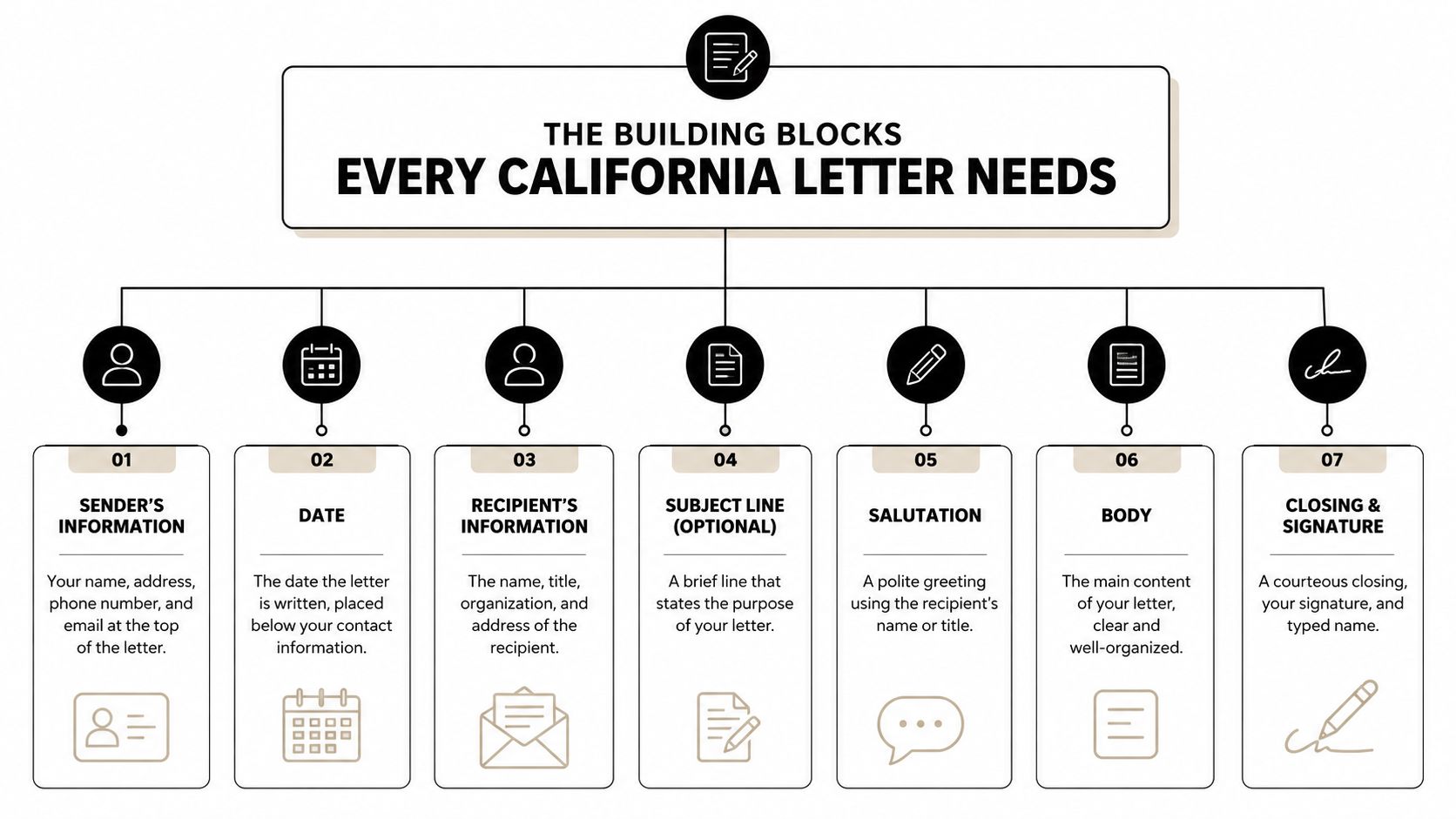
Start with the greeting and property reference
Open with a polite greeting and name the property clearly. The seller should know immediately that this letter belongs to their house, not a generic form you pasted from a search result. Sloppy names, wrong addresses, or a vague seller reference make the whole offer feel careless.
A clean opening can be as direct as, “Dear Mr. and Mrs. Smith, thank you for considering my offer on 123 Palm Avenue.” That is enough. Do not burn the first lines trying to sound dramatic.
Connect to the home without overdoing it
The next block is the personal connection. Say what you noticed and why the house fits your life, but keep it tied to the property itself. A HERO buyer can sound grounded by mentioning stability, local roots, or the way the home fits a long-term plan.
Keep it specific. Sellers respond to buyers who sound steady and real, not buyers who flood the page with emotion.
State the offer summary clearly
A property offer letter should include the offered purchase price, financing details, contingencies, an earnest money deposit, a proposed closing date, and a personal note to the seller. Another common structure adds the property address, offer amount, ideal closing date, expiration date, and the main transaction milestones. [Template.net real estate offer letter checklist] [Genie AI offer letter template]
Say the deal plainly. Sellers want to see the number, the timeline, and the conditions without hunting for them.
Show financing strength, not just enthusiasm
Weak letters fail here. Sellers care that you can close, so include your preapproval, proof of funds if relevant, and any other financing detail that shows readiness. For California buyers using a loan, this is the place to signal competence, especially if you have already reviewed your good-faith deposit guidance for California buyers. If your letter does not reinforce that you can finish the deal, it is leaving value on the table.
Clarity beats hype. A buyer who looks organized and funded has a better shot than a buyer who sounds sentimental but cannot prove the money is real.
End with a clean sign-off
Finish with gratitude, your signature, and a tone that stays composed. One template structure calls for the property address and description, the source of funds, conditions, timeline details, proof of funds or identity documentation, and an expiration date that can convert the offer into a binding contract if accepted. [Genie AI offer letter template] Do not add flourish just because you reached the end. Sellers remember a letter that sounds steady.
Three Letter Styles and When to Use Each
Different sellers respond to different signals. Some want a clean transaction. Some want proof that your offer will close. Some still care whether the buyer sounds like a real person who will treat the home well. The smart move is to match the letter to the seller, not force every deal into a soft, sentimental script.
Professional style
Use this when the seller looks investor-minded, the home is a relocation purchase, or the market is moving fast and the seller values certainty over sentiment. This style leads with terms, financing, and closing flexibility. It is the cleanest choice because it stays close to the deal and keeps emotion out of the way.
Sample paragraph: “Thank you for considering my offer on 42 Alder Street. I'm pleased to submit a strong purchase proposal with financing already in place and a closing timeline that can work around your schedule. I'd be glad to make the process straightforward and efficient.”
Personal style
Use this when the seller is likely emotionally attached to the home, especially if it is owner-occupied and clearly cared for. This version lets you mention what drew you to the layout, the neighborhood, or the feel of the property. Keep it real and brief. A sentimental letter that rambles for three pages sounds like a liability, not a compliment.
Sample paragraph: “Your home on 118 Juniper Lane immediately stood out to me because of the natural light and the way the backyard feels private and welcoming. I can picture myself taking care of the home with the same attention you've clearly given it. That matters to me, and it is a big reason I'm excited to make this offer.”
Direct style
Use this in hot markets where the seller is scanning a stack of offers and you have maybe ninety seconds of attention. It blends the professionalism of the first style with one short personal line. This is the better choice for most California bidding wars because it avoids both coldness and oversharing.
| Letter Style | Best Seller Profile | Market Condition | Risk Level |
|---|---|---|---|
| Professional | Investor, relocation seller, efficiency-focused owner | Fast-moving or highly priced | Low |
| Personal | Owner-occupant with emotional attachment | Competitive but still relationship-driven | Medium |
| Direct | Busy seller or crowded offer pile | Multiple-offer environment | Low |
A buyer who wants a cleaner execution story can also use the offer package itself. If there is a pricing gap or a condition question, that belongs in the broader strategy, not as a dramatic confession in the letter. Appraisal gap coverage guidance
Keep the style that matches the seller's likely mindset, not the style that makes you feel poetic.
Fair-Housing Risks Most Templates Ignore
A lot of house letter advice is dangerously incomplete. It tells buyers to be warm, but it doesn't explain where warmth turns into legal exposure. That's the problem, because a personal story can accidentally drag the seller into territory they should never have to evaluate.
What not to say
The clearest line is to avoid protected characteristics. Federal fair housing rules already make this area sensitive, and California buyers need to be even tighter because state and local rules can add more pressure around how a seller receives the letter. Don't mention race, religion, national origin, familial status, disability, or anything that points toward those traits. Avoid family planning language, church references, caregiving stories, and anything that reads like a request for sympathy based on a protected category. [YLopo house offer letter guide]
A common mistake is thinking a personal story is automatically harmless if it sounds sincere. It isn't. The more your letter invites the seller to respond to your identity rather than your offer, the more risk you create for both sides.
What is usually safe
Keep the personal side focused on the home and the fit. Talk about the location, the commute, the layout, neighborhood walks, or how the property suits your long-term plans in a general way. That keeps the tone human without making the seller a gatekeeper for anything protected.
Rewrite the risky part
Bad version, “We're hoping to raise our children in a community with families like ours and a strong church presence.”
Better version, “We're looking for a home that fits our long-term life in this neighborhood and gives us room to build a stable routine.”
That rewrite still feels warm. It also stays out of the zone that makes listing agents nervous. A buyer who wants to be memorable should be memorable for being clear, respectful, and easy to close with, not for oversharing.
California Contingencies and HERO Program Advantages
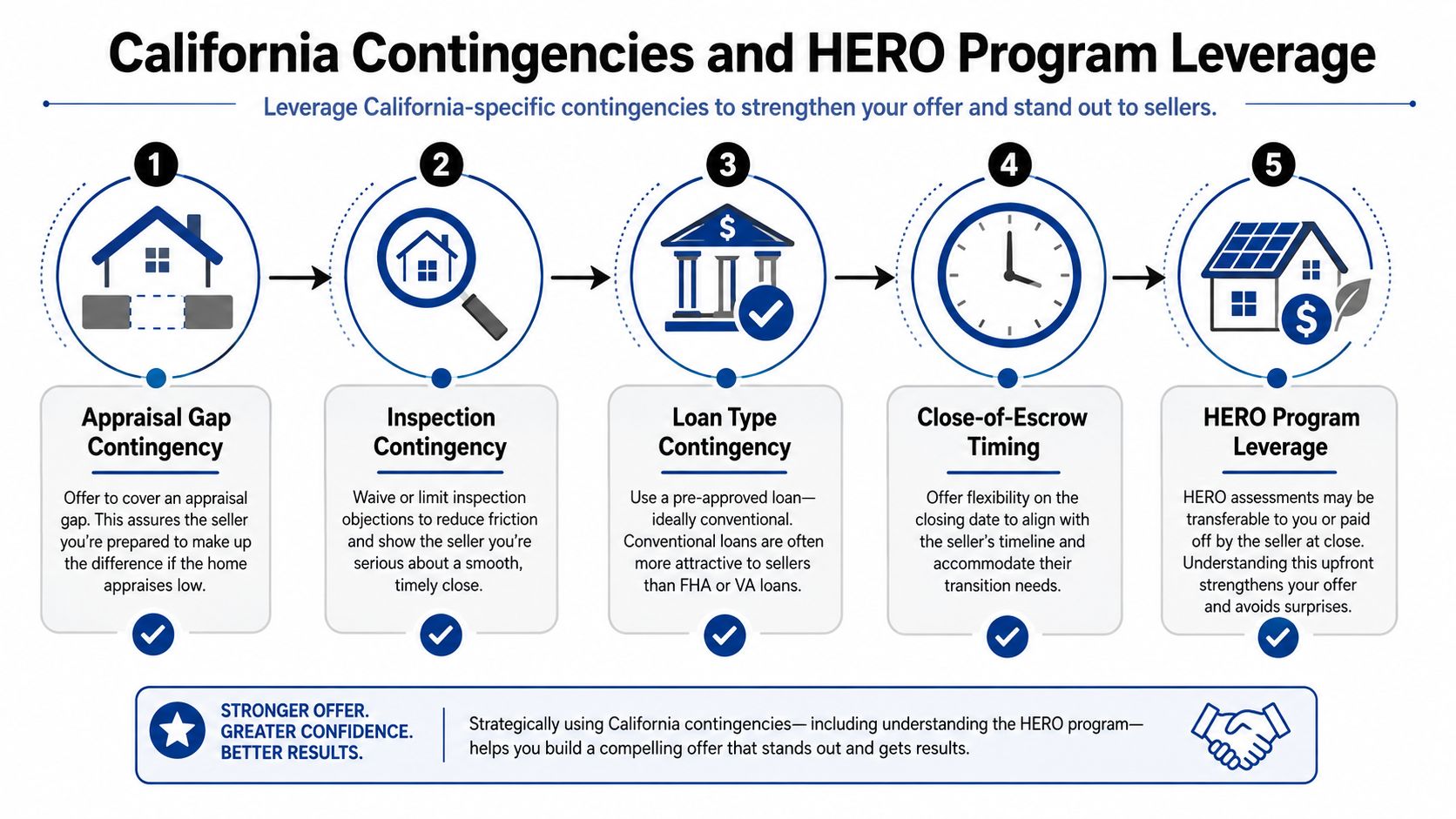
California sellers care about risk. They care about whether your offer will hold up if the appraisal comes in light, whether you'll create inspection drama, and whether your loan type makes the file harder to close. A letter can signal flexibility on those points without turning into a binding side contract.
The contingencies that actually matter
If you want the seller to believe your offer is solid, point to the parts of the deal that keep the process moving. A buyer who can be flexible on appraisal gap exposure, inspection scope, loan type, or close-of-escrow timing looks easier to work with than a buyer who sounds rigid. That does not mean you should waive protections casually. It means you should frame your position clearly and with integrity.
Many California HERO buyers have a real advantage. If you have a named program, a dedicated loan officer, and structured assistance, that signals organization. The seller does not need your entire financial biography, just enough to see that your path to closing is managed.
Inspection contingency removal guidance
How to mention HERO benefits
Say the useful parts, not every program detail. If you're using the HERO Home Loan & Buyer Rewards Program, say that your financing includes assistance support, lender credits, and a loan team already working the file. If you have a mortgage preapproval, make it clear. If you have proof of funds or a strong deposit, mention that in the letter or package.
That works because a seller wants evidence of execution, not a sales pitch about your hardship. A letter that says, in plain English, that your financing is handled and your timeline is realistic does more to build confidence than a paragraph full of emotional language.
Be careful with deposit language
A real-estate offer letter should include an earnest money deposit, and templates often treat that deposit as a seriousness signal. That is true in practice too. You do not need to brag about it, but you do need to make sure the seller sees that you are putting real skin in the game.
The cleaner the financing story, the less the seller has to worry about your offer stalling later.
The same rule applies to dual agency and other contract complexity in California transactions. If a situation already carries extra moving parts, keep the letter even simpler. Do not add a long narrative that gives the wrong person more to manage. Focus on the terms that help the seller trust the file, and leave the rest to the offer package.
Do and Don't Checklist Before You Hit Send
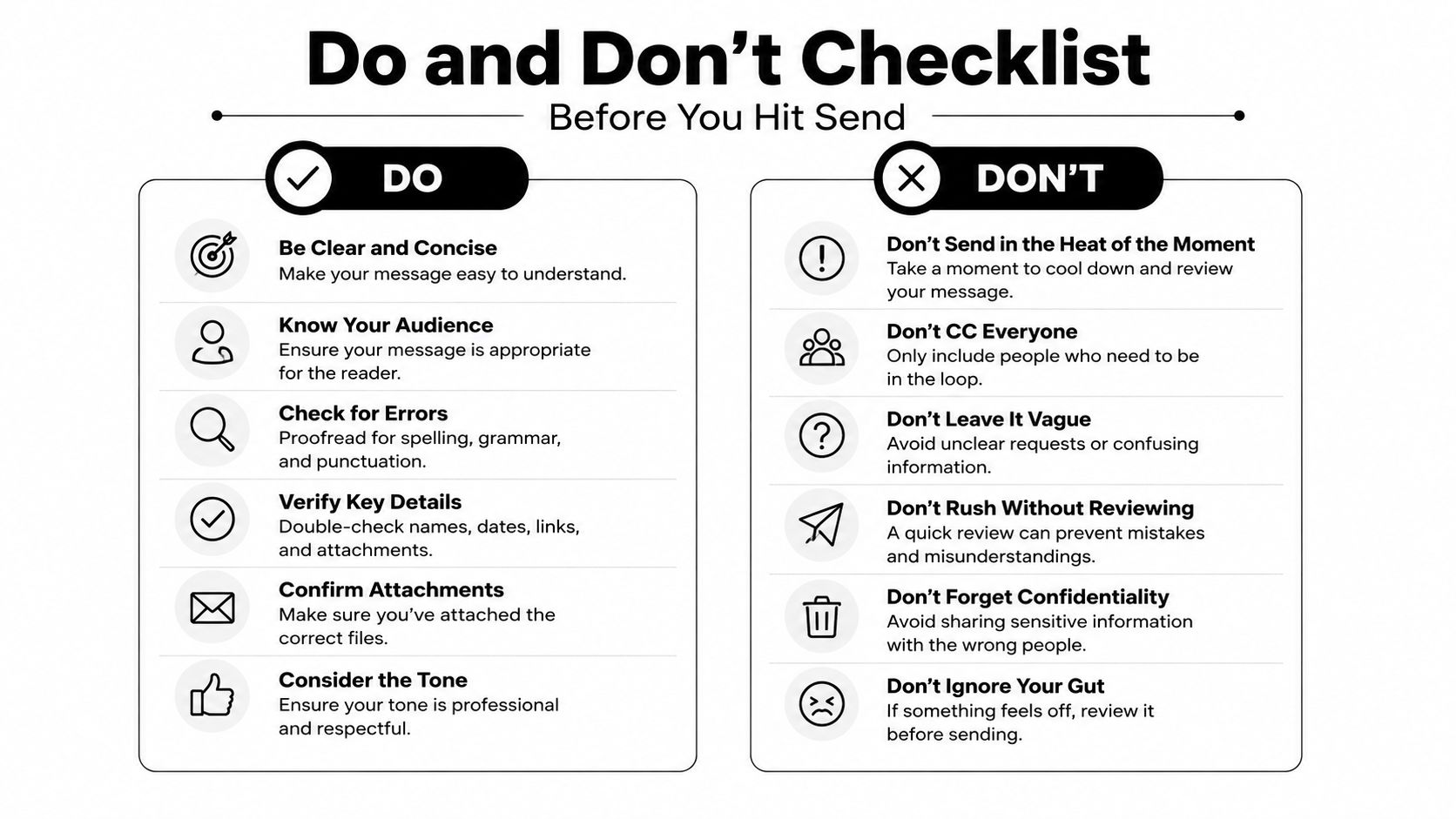
The fastest way to weaken a strong offer is to let one careless detail slip through. Typos, the wrong address, a protected characteristic, contract contradictions, and too much personal hardship language can all make the letter feel unsafe or sloppy. Sellers notice that stuff immediately.
Do
- Match the property exactly. Use the correct address and description so the seller knows the letter is tied to the right home.
- Keep the tone professional. Warm is good. Desperate is bad.
- Attach the financing proof separately. A preapproval letter belongs with the offer package, not buried in sentimental text.
- Use a final PDF. You want the version that can't be edited by accident after review.
- Check that the offer terms still match. If the price or closing date changed, the letter has to reflect that cleanly.
Don't
- Don't mention protected traits. That includes family status, religion, race, or anything that pushes the seller toward discriminatory thinking.
- Don't contradict the contract. The letter should support the offer, not create side promises.
- Don't overshare hardship. Sellers are not underwriting your life story.
- Don't forget the signature. An unsigned letter looks unfinished.
- Don't send it without agent review. One sloppy sentence can undo a lot of good structure.
A simple mechanical rule helps too. Name the file clearly, keep the format clean, and make sure the letter reads like it belongs in a professional offer packet. The goal is not to impress the seller with creativity. The goal is to make the seller feel like your offer is easy to accept.
Putting It All Together Before the Deadline
A winning letter is only one part of a coordinated offer package. It works best when it sits alongside your preapproval, proof of funds, comps if your agent is using them, and any buyer-side note that makes the file easier to trust. In a competitive week, the buyer who moves with a plan usually beats the buyer who keeps revising the wording.
The simplest timeline is this, gather your documents early in the week, draft the letter when the offer numbers are set, get a loan officer or agent review before you submit, and send everything before the deadline closes. If you can read the finished letter aloud in under sixty seconds and still sound like yourself, it's probably tight enough. If you can't, cut it down again.
HERO buyers should lean into what already helps them. Professional stability, a named loan program, and organized financing are exactly the kind of signals sellers want in a crowded California market. Use those strengths plainly, keep the letter short, and let the offer speak with confidence.
California Loans for Heroes helps California HERO buyers turn a strong offer into a workable purchase plan with homebuyer assistance, down payment assistance options, competitive mortgage rates, refinance solutions, lender credits, and dedicated one-on-one support. If you're getting ready to write an offer letter and want your financing to look as solid as your numbers, visit California Loans for Heroes and get the support built for your situation.