
You finally got the call you wanted. Your offer was accepted. The seller picked you over other buyers, your deposit is in motion, and your family is already talking about paint colors, commute times, and where the kids will sleep.
Then the appraisal lands short.
For California buyers, especially military families, firefighters, law enforcement officers, nurses, teachers, and other public servants buying on a tight approval strategy, that moment changes the entire deal. The issue isn't just that the home appraised low. It's that the financing math changes immediately, and buyers who were already stretching to win a home can get cornered fast.
Appraisal gap coverage matters because it sits right at the intersection of contract strategy, cash reserves, and loan structure. In California, where bidding pressure has stayed intense in many local markets, this isn't a niche problem. It's part of writing offers that can survive underwriting and close.
The Offer Was Accepted Then the Appraisal Came In Low
A San Jose teacher wins a home after multiple offers. An Orange County firefighter finally gets accepted after losing out more than once. A deputy sheriff in the Inland Empire feels relief for about two days, then gets the update from the lender. The appraised value came in below the contract price.
That call is where appraisal gap coverage stops sounding like contract language and starts feeling personal.
If the agreed price is higher than the appraised value, the lender doesn't merely "work with the contract." The lender underwrites to the appraised value. That means the buyer has to solve the shortfall somehow, or the deal starts wobbling. In California, this happens often enough that strong buyers need a plan before they ever submit an offer.

One reason this catches people off guard is that the offer looked sensible in the moment. The home had heavy traffic. Comparable listings looked weaker. The buyer's agent said the competition would be aggressive. So the buyer leaned in, wrote strong terms, and got the house.
Then the appraisal uses its own framework.
Buyers often think the hard part is getting accepted. In a competitive California market, acceptance is only half the job. The other half is making sure the deal still works when the appraiser and lender apply stricter rules than the seller did.
This is also why appraisal gap coverage has become a normal part of offer strategy in many parts of the state. AmeriSave's summary of REALTOR.com data notes that over 40% of successful offers in California included an appraisal gap clause in 2023, compared with 15% nationally.
Why this hits HERO buyers harder
Public service buyers often don't have endless liquidity sitting in a brokerage account. They may have stable income, solid credit, and strong eligibility for programs, but still run lean on cash after deposit, inspections, reserves, and moving costs.
That makes a low appraisal more than an inconvenience. It becomes a cash management problem with a deadline.
The real issue isn't panic. It's preparation
The buyers who handle this well usually did one thing early. They decided, in advance, how much gap they could absorb without damaging the rest of their financial life.
That number matters more than confidence, and more than optimism.
What an Appraisal Gap Is and Why It Happens in California
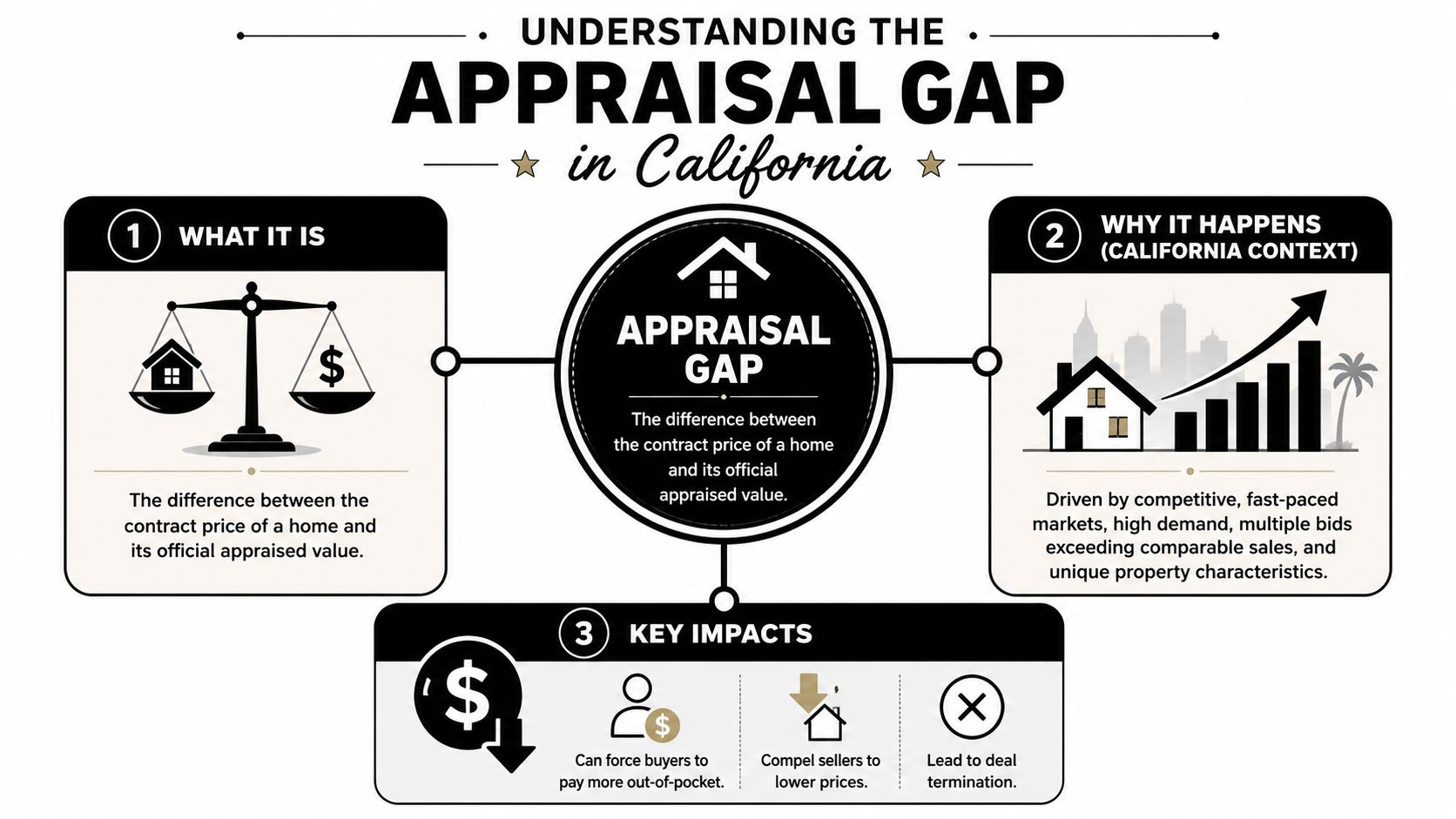
An appraisal gap is the difference between the price in the purchase contract and a lower appraised value. If you agreed to pay more than the appraiser concluded the property is worth, that difference becomes the gap. Lower's appraisal gap explanation explains the key issue: lenders base the mortgage on the lower appraised value, not the higher contract price.
Think of it this way. The contract price is the market's excitement price. The appraisal is the bank's evidence price.
Those two prices often match in balanced markets. In fast California markets, they don't always move together.
Why California buyers run into this so often
Low inventory pushes buyers into multiple-offer situations. Homes with strong locations, clean condition, or school-district appeal can attract offers that move faster than historical comparable sales. Appraisers still have to rely heavily on closed sales and supportable adjustments, so there can be a lag between what buyers will pay today and what the file can justify today.
That disconnect is a major reason appraisal gaps show up so often in California.
Finance Yahoo's report citing Cotality states that appraisal gaps occur in about 10% of U.S. residential home transactions, while hot California markets such as San Ramon and San Jose saw as many as 15% to 20% of homes face appraisal gaps in 2023 to 2024.
A low appraisal doesn't always mean the buyer was reckless
A lot of buyers hear "low appraisal" and assume it means they overpaid. That's not always true.
An appraiser isn't pricing the emotional pull of a home, the timing pressure on buyers, or the intensity of a bidding war. Appraisers are trying to support value through documented comparables. In California neighborhoods where prices move quickly, a buyer can make a rational offer and still end up with a gap.
The appraisal is not a moral verdict on your offer. It's a lending document built on supportable sales evidence.
What happens next
Once the appraisal comes in low, there are only a few ways forward. The buyer can bring in more cash, the seller can reduce the price, the contract can rely on a gap clause if one was written, or the deal can stall and possibly terminate depending on contingencies.
That's why buyers need to understand appraisal gap coverage before they compete, not after the report is already in the file.
Your Four Main Options for Covering an Appraisal Gap
When a low appraisal hits, buyers usually have four practical paths. None is perfect. The right one depends on cash reserves, the seller's flexibility, the loan program, and how aggressively the buyer wants to protect the deal.
Option one is straightforward cash
The cleanest solution is bringing additional funds to closing. If the buyer has the liquidity, this can keep the transaction moving with the least friction between the parties.
The downside is obvious. That cash has to come from somewhere. Pulling too much toward the gap can leave the buyer exposed on reserves, repairs, or post-closing stability.
Option two is renegotiating with the seller
Some sellers will lower the purchase price when the appraisal comes in short. Others won't, especially if they had backup interest or believe the appraiser missed the mark.
This approach preserves buyer cash, but it's not fully in the buyer's control. The seller may agree, refuse, or only meet in the middle.
Option three is using appraisal gap coverage in the contract
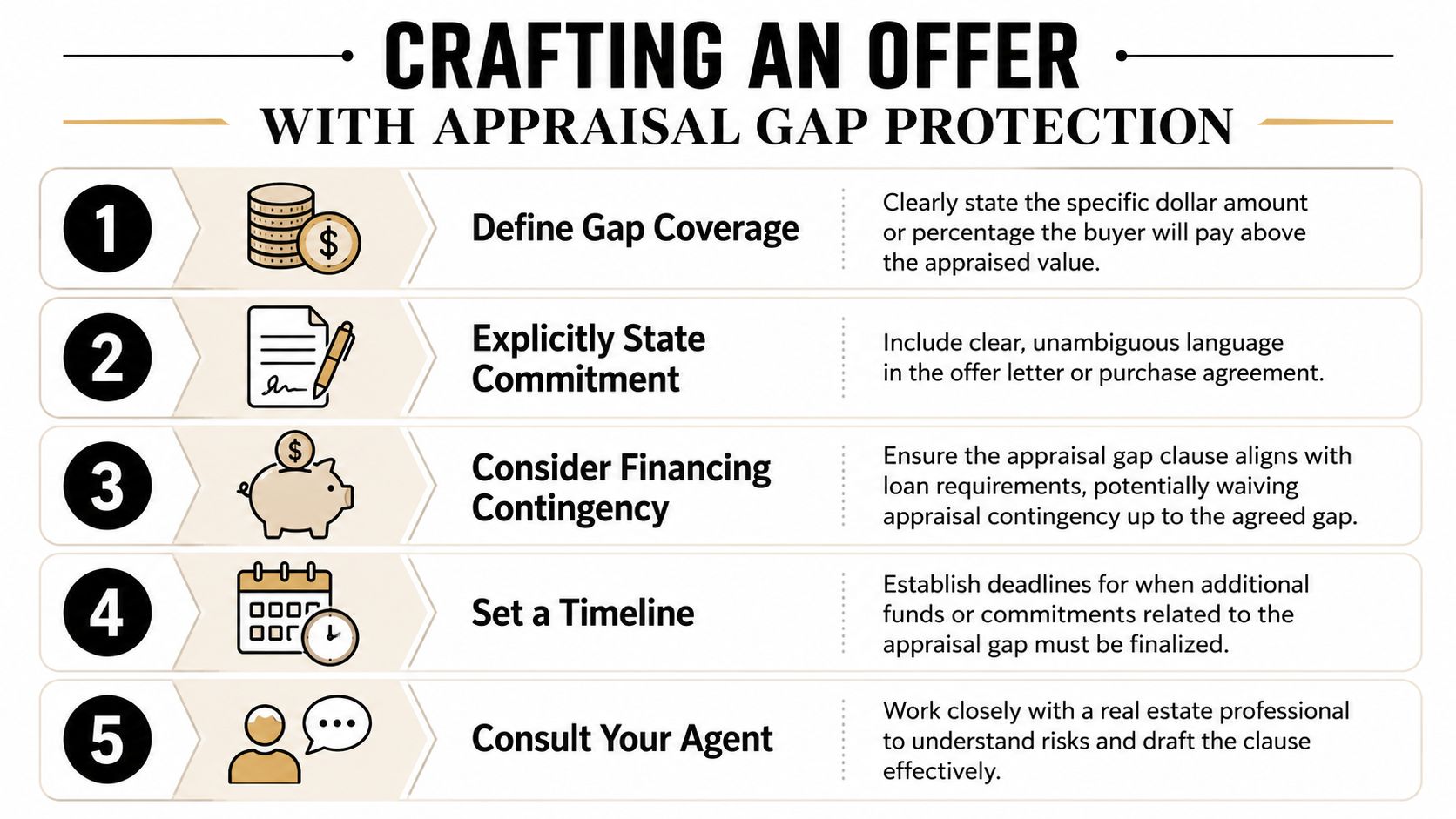
An appraisal gap clause is a contractual promise that the buyer will cover a defined portion of the gap if the property appraises low. Rocket Mortgage's explanation of appraisal gap clauses describes it as a provision that can specify either a fixed dollar amount or a percentage the buyer is willing to cover.
This is often the most strategic route when you're trying to win a home without giving an unlimited commitment.
Option four is using available assistance, credits, or asset planning
Some buyers can make the numbers work by coordinating funds before they write the offer. That may include gift funds if the loan and lender allow them, eligible asset positioning, or other approved sources of cash. Buyers who need support planning that side of the transaction should also review California-specific assistance options such as down payment assistance programs in California.
Comparing Appraisal Gap Solutions
| Method | How It Works | Pros | Cons |
|---|---|---|---|
| Bring cash | Buyer covers the shortfall from available funds | Fast, direct, preserves contract momentum | Reduces reserves and raises closing pressure |
| Renegotiate price | Seller lowers contract price after low appraisal | Protects buyer cash | Seller may refuse or only reduce part of the gap |
| Use appraisal gap coverage | Contract states buyer will cover a defined amount | Makes offer stronger up front and sets expectations early | Still requires actual funds if triggered |
| Use assistance or coordinated funds | Buyer organizes approved outside help or eligible assets | Can preserve flexibility and improve readiness | Requires early planning and lender review |
What tends to work and what doesn't
What works is clarity. Buyers who know their maximum exposure, verify acceptable funds early, and coordinate with both agent and lender usually make better decisions under pressure.
What doesn't work is vague optimism. "We'll figure it out later" is not a strategy when the appraisal is low and closing dates are already approaching.
Practical rule: If your plan depends on the seller being generous after the appraisal, you don't really have a plan yet.
Writing a Competitive Offer with an Appraisal Gap Clause
Appraisal gap coverage is often the most useful middle ground between a weak offer and an overly risky one. It tells the seller you're serious, but it doesn't have to expose you to unlimited cash obligations.
The biggest mistake is making the clause open-ended.
Great Colorado Homes' explanation of appraisal gap clauses highlights the core risk clearly: the most critical risk is offering an open-ended guarantee. A safer structure is to set a specific cap, such as language stating that the buyer agrees to pay up to $20,000 above the appraised value, but not to exceed the purchase price.
Why a cap matters
A capped clause does two jobs at once. It reassures the seller that you won't automatically walk if the appraisal is short, and it protects you from agreeing to cover a gap far larger than your budget can handle.
That protection isn't theoretical. Buyers can get hurt when they focus only on winning and forget that contract language becomes a real obligation later.
How to frame the conversation before you offer
Talk through the clause with your real estate agent and your lender before the offer goes out. The agent needs to know what makes the offer competitive in that local pocket. The lender needs to know whether your funds, reserves, and loan structure can support the commitment.
A strong discussion usually covers these points:
- Your true ceiling: The number you can cover without draining emergency funds.
- Your contingency position: Whether you're keeping an appraisal contingency, modifying it, or narrowing your exposure.
- Your deposit risk: Whether your earnest money structure lines up with the appraisal strategy. Buyers who need a refresher on that side of the file should review how a good faith deposit works.
- Your fallback plan: What happens if the appraised value lands below the amount you've agreed to cover.
Smart language is stronger than aggressive language
Sellers like certainty. A buyer who says, in effect, "I'll cover up to this amount" often presents a cleaner risk profile than a buyer who uses broad, emotional language but doesn't define the actual exposure.
A capped appraisal gap clause is usually stronger than a brave-sounding promise with no limit behind it.
What not to do
Don't assume the phrase "appraisal gap coverage" means the same thing to every agent, seller, or lender. Confirm the exact wording. Confirm the cap. Confirm how contingencies interact with it.
And don't treat it like insurance. It isn't insurance. It's a contract commitment backed by your money.
Appraisal Gap Math for California Homebuyers
The math is where many buyers get surprised. They expect to cover only the difference between the contract price and the appraised value. In practice, the required cash can shift because the loan amount itself is recalculated from the appraised value.
That's the part too many general articles skip.
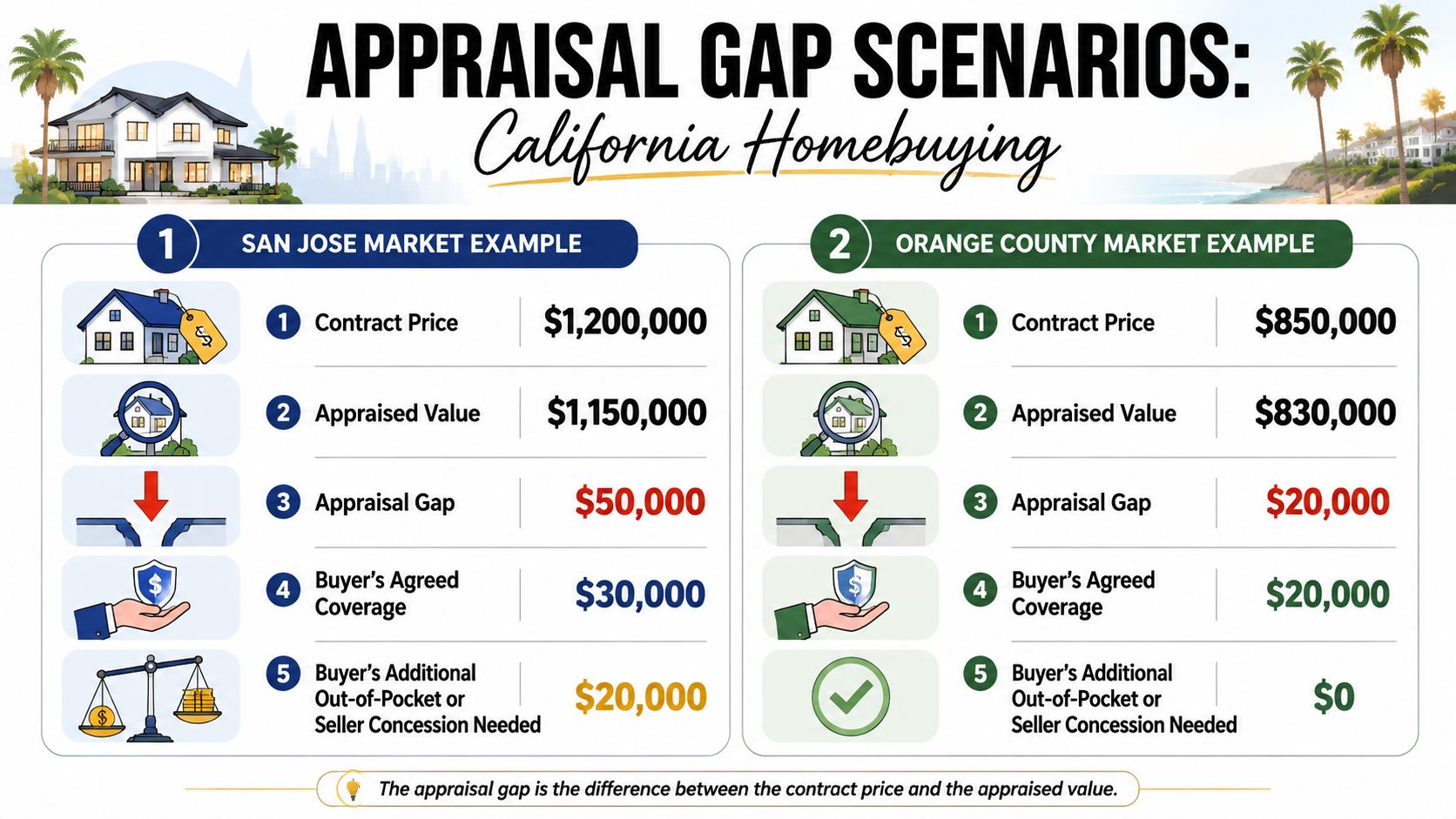
LRG Realty's breakdown of low appraisal cash-to-close math explains the issue directly: lenders recalculate the loan based on the appraised value, not the contract price. In its example, a $350,000 purchase with a $5,000 gap can increase the required cash to close by roughly $4,750 because the loan amount shrinks.
The core principle
If the home appraises below the contract price, the lender doesn't lend against the higher number just because that's what you offered. The financing is tied to the lower appraised value.
That means two things can happen at once:
- The gap itself appears: You may need to cover the difference between the price and the appraised value.
- The loan base changes: Your down payment and financing structure may now be calculated from a lower value than you expected.
How buyers should think about the numbers
Don't ask only, "Can I cover the gap?"
Also ask:
- Can I cover the gap and still meet reserve expectations?
- Will the revised loan amount change my cash-to-close in a way I'm not expecting?
- If I use gift funds, are those funds documented early enough for underwriting?
- If the gap is larger than my cap, do I still want the property enough to renegotiate and continue?
Why this matters so much in California
California buyers often compete at prices where even a modest appraisal shortfall creates a meaningful cash event. That can be manageable for some households, but it can become a problem fast for buyers balancing deposits, moving costs, and strict budget limits.
The dangerous assumption is thinking a low appraisal creates one number to solve. It usually creates a chain reaction.
The practical move
Before writing an aggressive offer, ask your lender for scenario planning. Not generic reassurance. Actual side-by-side payment and cash-to-close estimates showing what happens if the appraisal lands short.
That conversation can save a transaction, and in some cases save a buyer from making an offer that looked affordable only before the appraisal.
Navigating Appraisal Gaps as a California HERO
For California HERO buyers, appraisal gaps create a more specific problem than they do for the average borrower. A veteran using VA financing, a teacher layering assistance, or a first responder relying on a tight approval structure may have strong income and excellent eligibility, but still limited room for extra cash surprises.
VA buyers run into a particular gray area in public discussion. eXp Realty's guide on appraisal gap questions notes that many guides omit how appraisal gap commitments affect VA loan eligibility, including confusion over whether gap payments are permitted as part of the buyer's required investment or whether they can affect debt-to-income analysis.
That uncertainty matters because VA financing isn't just "another mortgage." It has its own underwriting standards, property requirements, and lender overlays. Buyers shouldn't assume that a contract strategy borrowed from a conventional offer will translate cleanly to a VA file.
What HERO buyers should do before offering
Start with the lender, not the listing.
Ask your loan officer to review the proposed gap strategy against your loan program, available assets, and documentation trail. If you're using VA financing, get clarity on how the underwriter and lender will view any funds you may need to bring in. If inspections are also part of your decision process, it's smart to review VA home loan inspection considerations before you lock yourself into a property that already carries appraisal risk.
Where public servants can get tripped up
A lot of public service buyers are disciplined savers, but they often buy with purpose-built financing and a narrow margin for extra costs. The risk isn't limited to "bringing in more money." The risk is bringing in money in a way that creates documentation, timing, or qualification problems late in escrow.
That means the best appraisal gap strategy for a California HERO is usually the one that protects both competitiveness and compliance. A strong offer that can't survive underwriting is not strong.
Frequently Asked Questions About Appraisal Gaps
Does appraisal gap coverage count as part of the down payment
No. It is separate from the down payment. The gap is money used to address the difference between the contract price and the appraised value when the lender bases the loan on the lower value.
Can gift money be used to cover an appraisal gap
Sometimes, if the loan program and lender allow it and the documentation is handled correctly. The key is getting lender approval early and making sure the paper trail is clean before underwriting gets deep into the file.
What happens if the appraisal gap is larger than my cap
The contract language controls what happens next. In many cases, the buyer and seller renegotiate. If the contract preserves the right contingency protections, the buyer may also have a path to exit instead of covering the entire shortfall.
Is appraisal gap coverage the same as PMI
No. They solve different problems. Appraisal gap coverage is a contract promise tied to value shortfall. PMI relates to loan risk on certain financing structures and doesn't function as protection for a low appraisal.
Should I always include appraisal gap coverage in California
No. It can help in a competitive offer, but it isn't right for every buyer or every property. If covering a low appraisal would wipe out reserves or force unstable financing decisions, the smarter move may be to target a less competitive home or keep stronger contingencies in place.
What's the biggest mistake buyers make with appraisal gaps
They focus on getting the offer accepted without deciding what they can afford to do if the appraisal comes in low. A realistic cap and lender review usually prevent the worst outcomes.
California HEROES don't need vague advice when a low appraisal threatens a purchase. They need clear numbers, loan-specific guidance, and a plan that fits how they qualify. California Loans for Heroes helps veterans, active-duty military, first responders, educators, healthcare professionals, and other public servants across California manage home financing with one-on-one support, buyer assistance options, and practical mortgage guidance built for real-world transactions.