Down payment assistance for first responders in California can range from a few thousand dollars to as much as $500,000 in high-cost markets like San Francisco, depending on the program. The key question isn't whether help exists, but which program design fits your income, mobility, and duty schedule.
You may be a firefighter watching Bay Area prices rise while your savings barely move, a nurse juggling a demanding schedule and closing costs, or an officer wondering whether a grant is better than a second lien. California offers several paths, but they don't all work the same way. Some provide cash that never has to be repaid, some defer repayment until you sell or refinance, and others require you to share part of the property's appreciation.
That distinction matters more than the headline assistance amount. A buyer planning to stay in one home for years may accept a deferred lien, while someone who could transfer stations or change employers soon may need a more flexible grant. This guide focuses on that decision, with California programs and structures at the center.
Why California First Responders Have Real Homebuying Help
A California firefighter can serve the same community for years while homeownership moves further out of reach. Rent, transportation, family expenses, and the practical costs of demanding shifts can consume savings that might otherwise cover a down payment. Nurses, law enforcement officers, paramedics, and other public-service workers face the same pressure, particularly in expensive coastal markets.
California first responders do not receive one universal homebuyer benefit. Assistance comes through municipal housing funds, state programs, lender-affiliated products, grants, deferred loans, and silent seconds. The California home loan options for heroes can help organize the search around a buyer's profession and financing goals, but eligibility still depends on location, income, property type, occupancy, and program terms.
California help follows local priorities
Local programs often serve two public goals: retaining essential workers and stabilizing neighborhoods. A city or county may limit assistance to specific public safety roles, geographic areas, or owner-occupied properties because it wants the benefit connected to the community.
That local design changes the decision. A firefighter buying near a current station may value assistance tied to a specific area, while an officer expecting a transfer needs to examine occupancy and repayment rules before accepting funds. A nurse with variable shift income may also need a program whose underwriting handles income consistently, not just one advertising the largest benefit.
Program structure matters more than the headline amount.
Choose the obligation before chasing the benefit
A buyer who expects to remain in a San Francisco home for years may evaluate a silent second differently from someone whose duty assignment could change. A household near an income limit may need a carefully structured state loan, while a buyer able to bring more cash may prefer to avoid appreciation-sharing terms.
Read the exit rules before comparing assistance amounts. Ask what happens if you sell, refinance, transfer, leave the job, or stop occupying the property. A grant may offer the cleanest exit when its requirements are satisfied. A deferred lien can preserve cash today but create a repayment obligation later. A silent second may carry no immediate payment while still affecting future equity.
Practical rule: Start with your likely five-year situation, then choose the program design that fits it.
California assistance is real, but the right option depends on your income, mobility, duty schedule, and tolerance for a future lien. Match those factors first. Compare dollar amounts second.
What Down Payment Assistance Is
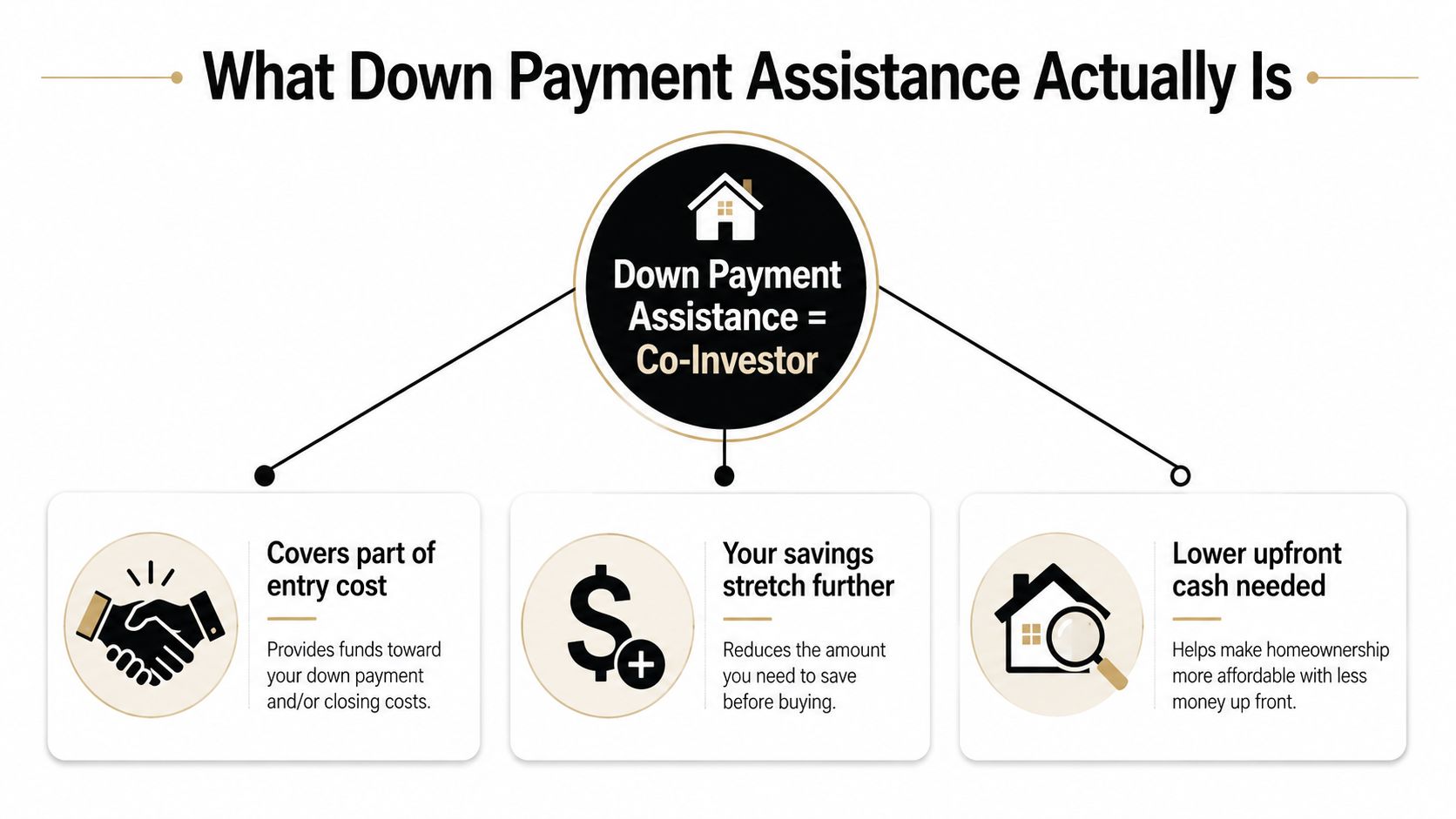
Down payment assistance helps cover part of the cash required to enter a home purchase. That lets your savings cover more than the down payment, including closing costs, reserves, and moving expenses. The right structure matters more than the headline amount, especially for a California first responder whose income, duty schedule, or assignment may change.
The money does not always arrive as funds you can use without restrictions. Program administrators attach conditions, and the legal structure determines whether you repay the assistance, when repayment begins, and whether the provider receives a share of future appreciation.
Grants offer the cleanest exit
An outright grant is the simplest structure. If it is non-repayable and you satisfy the program rules, you generally do not repay it when you sell or refinance. Grants suit buyers who value mobility because they usually do not create a lien that follows the property.
The trade-offs still matter. A grant may be limited in size or restricted to specific costs, income levels, occupations, or properties. Read the agreement carefully. Marketing language can make a deferred loan sound like a grant.
Deferred forgivable liens reward compliance
A deferred forgivable second lien typically has no immediate monthly payment. Repayment may be postponed, and the balance may be forgiven over time if you remain in the property and meet employment or occupancy conditions.
Texas State Affordable Housing Corporation's Homes for Texas Heroes program illustrates this design. Its assistance can be provided as a grant or as a deferred forgivable second lien that is repaid if the borrower sells or refinances within three years, according to TSAHC's first responder loan information.
This structure can reduce cash needed at closing without adding a fully amortizing monthly payment. The cost is flexibility. A job change, transfer, move, or refinance can trigger repayment before your plans are ready.
Silent seconds can include appreciation sharing
A silent second loan generally has no monthly payment, but repayment occurs after a defined trigger, such as a sale or transfer. San Francisco's First Responders Downpayment Assistance Loan Program, or FRDALP, provides up to $500,000 as a silent second loan. The balance is due when the property is sold or transferred, including principal plus an equitable share of appreciation, according to the City and County of San Francisco FRDALP page.
That structure can address a large upfront cash gap in a high-cost market. It is not free money. Compare the future repayment formula with the upfront benefit, then decide whether the program fits your expected time in the home and career mobility.
Program Types Available to California First Responders
California buyers should search several program families instead of relying on a generic “heroes” mortgage. The right choice depends on the program design, your income, how long you expect to stay, and whether your duty schedule or career could require a move. Compare a grant with a deferred lien or silent second before comparing headline assistance amounts.
State-level assistance through CalHFA
CalHFA's MyHome Assistance program provides a deferred-payment junior loan for eligible buyers. With FHA financing, assistance reaches the lesser of 3.5% of the purchase price or appraised value. With conventional financing, it reaches the lesser of 3%, and the funds may cover down payment or closing costs, according to CalHFA's homebuyer programs page.
This option suits a buyer who needs to keep cash available at closing and can satisfy occupancy and repayment conditions. It is not limited exclusively to first responders, so it can fill the gap when an occupation-specific option does not fit. The trade-off is future repayment under the program terms, not a permanent grant.
Municipal programs address expensive local markets
City and county programs often target a specific workforce and housing market. San Francisco's FRDALP serves eligible sworn first responders purchasing a market-rate property in San Francisco. Its large assistance ceiling reflects the cash required in a high-cost market, not a standard percentage available to every California buyer.
Read the local rules closely. Geographic boundaries, household-size caps, income targeting, employment verification, and service commitments can all apply. A buyer who works in one city but purchases in another must confirm both the employment definition and the property-location requirement.
Credit unions and workforce products
Credit unions may offer occupation-based assistance through partnerships or community development products. SAFE Federal Credit Union's FHLBank Atlanta Community Partners product provides up to $15,000 for down payment, closing costs, counseling, or rehabilitation. It requires household income below 80% of area median income, a borrower contribution of at least $1,000, and a primary residence, as detailed in SAFE Federal Credit Union's first responder mortgage information.
Ask your lender whether a comparable local product exists, whether funds remain available, and whether it can be combined with the proposed FHA, VA, or conventional loan. Program compatibility matters more than the advertised award.
National occupation-based programs
National programs can supplement a California search, but they should not replace state and local research. The Down Payment Resource index cited earlier shows that occupation-based assistance includes programs for teachers, first responders, law enforcement officers, firefighters, healthcare workers, and other critical public-service roles. Its early 2022 snapshot also reported that 83.6% of programs showed funds available to eligible buyers on January 6, 2022.
Treat stacking as a question, not an assumption. Your lender must confirm that each source, underwriting rule, lien position, and required contribution works with the others. A grant may preserve flexibility, while a deferred lien can create a repayment obligation when you sell or refinance. Choose the structure that matches your expected time in the home and career mobility.
How Much Assistance You Can Realistically Get
A California first responder may qualify for anything from a modest grant to a deferred junior loan or a city-backed silent second. The practical range depends on the program, not the uniform.
Geography, household income, family size, property location, loan type, and available funding all affect the award. A firefighter moving from a lower-cost county to San Francisco can face a completely different set of options.
California assistance at a glance
| Program | Assistance Type | Award Range | Repayment Terms |
|---|---|---|---|
| CalHFA MyHome, FHA | Deferred junior loan | Up to the lesser of 3.5% of purchase price or appraised value | Deferred repayment, subject to program terms |
| CalHFA MyHome, conventional | Deferred junior loan | Up to the lesser of 3% | Deferred repayment, subject to program terms |
| SAFE Federal Credit Union Community Partners | Assistance that may cover down payment, closing costs, counseling, or rehabilitation | Up to $15,000 | Terms depend on the product and program agreement |
| San Francisco FRDALP | Silent second loan | Up to $500,000 | No monthly payments. Repayment at sale or transfer includes principal plus an equitable share of appreciation |
These examples show why headline amounts need context. State programs generally offer a defined percentage or capped amount. Local silent seconds may provide more purchasing power, but their repayment formula can affect the equity you keep.
The table reflects program terms described earlier for CalHFA, SAFE Federal Credit Union, and San Francisco FRDALP. Availability, underwriting, and loan compatibility can change, so confirm current rules with your lender before relying on an advertised figure.
For a California buyer, the largest award is not automatically the best choice. A $500,000 silent second could close a San Francisco cash gap while creating an appreciation-sharing obligation. A smaller grant preserves more future equity, while a deferred lien may be useful when cash is tight but your career or housing plans are stable.
Your lender should compare cash to close, monthly payment, lien repayment, and likely exit scenarios in one analysis. Review how much down payment assistance can cover before choosing between a grant, deferred lien, or silent second. The right structure matches your income, expected time in the home, mobility, and duty schedule, not the biggest number in a program advertisement.
Eligibility Requirements You Should Know Before Applying
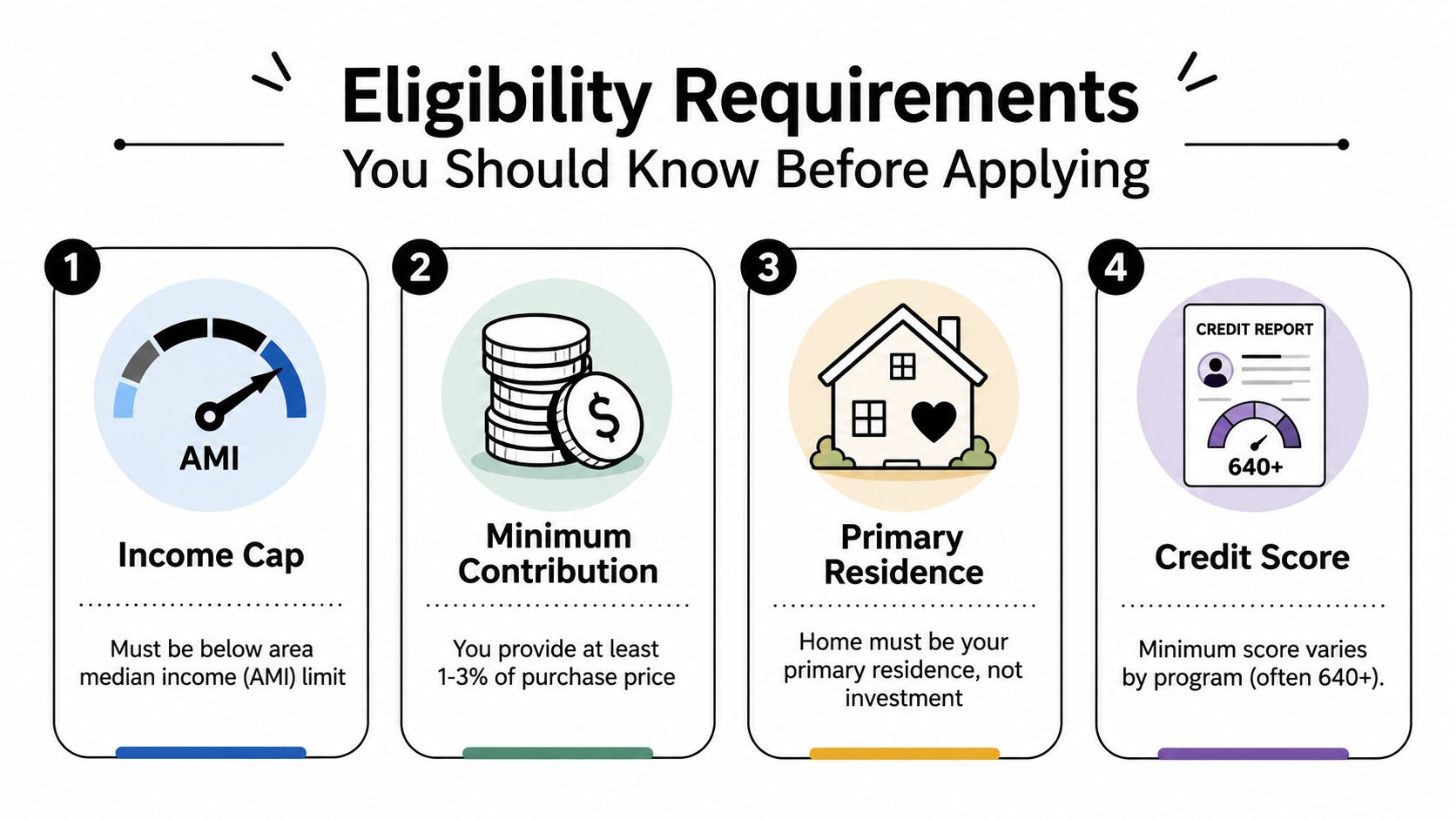
Programs don't approve applicants just because they wear a uniform or work in public service. They screen for affordability need, owner occupancy, borrower contribution, and program-specific employment status. The rules protect limited funds, but they also determine whether an attractive headline amount is usable.
Income limits target assistance where it matters
Many programs tie eligibility to household income and area median income. SAFE Federal Credit Union's Community Partners product, for example, requires household income below 80% of area median income, according to its published first responder assistance terms.
Income calculations can include more than base salary. Overtime, differentials, bonuses, second jobs, and household income may affect the calculation, depending on the program. Public safety workers should provide complete documentation rather than assuming a lender will count only regular wages.
Buyer contribution shows commitment
Some programs require you to bring your own funds. SAFE's product requires at least $1,000 from the borrower, even when assistance covers eligible purchase costs. That contribution helps demonstrate financial participation and keeps the transaction from becoming entirely dependent on outside funds.
Don't drain every dollar to meet a contribution rule. Preserve reserves for inspections, repairs, uniforms, transportation, and the unpredictable costs of owning a home.
Occupancy and employment conditions can create repayment
The home usually must be your primary residence, not an investment property or vacation home. Employment verification may also be required, and some programs impose service or occupancy commitments. Selling, refinancing, moving out, or leaving a qualifying role can trigger repayment or stop forgiveness.
Read the trigger language before you fall in love with the assistance amount. The repayment clause matters more than the program's marketing headline.
Credit, debt-to-income, property standards, first-time buyer status, purchase-price limits, and counseling requirements can vary by program. Don't treat an infographic or online eligibility quiz as a final answer. Have the lender review the actual guidelines for the specific assistance source and property.
How to Apply for Down Payment Assistance
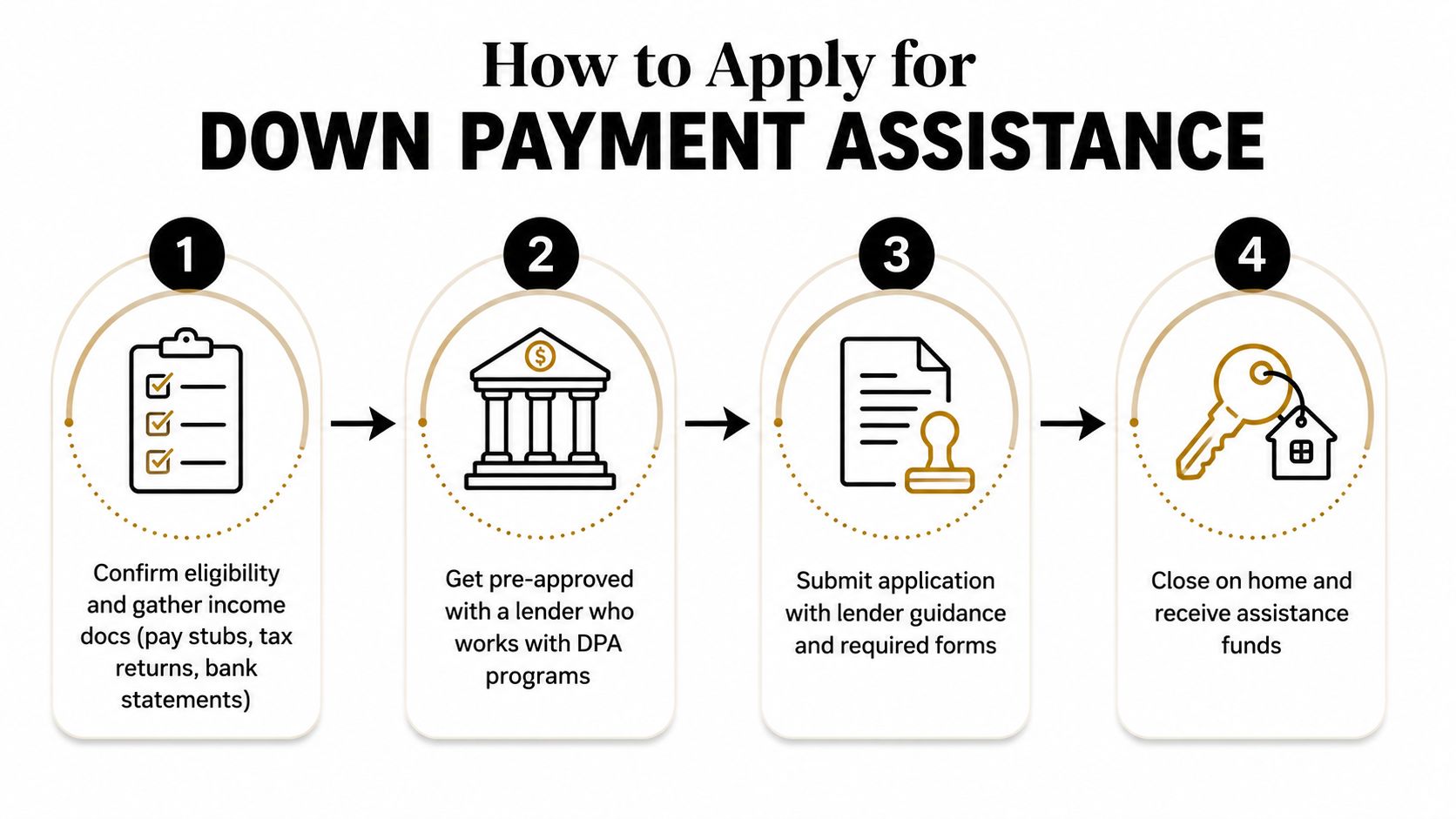
Start with a lender, not an online application submitted in isolation. The lender needs to match the assistance source to your mortgage type, document your income correctly, and confirm that the program can close within the transaction's deadlines.
Begin with a document-ready financial review
Gather recent pay information, tax documents, bank statements, employment verification, and information about other household income. A first responder's pay can include overtime or shift differentials, so the lender should understand how the income was earned and how the underwriting rules treat it.
Then identify the programs tied to your county, city, employer, and occupation. Confirm whether the property must be in a specific jurisdiction and whether the program accepts FHA, VA, USDA, or conventional financing.
Choose the lender carefully
The lender controls access to many assistance products. Ask direct questions:
- Program experience: Which California first responder and workforce programs do you actively originate?
- Layering rules: Can the assistance be combined with the proposed FHA, VA, USDA, or conventional loan?
- Repayment review: Can you show the lien balance and repayment triggers in writing?
- Timing: Is funding available now, and what approvals must occur before an offer is written?
- Counseling: Does the program require homebuyer education before closing?
A pre-approval from a lender unfamiliar with the assistance program may create avoidable delays or force you to change financing after finding a property. Use the down payment assistance application guidance as a starting point, then verify every condition with the program administrator and lender.
Coordinate education, property selection, and closing
Complete required homebuyer education or counseling as early as possible. Select a property that meets the location, occupancy, purchase-price, and property-condition rules. Once you have a contract, the lender and assistance administrator coordinate approval, lien documents, title requirements, and the delivery of funds to closing.
Programs can operate on different funding schedules. Ask for the current availability status before making an offer, and don't assume a prequalification reserves funds. Your first call this week should be to a lender who understands public-service income and has closed the exact type of assistance you want to use.
Smart Strategies to Maximize Your Assistance Benefit
The strongest strategy usually combines careful program matching with disciplined stacking. Start with the primary mortgage, then test whether a state junior loan, occupation-based grant, municipal program, or lender credit can fit without violating lien, income, or contribution rules.
Don't stack programs solely because the combined headline looks impressive. Each source may require its own counseling, borrower contribution, property restrictions, or repayment terms. The lender should calculate the final cash-to-close and review the combined obligations before you write an offer.
Match the benefit to your expected mobility
A smaller outright grant can be the better choice for a buyer who may relocate. A deferred forgivable lien may work well for someone committed to the home and qualifying employment. A silent second with appreciation sharing may be appropriate when the upfront gap is otherwise too large, but you must understand how a future sale or transfer affects your equity.
California first responders should ask:
- How long will I likely stay? A short expected stay makes repayment triggers more important.
- Could my duty station change? Confirm whether a transfer affects eligibility or forgiveness.
- Will I refinance? A deferred lien may need to be repaid or subordinated.
- Can I preserve reserves? Assistance should reduce cash pressure, not justify an unsafe monthly payment.
- What is the exit cost? Model the repayment formula, including any appreciation share.
Down Payment Resource reported 2,509 programs in Q1 2025, 2,679 in Q1 2026, and 2,746 in Q2 2026, with occupation-based programs rising to 206 in Q1 2026 and 51 programs supporting law enforcement and first responders in Q2 2026, according to its 2026 program expansion update. The growing menu makes professional program screening more valuable, not less.

California Loans for Heroes offers homebuyer assistance and incentives for California service professionals, including first responders, through its HERO Home Loan & Buyer Rewards Program. The service can include assistance options, lender credits, mortgage financing, and one-on-one guidance, subject to participating programs and borrower eligibility.
Make a short list of programs, gather your income documents, and ask a qualified lender to compare grant, deferred-lien, and silent-second scenarios side by side. That decision framework will tell you more than any generic promise of “special” first responder financing.
California Loans for Heroes can help California first responders review homebuyer assistance options, lender credits, mortgage financing, and the repayment trade-offs attached to each structure. Visit California Loans for Heroes to connect with a team that works with public-service professionals and request a personalized review of your purchase plan.