
You love your work. You show up for students, parents, staff meetings, lesson plans, and the endless stack of things that follow you home. Then you open a real estate app in California and it feels like the math stops working.
That's where a lot of teachers get stuck. Not because they're careless with money, but because California's housing market punishes buyers who rely on a steady paycheck and don't have a giant pile of cash sitting around. The down payment feels too big. Closing costs feel random. Mortgage terms feel opaque. And every article online seems to say, “Good news, there are programs,” without telling you which ones matter where you live.
The truth is better than that. There are real home loan programs for teachers, and some of them can meaningfully reduce upfront costs, improve loan structure, or open doors that seem closed right now. The hard part isn't finding a list. The hard part is knowing which programs can work together and which ones are all headline, no fit.
The California Teacher's Homeownership Dream
A California teacher usually doesn't need motivation. They need a plan.
You may already be doing the right things. Paying rent on time. Keeping debt under control. Saving what you can between classroom expenses, rising insurance costs, and everything else life throws at you. But the gap between “financially responsible” and “ready to buy a home in California” can still feel huge.
That gap creates a false conclusion. A lot of educators assume they need years more savings before they can even think about buying. That's often wrong. What they need is a mortgage strategy built around educator-specific assistance, not a generic online pre-approval.
Here's the pattern I see again and again. A teacher starts by looking at conventional loans only. Then they conclude the cash needed at closing is too high. Then they stop. They never get far enough to learn that educator programs can change the structure of the deal, not just shave a little off the edges.
You don't need every program. You need the right combination of programs you can actually qualify for.
For California educators, homeownership gets more realistic when you stop treating the mortgage as one product and start treating it like a package. First mortgage. Down payment help. Potential credits. Local assistance if available. Occupancy rules reviewed up front. That's the difference between “I'm probably not ready” and “I might be closer than I thought.”
If you want a starting point designed for your profession, review the educator options on California teacher and educator home loan support. Then get your numbers reviewed by someone who understands how teacher-focused assistance works in California, not just how to issue a generic pre-approval.
Understanding the Types of Teacher Home Buying Programs
Most buyers hear “teacher home loan” and assume it's one special mortgage. It isn't. It's a category.
The cleaner way to think about home loan programs for teachers is this: you're building a financial support team. One part may handle the first mortgage. Another may reduce cash needed at closing. Another may help through a grant, credit, or second lien. If those pieces fit together, your purchase gets much easier.
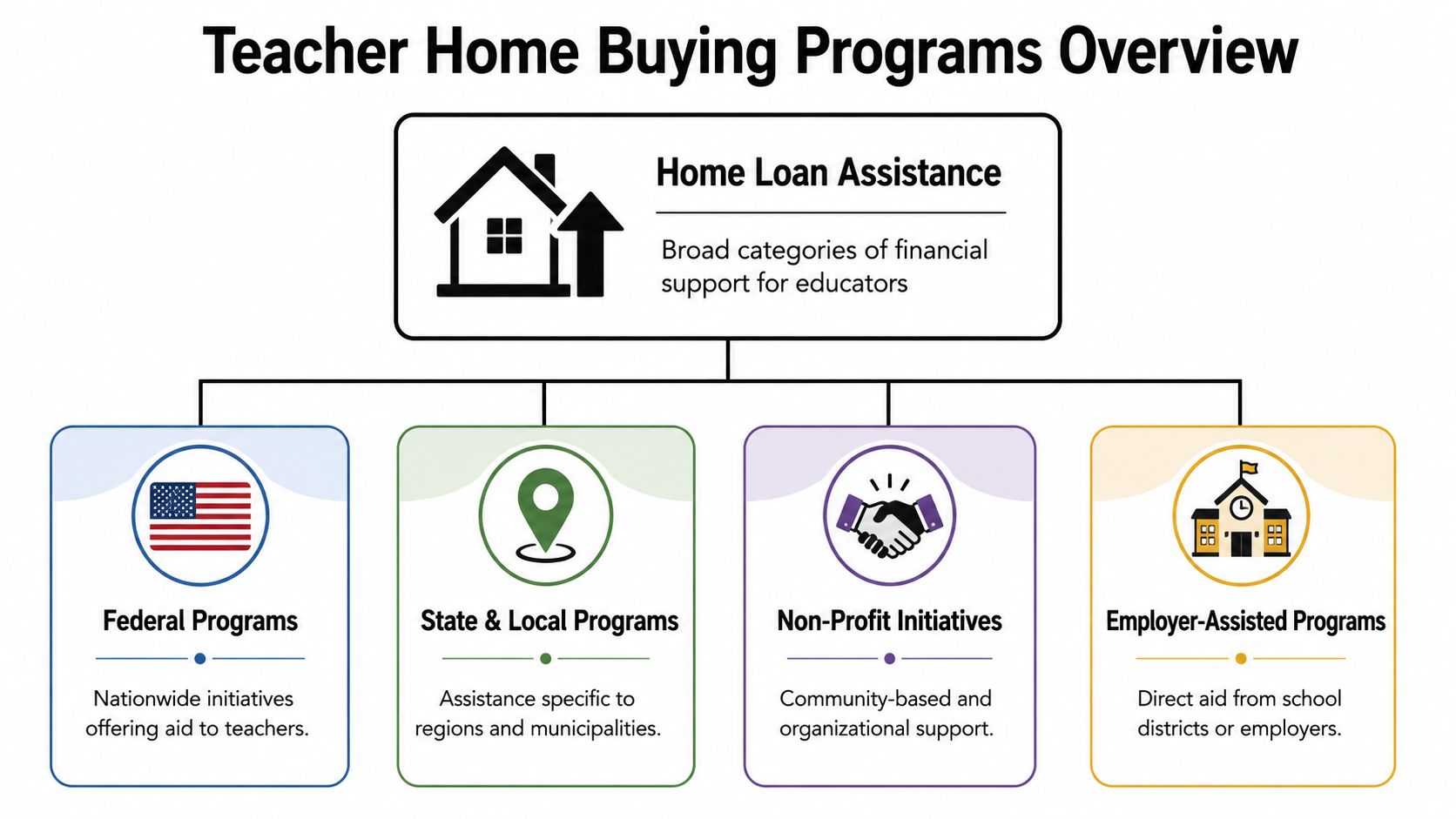
Federal programs
These are the programs buyers usually hear about first. Federal options can offer significant help, but they tend to come with strict property or occupancy rules. They're worth checking because the benefit can be substantial if the property and your location line up.
Federal programs matter most when you're flexible on property selection and willing to follow the program's residency requirements.
State and local assistance
California buyers should pay close attention. State and city or county programs often focus on down payment assistance, closing cost help, or forgivable secondary financing. In practice, this category often matters more than the flashy national offers because it may apply to a broader set of homes.
Local assistance can be powerful, but it's also where buyers get tripped up by income limits, property location rules, and layered underwriting requirements.
Nonprofit and community-based help
Some teacher buyers qualify for support through nonprofit organizations or community housing initiatives. These programs can fill a gap when a national or state option doesn't fit. They may also work best for first-time buyers who need guidance as much as money.
Don't assume this category is always easier. Sometimes the rules are just as specific as government-backed programs.
Employer-assisted and lender-based options
Some school districts, affiliated groups, or lenders create educator-focused loan options. These may include reduced closing costs, flexible credit guidelines, or terms designed for public service professionals. They're not all equal, and the marketing can get ahead of the details.
A simple framework helps:
| Program type | What it usually helps with | What to watch closely |
|---|---|---|
| Federal | Purchase discounts or broader national access | Property restrictions and occupancy rules |
| State or local | Down payment or closing cost assistance | Income caps and sales price limits |
| Nonprofit | Gap funding or buyer support | Limited availability |
| Lender or employer | Loan structure, credits, or flexibility | Product-specific terms |
If you remember one thing, remember this. The strongest home loan programs for teachers usually aren't one big miracle product. They're a stack of smaller advantages that work together.
Exploring Major Federal and National Loan Programs
The national programs get the attention because the headline numbers are big. Sometimes that attention is deserved. Sometimes it distracts buyers from the eligibility rules that decide whether the program proves useful.
HUD Good Neighbor Next Door
HUD's Good Neighbor Next Door program is the clearest example of a dramatic benefit with narrow eligibility. It was established in 2009 and offers qualified teachers a 50% discount on the listing price of homes in designated revitalization areas. It also requires the buyer to live in the property for at least three years, which means a $200,000 listing can become a $100,000 purchase if the home and buyer meet the rules under HUD's Good Neighbor Next Door terms.
That's a serious discount. It's also not a general-use California teacher perk you can apply to any listing you like. The property has to be in the right area, and the occupancy commitment isn't optional.
Practical rule: If a program offers extraordinary savings, expect narrower property choices and stricter residency rules.
For the right buyer, this can be excellent. A teacher who's open to a qualifying area and plans to stay put may get a level of purchase support that's hard to match elsewhere. For a buyer who needs flexibility on location or expects to move soon, it may be a poor fit despite the headline.
Teacher Next Door and national assistance models
The Teacher Next Door program has historically offered up to $8,000 in grants for closing costs and pre-closing expenses, along with up to $15,000 in down payment assistance. It also features a 0% Down Purchase Option tied to a second lien that can reach $15,000, with no interest, no monthly payments, and repayment only when the first lien is refinanced or paid off. In Nevada, the program provides $7,500 in forgivable assistance, and in Texas the Homes for Texas Heroes variation can offer 3% to 5% of the loan amount as a non-repayable grant, with teachers receiving the 5% tier on FHA, VA, or USDA financing through Teacher Next Door program details.
What matters here isn't just the dollar amount. It's the structure. A second lien with no monthly payment changes the entry math for buyers who can handle a mortgage payment but can't build cash fast enough for down payment and closing costs.
That said, don't chase the biggest advertised number. National programs often sound broader than they are. Before you get emotionally attached to the savings, verify the property area, your employment category, occupancy rules, and whether the assistance has repayment triggers.
Unlocking Homeownership with California Specific Resources
California buyers need to stop reading national program roundups as if they're a purchase strategy. They're not. They're background.
In California, the strategy is stacking. You start with a solid first mortgage, then evaluate what state, local, and profession-based assistance can sit on top of it without creating a mess in underwriting. That's how teachers buy in expensive markets without draining every reserve they have.

Why layering matters
A useful model comes from Texas. In the Homes for Texas Heroes program, eligible K-12 public-school educators can pair a mortgage with down payment assistance taken as either a grant or a deferred forgivable second lien loan. That deferred option is repaid only if the borrower sells or refinances within three years, and Texas Heroes buyers can also combine assistance with a Mortgage Credit Certificate that is free for them, creating an additional $500 in savings according to the Texas State Affordable Housing Corporation teacher home loan program.
That example matters for California even though it isn't a California program. It shows the right mindset. The power isn't only in one grant. The power is in how the layers reduce cash required at closing, preserve reserves, and make the monthly payment structure more manageable.
What California teachers should do
For California educators, that means looking at state-backed assistance, local housing programs, and lender-specific educator options together. Many buyers make the mistake of asking, “What teacher program do you have?” That's too narrow.
Ask better questions:
- What can be stacked together: You want to know which first mortgage options can work with down payment assistance and any local support.
- What gets repaid later: Some assistance is forgivable. Some is deferred. Some must be repaid if you sell or refinance too early.
- What limits apply: Income limits, property location rules, and sales price caps can knock out an otherwise attractive program.
- How much cash do I need to keep: The goal isn't to arrive at closing with zero dollars left in your account.
A California-focused advisor should be able to map those moving parts clearly. If they can't explain how assistance changes your cash-to-close and long-term risk, keep looking.
One option in this space is California down payment assistance guidance from California Loans for Heroes, which focuses on helping California public-service professionals, including teachers, evaluate assistance and loan combinations. That's the right lane to stay in. Not hype. Not vague promises. Actual program fit.
The best California plan usually isn't the largest advertised grant. It's the combination that survives underwriting and still feels safe after closing.
How These Programs Engineer Real Financial Savings
Most buyers fixate on the down payment. That's understandable, but incomplete.
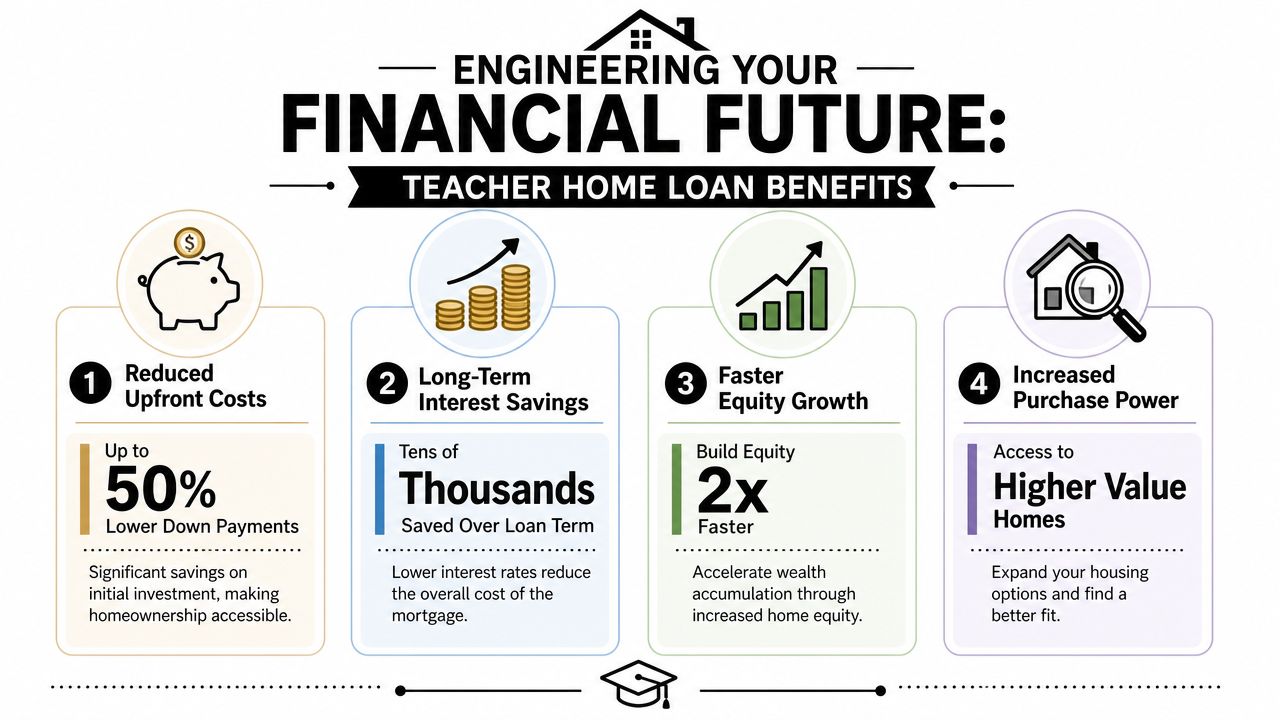
The strongest home loan programs for teachers don't just help you get in. They improve the economics of ownership after you move in. A lower rate, reduced closing costs, or a better mortgage structure can matter just as much as upfront assistance.
Rate concessions
A small rate improvement is not cosmetic. It changes the loan.
The Colorado Housing and Finance Authority's Teacher Mortgage Assistance Program offers an additional 0.125% reduction on already below-market interest-rate loans for teachers, and that reduction can save thousands of dollars in interest over the life of the mortgage according to CHFA's teacher mortgage assistance information.
That matters because mortgage affordability isn't just about getting approved. It's about what the loan costs month after month and year after year. Even a modest pricing improvement lowers the interest portion of each payment and reduces total finance charges over time.
Cash flow and closing costs
Some educator-focused products also relax underwriting or reduce upfront friction. The practical effect is simple. Buyers may need less cash at closing, and they may have a cleaner path through approval if their balance sheet is solid but not oversized.
Here's how the savings usually show up:
- Lower upfront strain: Assistance or credits can reduce how much money you need to bring in at closing.
- More efficient debt service: A rate concession lowers borrowing cost over time.
- Potential PMI advantages: Some products reduce or avoid mortgage insurance, though those terms are product-specific.
- Better reserve preservation: Keeping more cash after closing lowers the odds that homeownership feels financially tight in the first year.
Why specialists matter here
A general lender may quote a rate and stop there. A specialist should look deeper and ask whether the structure can be improved.
A teacher program is valuable when it changes your total cost, not just when it gives you a marketing headline.
That's why comparing APR, cash to close, repayment conditions on assistance, and post-closing reserves matters more than obsessing over one advertised benefit. Buyers who understand that usually make better decisions and feel better about them six months later.
Your Step by Step Application Roadmap and Checklist
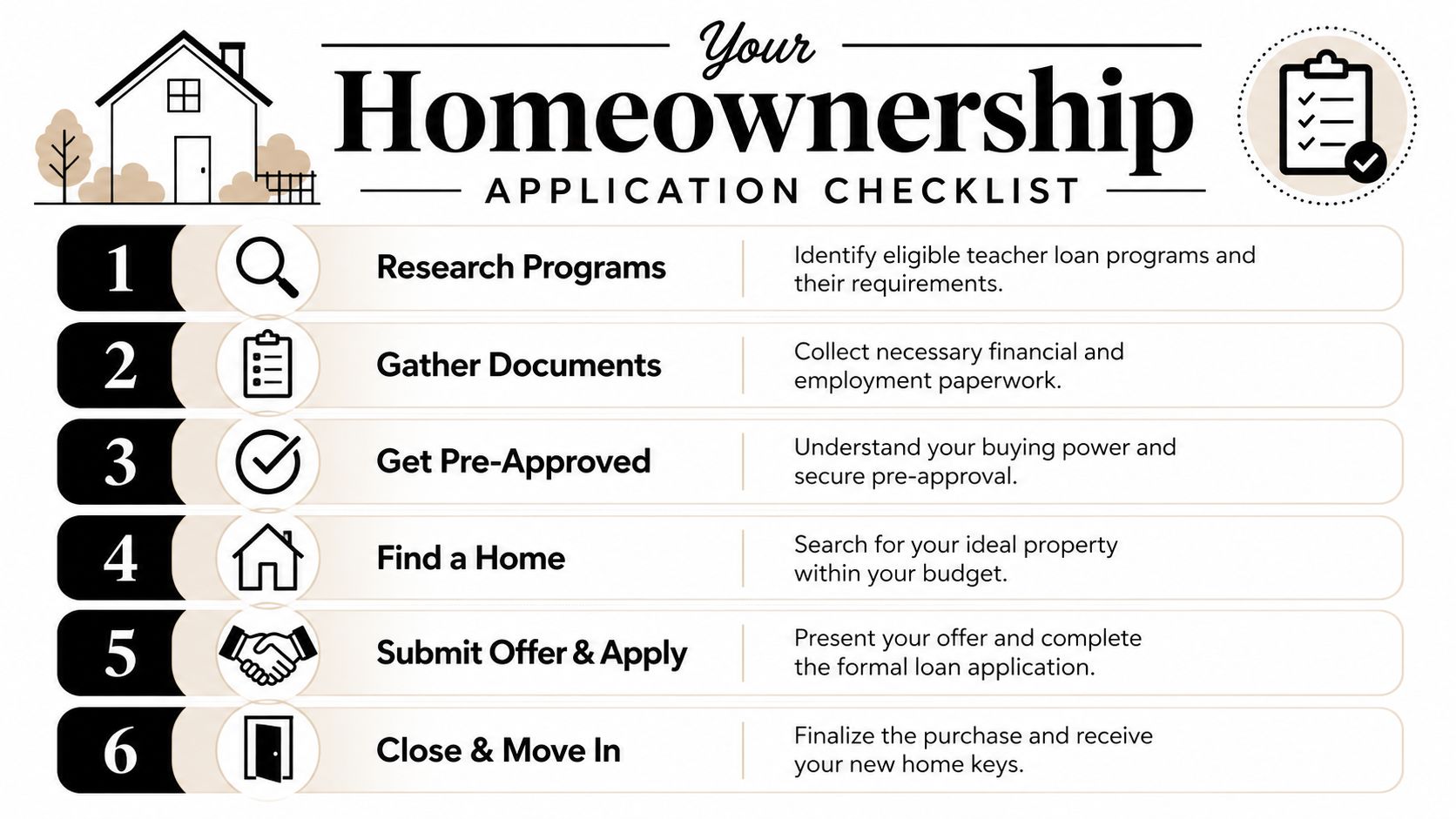
The process gets easier when you stop treating it like a mystery and treat it like a workflow. Buying a home in California as a teacher involves a lot of moving parts, but the sequence is straightforward.
Step 1 through Step 3
Get program-aware pre-approval first. Don't shop homes before you know which assistance may apply. A teacher-focused pre-approval should review income, debt, reserves, employment, and any assistance options that can be layered.
Gather your documents early. This prevents delays when you find the right property. Most buyers lose momentum because paperwork starts too late.
Set a real monthly comfort level. Approval amount and comfort level are not the same thing. Build your target payment around your actual life, not the lender's maximum.
Step 4 through Step 6
Shop for homes that fit the rules. Some assistance programs care about occupancy, location, or property type. Don't fall in love with a home before confirming the basics.
Write the offer with financing strategy in mind. Your loan structure should already be mapped before the offer goes out. That keeps the transaction cleaner once you're under contract.
Stay responsive during underwriting. Most closings don't go sideways because buyers are unqualified. They go sideways because documents dribble in late or questions sit unanswered.
Here's the simplest document checklist to start from.
Document checklist
- Recent pay stubs: Enough to verify current income and employment.
- W-2s and tax returns: Usually needed to document earnings history.
- Bank statements: Used to verify available funds and reserve position.
- Teaching credentials or employment verification: Helpful when a program requires educator status.
- Photo ID: Required for standard loan documentation.
- Debt and asset details: Include any large deposits or payment obligations that may need explanation.
If you're buying your first home, this process feels more manageable when you follow a clear sequence like the one outlined in these steps to buying your first home. The biggest mistake is waiting until you've found a house to figure out financing. In California, financing comes first.
Navigating the Fine Print and Avoiding Common Traps
The biggest trap in home loan programs for teachers is believing the headline before reading the restrictions.
A program can be legitimate and still be a bad fit for you. That's normal. The issue isn't that the program is misleading by default. The issue is that buyers often see the savings and ignore the conditions attached to them.
According to AmeriSave's guide on teacher home loan programs, a major tradeoff exists between headline savings and real eligibility. HUD's 50% discount is limited to specific revitalization areas and requires a 36-month residency. Many state programs also come with income caps, sales price limits, or repayment requirements if the home is sold or refinanced too soon.
The fine print that matters most
- Employment rules: Some programs are limited to public-school educators or require current verification from an eligible employer.
- Occupancy requirements: If you need flexibility to move, rent out the property, or refinance quickly, some assistance structures may work against you.
- Repayment triggers: Deferred or forgivable aid can still become repayable if you sell or refinance within the restricted period.
- Geographic limits: A strong program on paper may be irrelevant if the property area or local funding doesn't line up.
This doesn't mean you should avoid these programs. It means you should stop treating them like coupons.
The right way to judge a teacher program is simple. Ask what it saves, what it restricts, and what happens if your plans change.
That question alone eliminates a lot of bad fits before they waste your time.
If you're a California educator and want help sorting through teacher-specific financing, layered assistance, and real-world eligibility, California Loans for Heroes is one place to start. The goal isn't to chase every program. It's to identify the combination that fits your income, property goals, and long-term plans so buying a home in California feels achievable instead of confusing.