You're applying for a California home loan, a state benefit, or an employer program, and someone has asked you to prove that you're a veteran. You find an old DD214, send it over, and then hear that the file still needs a different document. That situation is common because how to verify veteran status depends on the benefit, lender, or agency requesting proof.
The practical approach is simple. Identify the purpose first, use the document that proves the required service facts, and protect sensitive information when a full record isn't necessary. For California borrowers, getting this right early can keep a VA loan, HERO Home Loan application, or other benefit from stalling.
What Veteran Status Verification Really Means
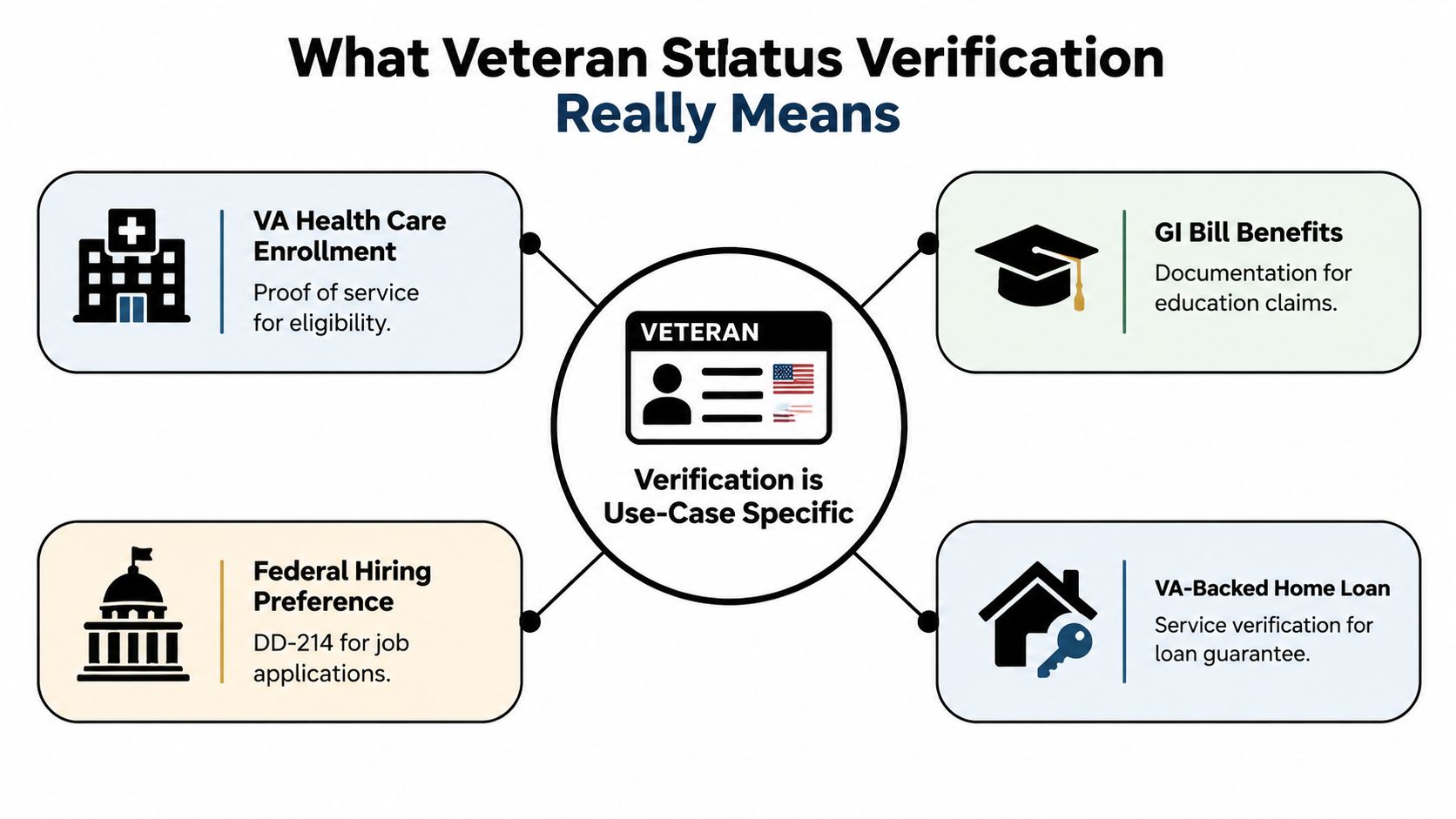
Veteran status verification isn't a single yes-or-no checklist. The proof needed for VA Health Care enrollment, the GI Bill, federal hiring preference, a VA-backed mortgage, and a California housing program may differ. Each organization must determine whether your service meets its own eligibility rules, including service dates, branch, discharge characterization, and any applicable service threshold.
That's why lenders, employers, and benefits offices treat verification as a risk-control step. They need a record they can retain and defend, not merely an identification card that says you served. The National Archives identifies the DD Form 214, officially the Certificate of Release or Discharge from Active Duty, as the standard separation document and explains that it supports service verification for benefits, retirement, employment, and veterans' organization membership. The National Archives' DD214 guidance is the right place to confirm the document's role.
Match the proof to the purpose
Start by asking the requesting party one direct question: What exactly do you need me to prove? A mortgage lender may need service eligibility for a Certificate of Eligibility, while an employer may need separation dates and discharge characterization. A health or retail program may accept a VA-issued card or eligibility letter.
The four documents most applicants encounter are:
- DD214: The primary record for dates of service, branch, and discharge characterization.
- VA-issued letters: Official confirmation for benefits, eligibility, disability, or service-related records.
- Veteran Health Identification Card: Useful for VA health care identity and access, but not automatically a complete mortgage file.
- Veteran Identification Card: A government-issued photo ID that can help confirm veteran identity in appropriate settings.
For a housing application, review the document requirements before uploading anything. The benefits of a VA loan can depend on service eligibility, but the lender still has to document that eligibility through the appropriate VA process.
Practical rule: Don't ask, “Which veteran card do I have?” Ask, “Which service fact does this application need verified?”
The Core Documents That Prove Your Service
The DD214 is usually the starting point, but it isn't the only record that may matter. The National Archives calls it the Certificate of Release or Discharge from Active Duty. It records the service details a reviewer commonly checks, including entrance and separation dates, branch, and character of discharge. For a lender or benefits office, those details are more useful than a general veteran label.
Reserve and Guard service can require different supporting records. A DD256, often associated with reserve components, and an NGB Form 22 for National Guard separation may help establish the relevant service history. A correction or additional record may be necessary if the original document doesn't clearly show the service period or discharge information.
The Certificate of Eligibility, or COE, is different from a DD214. It's a VA determination used in home-loan underwriting, confirming whether the borrower meets VA loan service requirements. It doesn't replace the underlying service record when a lender needs clarification, but it can move a mortgage file forward when the VA has already reviewed the service data.
VA letters and identity cards serve different jobs
VA.gov may provide a Service Verification Letter, Benefits Summary Letter, or Disability Rating Letter. Each letter supports a different purpose. A Benefits Summary Letter may help a lender or agency confirm VA benefits, while a Disability Rating Letter addresses disability information. Use the letter requested by the receiving organization, and don't send more personal information than necessary.
The Veteran Health Identification Card, or VHIC, is tied to VA health care identity. The Veteran Identification Card, or VIC, provides government-issued photo identification for veterans. The VA explains how applicants can sign in to AccessVA to check the status of a VIC application through its Veteran Identification Card information. ID.me also identifies several documents that can prove military status, including a DD214, state ID with a veteran endorsement, Honorable Discharge Certificate, NGB Form 22, Reserve Separation Orders, state or county veteran ID, VA eligibility letters, VHIC, and VIC.
Neither card should be treated as a universal substitute for the records required in a loan file. Match the document to the decision being made.
| Document | What It Proves | Best Use Cases | Where to Get It |
|---|---|---|---|
| DD214 | Active-duty release or discharge details, service dates, branch, and character of service | VA benefits, employment, state programs, mortgage review | National Archives, VA records request, or service records |
| DD256 | Reserve-component discharge documentation | Reserve service verification and benefits review | Military records custodian or records request |
| NGB Form 22 | National Guard separation information | Guard service and state or federal benefit review | National Guard records office or records request |
| Certificate of Eligibility | VA determination of home-loan eligibility | VA-backed mortgage underwriting | VA.gov or an approved lender |
| Service Verification Letter | VA confirmation of service information | Benefits and agency verification | VA.gov |
| Benefits Summary Letter | VA benefits information | Benefits review and some lender requests | VA.gov |
| Disability Rating Letter | VA disability rating information | Disability-related benefits or underwriting documentation | VA.gov |
| VHIC | VA health care identification | VA health care access and identity | VA |
| VIC | Government-issued veteran photo identification | Identity and eligible discount programs | VA AccessVA |
Verifying Your Status Online Through VA.gov and ID.me
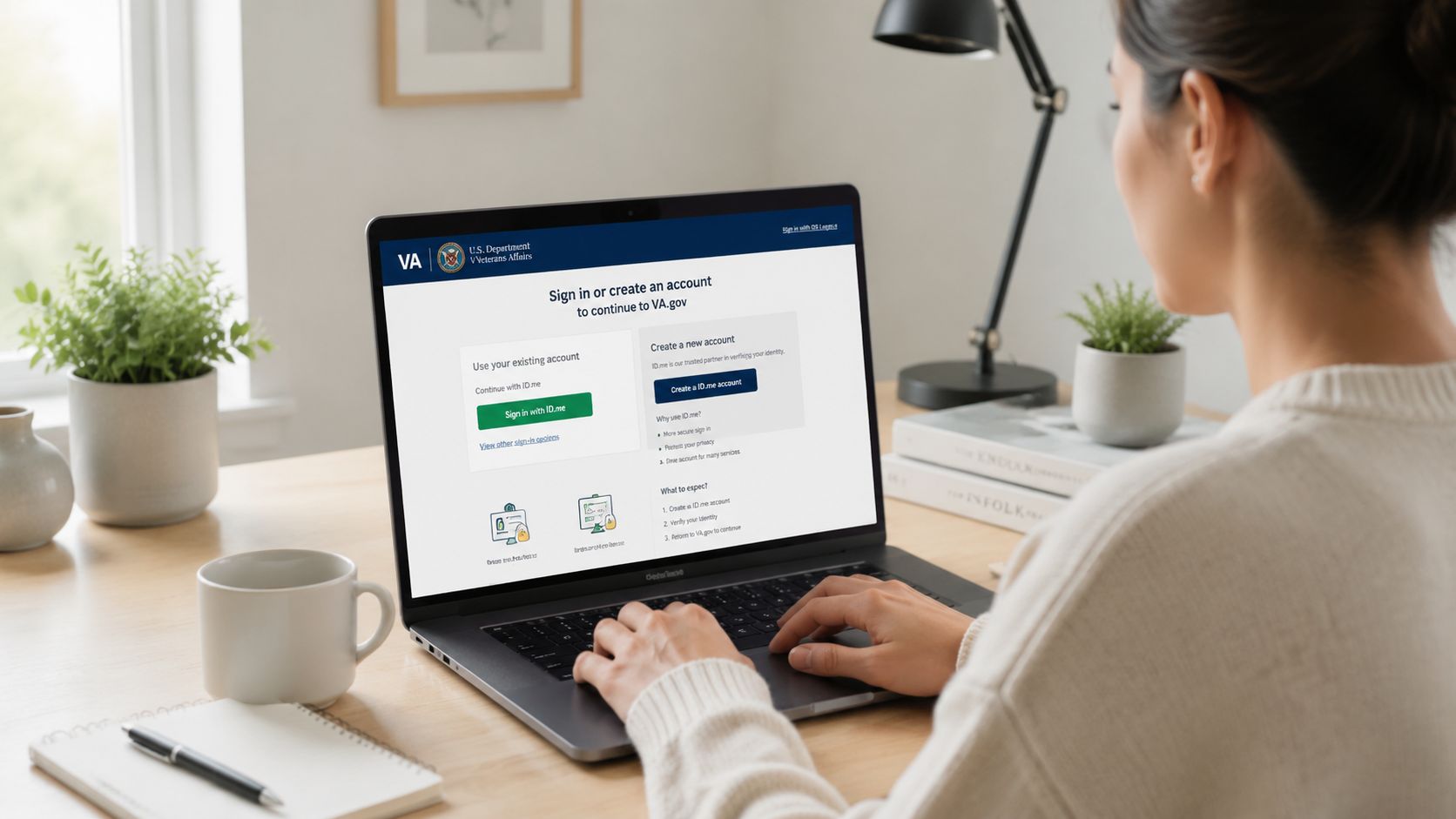
Online verification is usually the fastest first attempt, especially when you need loan documentation. Create or sign in to a verified ID.me account through VA.gov. ID.me functions as a credential service provider for VA online services, so the system can authenticate your identity before showing protected records.
Have your legal name, date of birth, and Social Security number available. The identity check may also require a supported method such as uploading a driver's license, completing a selfie-based check, or using a supported phone verification method. The VA has also expanded identity verification options, including in-person assistance at participating post offices, as described in its guidance on Login.gov in-person identity verification for veterans.
Download the document that fits the file
Once authenticated, VA.gov may display military service information drawn from Department of Defense and VA records. You shouldn't assume that every record will appear or that every requesting party will accept the same download.
For a mortgage, look for the Certificate of Eligibility or ask the lender to request it through the VA lender portal. For benefits or employment, download the Service Verification Letter or Benefits Summary Letter if that's what the agency accepts. A Disability Rating Letter is appropriate when the request concerns disability compensation or qualifying income.
If the profile is blank, incomplete, or inconsistent with your service history, don't repeatedly submit the same screenshot. Move to a formal records request. The National Archives' military service records request guidance directs users toward online request workflows, including eVetRecs and identity-verified sign-in. For a mortgage, tell your loan officer immediately that online verification didn't produce a usable record so the lender can choose the correct backup path.
Requesting Records with SF-180 and eVetRecs
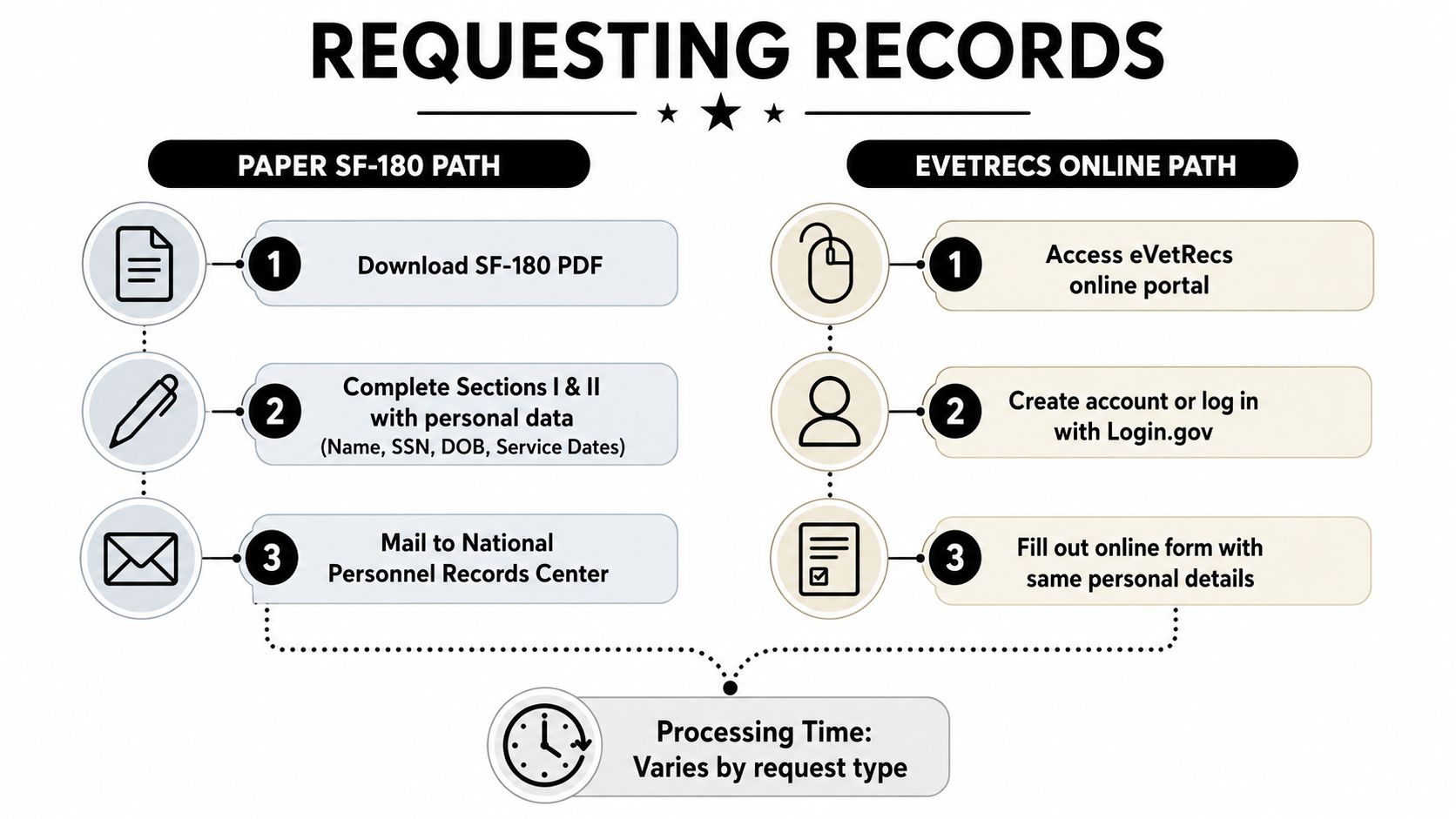
Use a formal records request when VA.gov doesn't show the information you need or your DD214 is missing. Standard Form 180 lets you request military personnel records from the National Personnel Records Center. The paper form asks for identifying and service information, such as your name, Social Security number, date of birth, branch, service dates, and duty station when known.
Complete the request carefully. Select the option that matches your need, such as a separation document, service history, or another personnel record. A request for a DD214 isn't the same as a request for a complete personnel file, so describe the exact document that will satisfy the lender or agency.
Choose paper or online based on the file
The paper SF-180 can be mailed or faxed to the appropriate address listed for the record type. eVetRecs provides an online route for military record requests through the National Archives. Current instructions direct users to sign in with an identity-verified ID.me account, which adds digital identity proofing to the request process.
Keep a copy of the completed form, confirmation page, and every document you submit. Processing time varies by request type, and a missing date, incorrect service number, or mismatched name can create another round of questions.
If the request stalls, contact the records custodian first and document the response. For a benefits or loan deadline, ask a VA representative, accredited service organization, or congressional constituent-services office about escalation options. Don't wait until closing or a benefits deadline to mention that the record request is pending.
California-Specific Verification for Home Loans
California lenders generally want a clean path from your service record to your VA loan eligibility. The central mortgage document is the Certificate of Eligibility, or COE. You can request it through VA.gov, but an approved lender may also pull it through the VA lender portal. That lender-side request is often the most efficient option because the loan team can review the result directly and identify whether the VA needs additional service documentation.
Keep your DD214 available even when the lender obtains the COE. If the COE is delayed or the VA can't verify the service automatically, the lender may request a DD214, NGB Form 22, discharge record, or other supporting documentation. A VA-issued letter can help in some situations, but the lender decides what satisfies its underwriting and investor requirements.
California programs add their own review layer. The HERO Home Loan and California Loans for Heroes may involve program-specific paperwork, income documentation, property requirements, or residency confirmation in addition to military-service proof. CalVet farm and home loan programs also have their own application and eligibility requirements. Don't assume a VA card alone satisfies a state or lender checklist.
A California loan file moves faster when the borrower submits service proof, identity proof, income records, and California residency documents as separate, clearly labeled items.
| Program | Primary Verification Document | California-Specific Requirement | Where to Apply |
|---|---|---|---|
| VA-backed mortgage | COE, with DD214 or supporting records if needed | Property, income, credit, and lender underwriting requirements | VA.gov or an approved VA lender |
| HERO Home Loan | COE, DD214, or accepted VA verification | Program-specific eligibility and California application documentation | California Loans for Heroes or participating lender |
| California Loans for Heroes | Service documentation accepted by the participating lender | California residency and program underwriting review | California veteran home loans |
| CalVet farm and home loan | Service records and program forms | CalVet-specific eligibility, income, property, and California requirements | CalVet |
| State veteran benefits | DD214 or an accepted alternate record | Program-specific California eligibility and residency proof | California Department of Veterans Affairs or the administering agency |
Ask the program administrator for its current checklist before sending sensitive records. A lender can tell you whether it needs a full DD214, a COE, or both.
What to Do When Your Records Are Lost or Incomplete
A missing DD214 doesn't mean your service can't be verified. It means you need to build a documented replacement path instead of uploading an incomplete file and hoping the reviewer fills in the gaps.
Start with the mismatch that caused the failure:
- Lost or damaged separation record: Request the DD214 through the National Archives, eVetRecs, or SF-180. Records affected by historical loss may require supporting evidence from other sources.
- Name mismatch: Provide the legal-name history and supporting identification. Make sure the name on the loan application matches the name used in the military record or explain the difference in writing.
- Social Security number mismatch: Recheck every digit across the application, VA account, and records request. A small data error can prevent an automated match.
- Guard or Reserve history: Ask for the appropriate National Guard or reserve separation record, rather than relying only on an active-duty form.
- Discharge information that looks unclear: Request agency review or correction. Don't assume a reviewer will interpret an ambiguous code in your favor.
Supporting evidence can include buddy statements, payroll records, VA health records, orders, and other official correspondence. These items may not replace the primary record, but they can help an agency cross-check the service history.
A DD215 is generally used to correct or supplement a DD214. A records correction request is different from a discharge upgrade, which addresses the characterization or circumstances of discharge. Choose the remedy that matches the problem. If the VA needs proof of service and traditional records aren't available, ask which current VA form or successor process it wants, including whether VA Form 20-10206 is appropriate.
The VA may request additional verification through internal systems when records are incomplete or questionable. Respond with a consistent packet, not scattered documents sent at random.
Your Next Step Toward Verified Veteran Benefits
Run four questions before you submit anything:
- Which benefit or program are you pursuing? A mortgage, health care enrollment, education benefit, employer preference, and California state program may use different proof.
- Which document proves the required fact? That might be a DD214, NGB Form 22, COE, VA letter, or another accepted record.
- Is VA.gov verification enough? If the online profile is complete, download the document the recipient accepts. If it isn't, start the records request immediately.
- Does the California program need extra paperwork? HERO Home Loan, CalVet, and other state-related applications may require residency, income, and program forms alongside service proof.
Take three practical steps today. First, sign in to VA.gov and check whether you can download a usable service or benefits document. Second, if you're considering a VA mortgage, request the COE or authorize your lender to obtain it. Third, contact the California Department of Veterans Affairs or CalVet for the current state-program checklist.
Incomplete verification is one of the clearest reasons a benefits or loan file stalls. Build the file before you apply, label every document, and disclose any mismatch at the beginning. If you're ready to see which path may fit your situation, use the California Loans for Heroes eligibility check, then gather the exact service records the lender requests.
California Loans for Heroes helps California veterans and other eligible public-service professionals explore home loans, assistance options, lender credits, refinancing, and one-on-one application support. Visit California Loans for Heroes with your current service documents so the team can help identify the next verification step for your home loan.