
You've found a home you can afford on paper, but the cash needed at closing still feels out of reach. As a California teacher, firefighter, nurse, service member, law enforcement officer, or other public-service professional, you may qualify for help with the down payment or closing costs. The difficult part isn't finding a program with an attractive headline. It's determining what you'll repay, when repayment begins, and whether the assistance fits your plans for the property.
California home buyer grants can mean several different things, including a true grant, a forgivable second mortgage, a deferred junior lien, or a shared-appreciation loan. Those structures create very different outcomes when you sell, refinance, transfer ownership, or move for work. The right strategy uses the smallest workable amount of assistance and pairs it with a first mortgage that remains manageable after closing.
California Homebuyer Assistance Starts With the Right Question
A public-safety couple in California might see two possible offers. One advertises $25,000 in assistance. Another provides a smaller $7,500 forgivable loan, but the balance disappears only after five years of continued occupancy. The larger number looks better during the initial search, yet it may come with tighter income limits, restricted property locations, a recorded lien, or a repayment formula that affects a future sale.
That couple needs to ask more than whether they qualify. They need to ask whether they'll still own and occupy the home when forgiveness occurs, whether either employer may require a relocation, and whether a refinance could trigger repayment. A benefit that reduces cash to close but limits flexibility may cost more than a smaller program with simpler terms.
Practical rule: Treat every award as a financing structure, not as free cash, until the written program documents confirm otherwise.
The state's assistance market includes several models. CalHFA's MyHome Assistance Program is a deferred-payment junior lien, not a forgivable grant. Its terms allow assistance for down payment and closing costs, but repayment remains part of the long-term plan. The Dream For All Shared Appreciation Loan works differently. It can provide substantial initial assistance, while the state participates in future appreciation under the program's rules. CalHFA's program materials describe the shared-equity structure and eligibility requirements in its Dream For All program information.
Local programs add another layer. A city, county, employer, or nonprofit may offer forgivable assistance, a deferred loan, or funds tied to a particular occupation or neighborhood. HERO buyers may also have profession-specific options connected to military service, public safety, healthcare, education, aviation, or government employment.
The central question is simple: Which combination of grant, forgivable assistance, deferred lien, and first mortgage matches your employment, timeline, and resale plan? That question is more useful than ranking programs by the largest advertised amount.
Grants Are Only One Form of California Assistance
The word “grant” creates a dangerous expectation. Buyers often assume the money is permanently theirs, but California assistance commonly arrives through a second mortgage or shared-equity arrangement. The repayment terms matter more than the label used in an advertisement.
A true grant generally doesn't require repayment. A forgivable loan is different. It may be forgiven over a required period of owner occupancy, but leaving early, renting the property, refinancing, or transferring ownership can cause some or all of the balance to become due. The exact schedule and triggers depend on the program documents.
A deferred junior lien usually doesn't require a monthly payment while the borrower meets the program requirements. It can become payable when the borrower sells, refinances, pays off the first mortgage, transfers the property, or stops using the home as a primary residence. CalHFA describes MyHome as a deferred-payment junior loan, which means buyers should plan for eventual repayment rather than assume the balance disappears. The CalHFA MyHome program provides the governing structure.
A shared-appreciation loan creates a different obligation. Instead of charging a normal monthly payment on the assistance amount, the program may receive its original contribution plus an agreed share of future appreciation. That can make the initial purchase easier while reducing the equity the buyer keeps after a later sale.
| Assistance Type | Repayment Trigger | Resale Risk | Typical Use Case |
|---|---|---|---|
| True grant | Usually no repayment, subject to written terms | Lower, if no occupancy or compliance condition applies | Buyers who meet a narrowly defined funding requirement |
| Forgivable assistance | Early departure, sale, transfer, refinance, or failure to occupy | Moderate, because forgiveness may be prorated or canceled | Buyers planning to remain in the home through the forgiveness period |
| Deferred junior lien | Sale, refinance, transfer, payoff, or another program trigger | Moderate to high, depending on balance and equity | Buyers with repayment capacity who need help at closing |
| Shared-appreciation loan | Sale, refinance, transfer, or program-defined payoff event | High if the property appreciates substantially | Buyers who need a larger initial equity contribution and accept future sharing |
The practical consequence is that the largest award may not be the cheapest assistance. A buyer with a stable job and a long ownership horizon might accept a forgivable loan with an occupancy requirement. Someone expecting a transfer, career change, or refinance may prefer a smaller deferred lien or a simpler grant, even if less money is available.
Review four items before accepting any assistance:
- Repayment event: Identify exactly what causes the balance to become due.
- Forgiveness schedule: Confirm whether forgiveness is gradual, conditional, or unavailable.
- Equity formula: Determine whether the program shares appreciation or only seeks repayment of the original balance.
- Future financing: Ask whether a refinance, home-equity loan, or ownership transfer requires consent.
California's home funding resources from the Department of Housing and Community Development reflect a broader program where assistance may be deferred, forgivable, or tied to shared appreciation. Read the promissory note and regulatory agreement before you treat the funds as a permanent reduction in your purchase cost.
State Programs Buyers Should Compare
Statewide programs solve different closing and repayment problems. Compare them by future cost and market fit, not by the largest advertised award. Eligibility can turn on income, household composition, occupancy, property rules, first-time buyer status, lender participation, and available funding. A program that fits an inland purchase may still leave a buyer short in a high-demand coastal market.
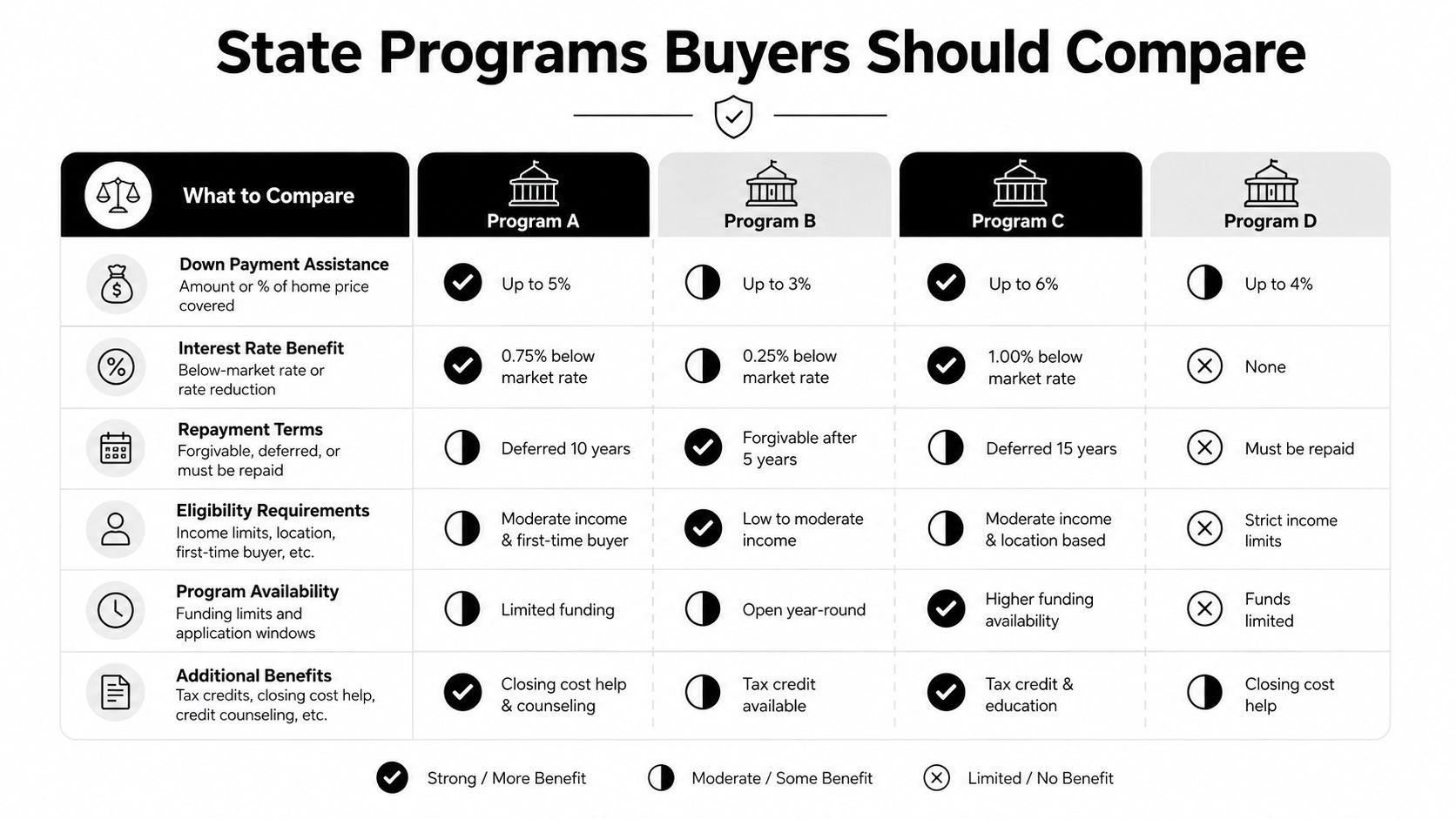
MyHome keeps the structure straightforward
CalHFA's MyHome Assistance Program provides a deferred junior lien for eligible first-time buyers. With an FHA first mortgage, assistance can reach the lesser of 3.5% of the purchase price or appraised value. With a conventional first mortgage, it can reach the lesser of 3%, according to CalHFA's MyHome program requirements.
The home must be the borrower's primary residence. Non-occupant co-borrowers are not permitted, and buyers must complete homebuyer education and meet program income limits. MyHome fits buyers who can manage the first-mortgage payment but need help with cash at closing. The assistance is repayable, so the junior lien remains part of the ownership and refinancing plan.
Dream For All lowers the upfront hurdle, then shares appreciation
The Dream For All Shared Appreciation Loan targets first-generation, first-time buyers. CalHFA states that assistance can reach up to 20% of the home purchase price or appraised value, capped at $150,000, subject to program rules. One borrower must be a first-generation homebuyer, one borrower must be a current California resident, and every borrower must be a first-time homebuyer. Household income must also fall within county-specific limits.
The 2026 application cycle used random selection and a short registration window, so availability must be confirmed before a buyer relies on the funds for an offer. This is shared-appreciation assistance, not a conventional grant. A buyer may face a larger future obligation if the home gains value, particularly at sale, refinance, transfer, or another required payoff event. Review the California Dream For All eligibility details before building an offer around this option.
Teacher assistance serves a narrower audience
The Extra Credit Teacher Home Purchase Program and CalHFA's teacher-focused options target eligible credentialed K-12 educators. Their forgivable second-mortgage structure can reduce repayment risk, but only if the buyer satisfies occupancy, forgiveness, and school-employment conditions.
Income caps, property price ceilings, county rules, and funding availability determine whether the headline benefit works in practice. Award letters may be time-limited, so coordinate lender approval, counseling, contract deadlines, and closing preparation before treating assistance as secured. California HERO groups can also compare grant, down-payment assistance, and loan combinations through California Loans for Heroes, giving eligible buyers another way to match assistance with expected ownership length and future repayment risk.
Local and Community Programs Fill the Gaps
State programs don't cover every buyer or every market. County, city, employer, and nonprofit resources create a fragmented local layer, and that fragmentation is both an opportunity and a warning. Each program sets its own income ceilings, property restrictions, occupancy requirements, funding windows, and repayment terms.
The County of Los Angeles Home Ownership Program is one example of a jurisdiction-specific resource. City and county assistance identified through platforms such as CalProfile may serve particular communities or funding priorities. Employer housing funds can help workers in expensive areas, while Habitat for Humanity affiliates may combine education, affordability requirements, and nonprofit support.
The question isn't whether a local program offers assistance. Ask whether it can be combined with your first mortgage and any state or HERO benefit. Some jurisdictions allow layered financing. Others restrict subordinate liens, impose purchase-price limits, or stop accepting applications after funds are committed.
| Program Type | Example | Typical Award | Key Differentiator |
|---|---|---|---|
| County program | County of Los Angeles Home Ownership Program | Varies by current rules | County-specific income, property, and funding requirements |
| City or county assistance | CalProfile-listed local programs | Varies by jurisdiction | May target a defined locality, household type, or occupation |
| Employer housing support | Employer-funded housing assistance | Varies by employer plan | Eligibility may depend on employment status and service area |
| Nonprofit assistance | Habitat for Humanity affiliate programs | Varies by affiliate | Often combines affordability requirements with education and participation |
Treat local assistance as a conditional resource, not as money you can count on before confirmation. Funding can be exhausted during the year, and program administrators may require an approved lender or a specific application sequence.
In expensive metros, the maximum award may improve your offer strength without making the home affordable. In lower-cost inland counties, the same type of assistance may close a larger portion of the upfront gap. Your lender should compare the benefit against the property's price, your cash reserves, and the repayment event.
Eligibility and the Application Process
The first eligibility screen should happen before you fall in love with a property. California home buyer grants and assistance programs commonly examine first-time buyer status, household income, occupancy, citizenship or lawful residency, credit, debt, assets, and education requirements. A program may also define household income differently from the income used for ordinary mortgage qualification.
Start with the program's written rules, not an online advertisement. First-time buyer status often depends on whether you've owned a primary residence during the program's lookback period, but the precise definition belongs to the program administrator. CalHFA programs also apply income limits, occupancy standards, and education requirements, as described in its first-time homebuyer assistance information.
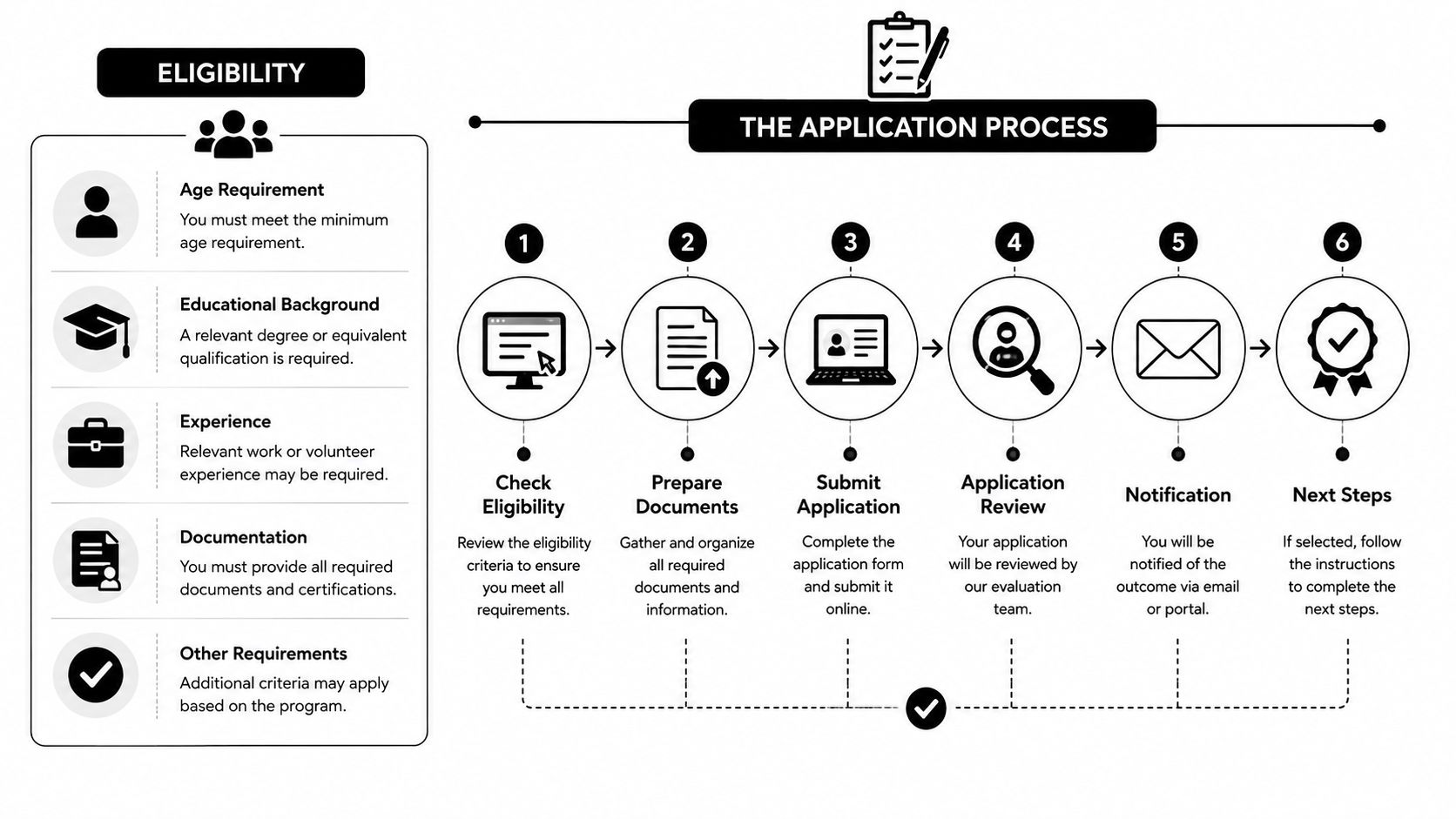
Build the file before making an offer
A lender needs enough information to evaluate both the first mortgage and the assistance layer. Gather:
- Income records: Recent pay stubs, employment information, tax returns, and documentation for variable or secondary income.
- Identity documents: Government identification and records supporting citizenship or lawful residency where required.
- Asset statements: Bank, investment, gift, and reserve documentation showing where closing funds originate.
- Housing history: Current housing payment information and evidence of any prior ownership if the program asks for it.
- Program records: Education certificates, occupation documentation, first-generation eligibility evidence, or employer verification.
Credit-score expectations and debt-to-income tolerances come from the lender and program combination. Don't assume approval under one first mortgage means approval after a junior lien is added. The assistance can affect the overall loan-to-value position, reserves, underwriting calculations, and required documentation.
Follow the sequence carefully
- Confirm eligibility. Review first-time buyer rules, income limits, occupancy terms, property restrictions, and repayment triggers.
- Choose a participating lender. Not every lender can originate or coordinate every assistance product.
- Complete prequalification. Ask for a payment estimate that includes the first mortgage, mortgage insurance where applicable, taxes, insurance, and any required subordinate financing.
- Submit the reservation or approval package. Funding may depend on a reservation, lottery selection, lender submission, or local application window.
- Complete education or counseling. Many programs require approved homebuyer education before closing.
- Sign the purchase contract within the required period. A reservation doesn't remove contract and closing deadlines.
- Coordinate the liens. The lender, escrow team, and program administrator must document the assistance alongside the first mortgage.
- Review closing and future repayment terms. Confirm what happens after a sale, refinance, transfer, or change from owner occupancy.
Funding cycles and processing times vary. Prepare early, because a delayed document, missing certificate, or expired reservation can force you to restart the process or lose access to a limited pool of funds.
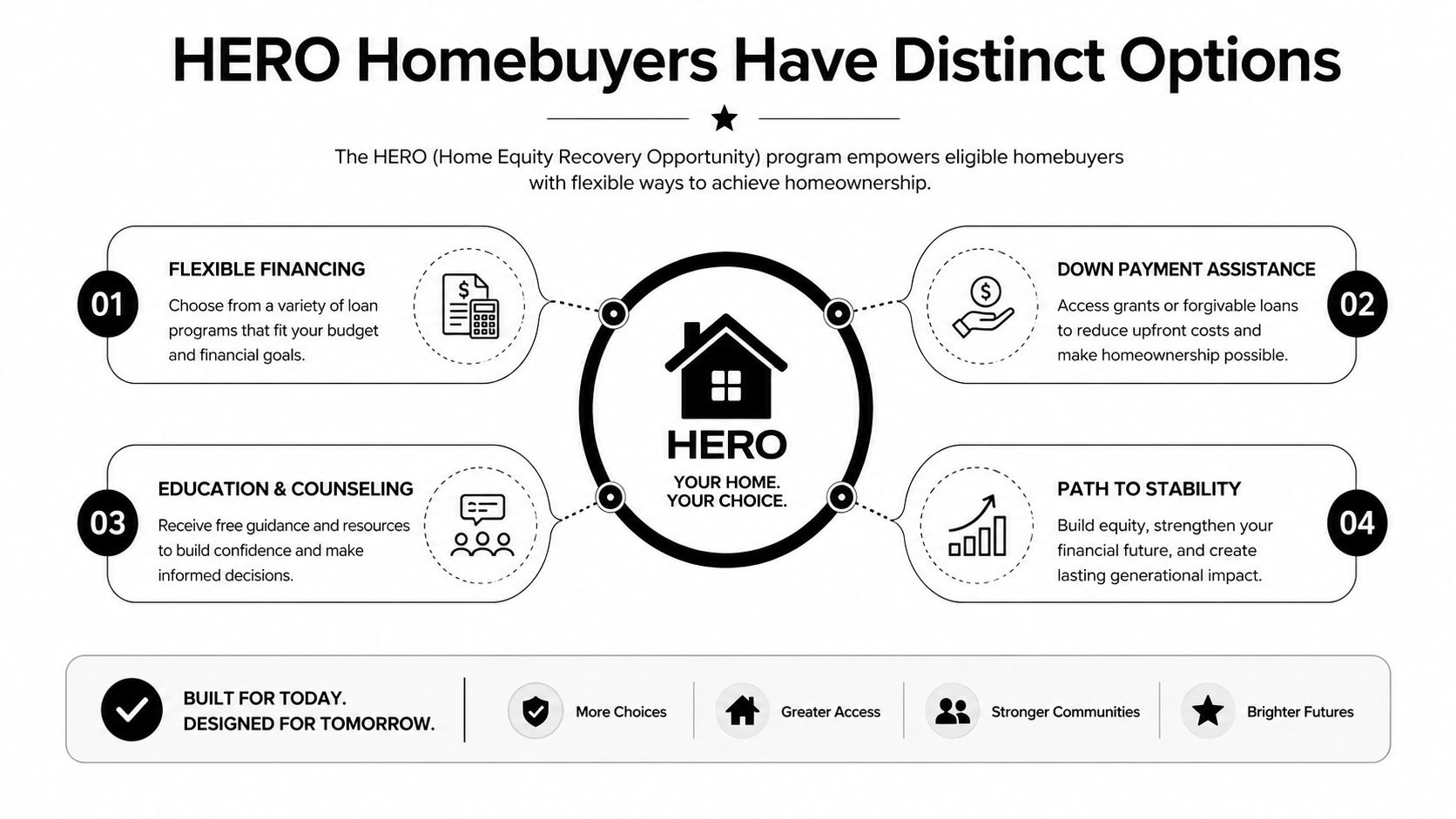
HERO Homebuyers Have Distinct Options
A public-service occupation can change the search, but it doesn't replace normal underwriting. Veterans and eligible spouses may consider VA financing. Educators may review CalHFA's School Teacher and Employee Assistance Program. Law enforcement officers, firefighters, EMS professionals, nurses, healthcare workers, pilots, and government employees may have occupation-specific assistance or employer resources worth screening.
A firefighter couple, for example, may qualify for a conventional first mortgage, a local junior lien, and profession-based assistance. A veteran may have a different priority because VA financing can change the down-payment decision and the way cash reserves are used. A teacher may need to weigh a forgivable second mortgage against a longer-term employment and occupancy commitment.
Occupation-based eligibility is a starting point for program research, not a substitute for income, credit, asset, and property review.
Professional status may open access to flexible financing, buyer assistance, lender credits, or a dedicated rebate structure. It can also create complications. A military transfer, hospital contract change, school assignment, or public-safety relocation may make a long occupancy requirement less attractive than a smaller benefit with a cleaner payoff structure.
HERO buyers should compare assistance in this order:
- Employment qualification: Verify that your role, employer, license, credential, or service history meets the program definition.
- Loan compatibility: Confirm whether the benefit works with VA, FHA, conventional, USDA, or another first mortgage.
- Cash-to-close impact: Calculate how much of your own money remains required after assistance.
- Repayment exposure: Review the effect of sale, refinance, transfer, or rental conversion.
- Household flexibility: Consider a future relocation, marriage, job change, or change in family size.
California Loans for Heroes connects eligible professionals with home loan and buyer assistance options, including down-payment assistance, refinancing resources, and one-on-one support. Its HERO home rebate program can be evaluated alongside state, local, and employer resources rather than treated as a replacement for them.
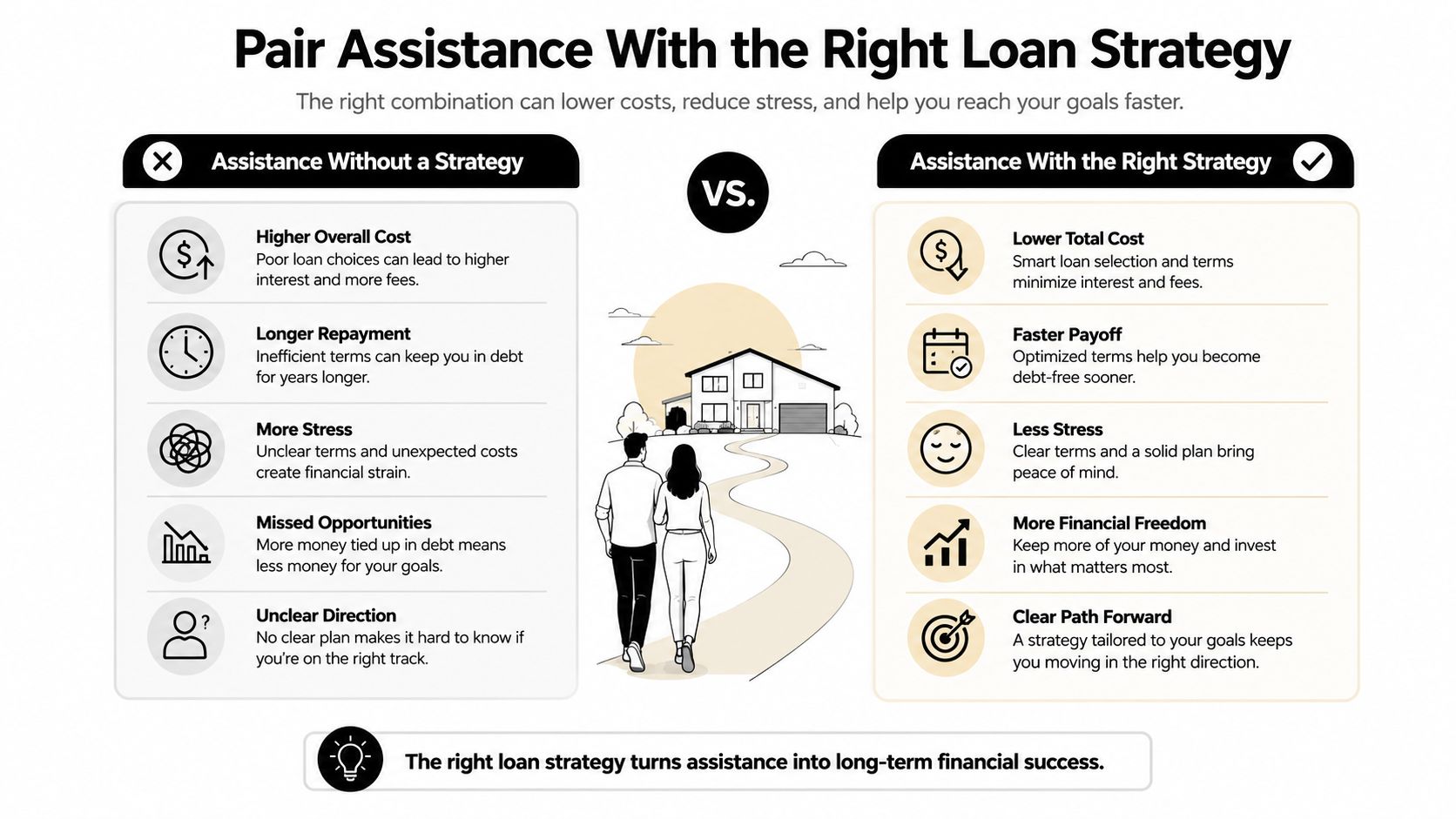
Pair Assistance With the Right Loan Strategy
A grant or assistance package is useful only if the first mortgage can support the home over time. CalHFA junior financing, county funds, a HERO benefit, or an employer contribution must satisfy both the first-lien lender and the administrator of the subordinate financing. A package with a larger headline benefit can still fail if programs cannot be combined or the added lien changes the underwriting result.
Choose the loan structure before pursuing the largest assistance amount. FHA, conventional, VA, USDA, and jumbo loans apply different standards for credit, debt-to-income ratios, mortgage insurance, reserves, appraisals, and subordinate liens. Lower cash at closing does not solve a payment that is too high or reserves that are too thin.
A layered structure could combine a CalHFA FHA first mortgage, MyHome assistance for part of the upfront requirement, and county funds for additional closing costs. MyHome FHA assistance can reach the lesser of 3.5% of the purchase price or appraised value, while its conventional limit can reach the lesser of 3%, according to CalHFA's statewide program index. The participating lender must confirm that every layer works together.
Compare the first mortgage before chasing the second
Ask the lender to show the full monthly and upfront cost:
- First-mortgage principal and interest
- Mortgage insurance, if required
- Property taxes and homeowners insurance
- Homeowners association dues, if applicable
- Deferred or repayable assistance balance
- Cash required from the buyer
- Conditions for refinancing or selling
Treat repayable assistance differently from a true grant. A deferred lien may not raise the monthly payment now, but it can become due at sale, refinance, transfer, or another triggering event. Shared appreciation requires extra scrutiny because a higher future property value can increase the payoff even when the payment remains manageable.
The right combination preserves room for maintenance, job changes, family expenses, and a future transaction. It is not automatically the package that produces the smallest check at closing.
Confirm the master-servicer rules
Before writing an offer, ask who approves the subordinate financing and how the assistance will appear in the final loan file. A county program may require a particular first mortgage, reject a product, or demand repayment before refinancing. A HERO benefit may impose separate eligibility and documentation requirements.
California Loans for Heroes can connect eligible professionals with grant, down-payment assistance, refinancing, and first-mortgage options. Review its HERO home rebate program alongside state, local, and employer resources, then compare the repayment risk and market fit of the complete package.
Avoid Mistakes and Build a Smart Plan
Most failed assistance applications don't collapse because the buyer lacked interest. They collapse because someone missed an income rule, occupancy condition, counseling requirement, reservation deadline, or lien restriction. Buyers also make offers before confirming that assistance is reserved, then discover the program cannot meet the contract timeline.
Use a simple decision framework. First, confirm the funding window and eligibility rules. Next, obtain a soft-credit prequalification and complete required HUD-approved or program-approved counseling. Then ask the lender to reserve available CalHFA or local funds before you write an offer, where the program allows that sequence.
| Pitfall | Smart-Plan Action |
|---|---|
| Missing an income limit | Have the participating lender calculate qualifying household income under the program's rules |
| Assuming forgiveness is automatic | Review the occupancy period, repayment events, and any recapture provisions |
| Ignoring refinance restrictions | Ask whether the lien must be paid, subordinated, or approved before refinancing |
| Skipping education | Complete the required counseling before the closing file becomes urgent |
| Writing an offer before reservation | Confirm funding status and align contract deadlines with the approval process |
| Underbudgeting closing costs | Keep a written cash-to-close estimate that includes layered fees and required reserves |
Choose the smallest workable assistance amount. A smaller forgivable benefit or deferred lien may preserve more future flexibility than a larger shared-equity award. Before signing, know what happens if you sell, refinance, transfer the property, rent it out, or leave California for work.
California Loans for Heroes can help eligible veterans, active-duty military members, first responders, law enforcement officers, firefighters, healthcare professionals, teachers, pilots, and public-service employees compare assistance structures and loan options. Visit California Loans for Heroes to review your eligibility, estimate the cash needed to close, and build a purchase plan that accounts for future repayment risk.