A third-year elementary teacher in Sacramento is doing the math on a one-bedroom rental that keeps climbing, a modest savings account that never seems to catch up, and a purchase price that still feels out of reach. That same conversation is happening in Riverside, San Diego, and every other California market where teachers are expected to build a life on a paycheck that doesn't stretch like housing costs do.
Many educators assume they need perfect credit, a huge down payment, and a standard mortgage to buy. That assumption is wrong. The key question is whether a teacher home loan deal beats a plain FHA 3.5% down loan, a 3% down conventional loan, or a USDA zero-down option once you factor in the fine print, the occupancy rules, and what happens if you refinance too early.
California teachers aren't failing the homebuying test. They're usually shopping with the wrong map.
Why California Teachers Are Looking at Home Loans Right Now
A teacher in California is usually not asking whether buying a home would be nice. The question is whether it's still possible after rent, commuting, student debt, and everyday life take their cut first. That's why teacher-specific financing keeps getting attention, especially when it can be layered with state and local help instead of treated like a stand-alone gimmick.
The most important shift is this. Teachers don't need to rely on one miracle program. They need a stack that reduces the upfront cash problem, lowers the monthly payment enough to matter, and doesn't create a painful surprise later. That stack can include educator-specific assistance, broader low-down-payment financing, and, in some cases, employer help tied to district service.
What matters most in California is not the marketing label on the loan. It's whether the structure fits the reality of a teacher's budget. A deal that trims cash-to-close but ties the borrower up for years can be useful, but only if the math still works after the first few years.
Teachers are also asking better questions now. They want to know whether the benefit is a grant or a forgivable lien, whether they can refinance later, and whether their job title is eligible. Those are the right questions.
Practical rule: If the program makes the payment feel affordable but punishes you the moment you sell or refinance, it's not automatically a good deal.
By the end of this guide, you should know which programs save money, which ones just move the cost around, and how to compare a teacher deal against standard financing without getting fooled by the headline.
What Teacher Home Loan Deals Are
A lot of people use “teacher home loan deal” as a catch-all phrase, but that is sloppy. There are really three different buckets, and you need to know which one you are shopping in before you compare offers.
Three buckets that get mixed together
The first bucket is true profession-based pricing or underwriting. That is the strongest version because the profession itself changes the deal. A classic example is HUD's Good Neighbor Next Door, which gives eligible teachers a 50% discount on the list price of selected homes in designated revitalization areas, with a 36-month occupancy requirement (AmeriSave guide on home loan programs for teachers). That is not a small rate adjustment. It cuts the purchase price in half.
The second bucket is state or local educator assistance, where a housing finance agency or program adds down payment help, closing-cost support, or a forgivable second lien. Nevada's teacher program is a good example, with $7,500 for down payment and closing costs, forgiveness after five years of owner occupancy, a minimum 640 credit score, and a maximum 50% debt ratio (Nevada Home Possible Teachers). Texas and Connecticut also use occupation rules, occupancy rules, and district verification in different ways.
The third bucket is generic low-down-payment financing that anyone can use. FHA loans need only 3.5% down for qualifying borrowers, and conventional 3% down loans exist as well (LendingTree overview). These are not teacher perks by themselves. They are baseline financing tools.
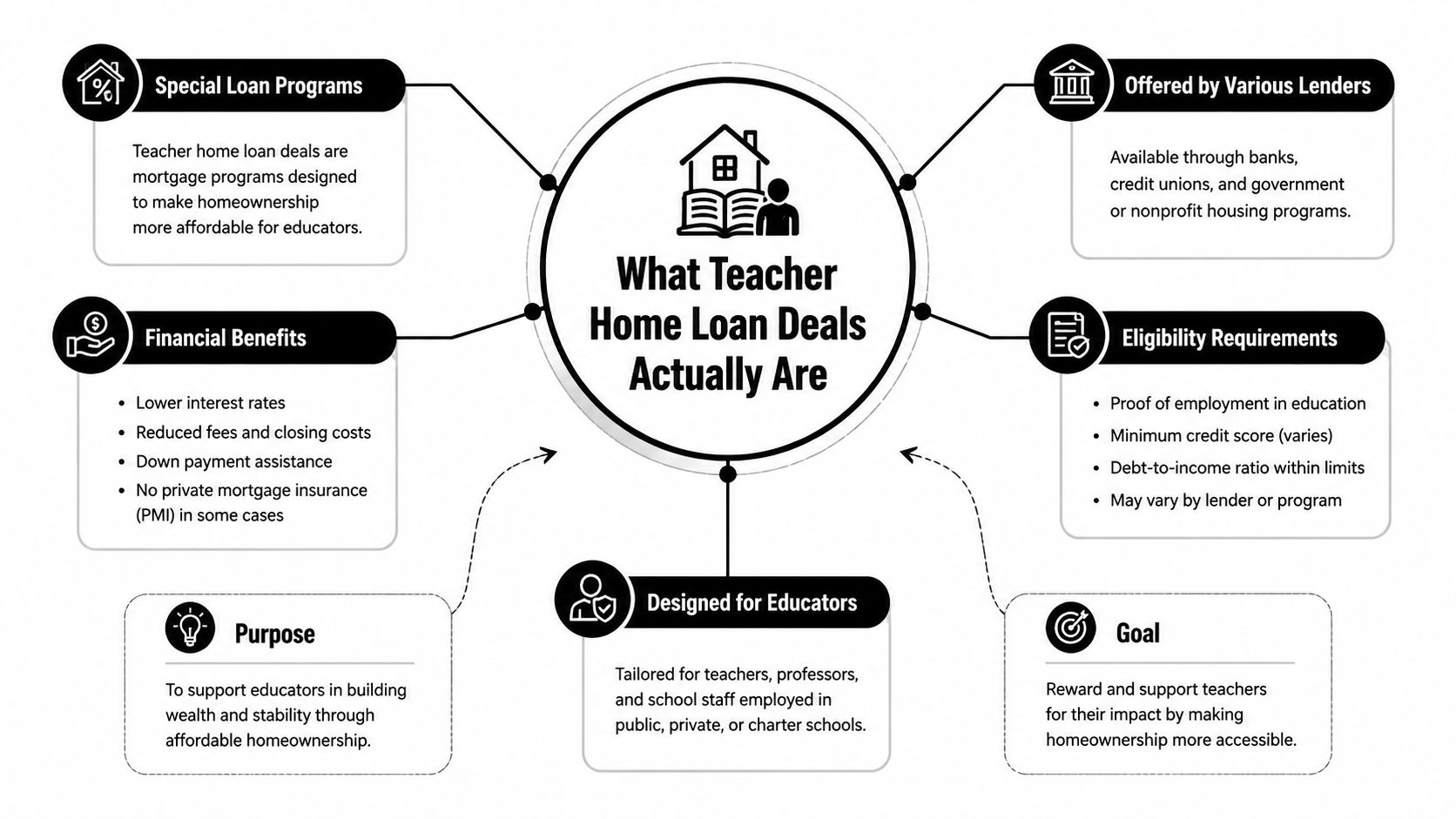
Shopping with coupons is the right comparison. One coupon cuts the price of the house itself. Another helps with checkout costs. A third just lets anyone in the store pay with less cash today. The mistake is treating them as the same thing.
If you are evaluating a teacher home loan deal, ask one question first. Does the program change the price, the down payment, the rate, or just the financing packaging? That answer tells you how much real value it has.
How Teacher Deals Compare to Standard Low-Down Mortgages
Many sales pitches fall apart at the point that matters most. A teacher-specific offer can look generous on paper and still lose to a plain FHA or 3% down conventional loan once you run the full ownership math.
The comparison that matters
| Program Type | Min Down Payment | Rate Profile | 5-Year Total Cost Trap | Biggest Limitation |
|---|---|---|---|---|
| Teacher-specific DPA or forgivable lien | Often lower cash-to-close, sometimes assisted | Can include reduced rates or lender credits, but not always | Assistance can come due if you sell or refinance early | Occupancy and repayment rules can be strict |
| FHA | 3.5% down | Usually competitive, depends on credit and lender | Mortgage insurance and upfront costs can outweigh a weak teacher perk | Mortgage insurance and property rules still apply |
| Conventional 3% down | 3% down | Often strong for borrowers with good credit | Lower upfront cash, but payment can rise with weaker credit pricing | Credit and qualification standards can be tighter |
| USDA | Zero down in eligible rural areas | Can be very cost-effective when location fits | Limited geography can kill the option before the math starts | Property location eligibility |
| HUD Good Neighbor Next Door | 50% discount on list price for eligible teachers in designated areas | The discount changes the equity picture dramatically | If you don't stay 36 months, the benefit can become painful | Very narrow property and occupancy rules |
A teacher deal only wins when the savings survive the fine print. Compare the monthly payment, the cash you need at closing, and the exit cost if you sell or refinance early. That is the ultimate test, not the brochure headline.
When the teacher deal wins, and when it doesn't
A California teacher with limited savings usually gets more value from layered assistance than from chasing one special loan. If a teacher program gives down payment help but also carries a rate markup or a forgiveness clock, the first-year savings can look good while the five-year result turns weaker. A straightforward FHA loan with lender credits can be cleaner if the educator expects to move or refinance early.
The stronger wins come from programs that reduce the home price, not just the amount financed. That is why profession-based discount programs usually beat a small fee reduction. If you want a California example of how that kind of structure can work, California Loans for Heroes down payment assistance for teachers is the kind of resource to check against the rest of your loan options.
Bottom line: If you expect to stay put and the assistance does not claw back on you, teacher programs can beat standard loans. If you might move or refinance soon, the plain FHA or conventional route can be smarter.
California Programs That Stack for Teachers
California teachers need to stop looking for a single magic program. The better move is to stack the right pieces in the right order so one layer does not cancel out another.
The stack that makes sense
Start with employer or district assistance if your district offers it. Many school systems and county offices of education use first-time homebuyer support, and those programs often come with their own paperwork and service commitments. Then layer in CalHFA if you qualify, because CalHFA conventional and FHA structures are built to work with down-payment help. After that, check whether a HERO-style rewards structure fits your lender path and property type. A practical starting point is the California educator resource page at California Loans for Heroes down payment assistance for teachers.
The order matters. Employer funds can come with a stay-in-district commitment, and you do not want to break that promise by choosing the wrong loan structure first. The same risk applies if one layer is forgiven over time and another layer expects you to remain in the home or in the job. Stack from the most restrictive program outward.
What to gather before you apply
Bring the documents that prove you're eligible, not just employed.
- Employment verification: Ask your district or HR office for written confirmation of full-time status, job title, and start date.
- Income proof: Collect recent pay stubs and your W-2s.
- Program rules: Confirm CalHFA income limits and any employer commitment period before you sign anything.
- Household details: Be ready to explain whether you're buying solo or jointly, because some educator products change by borrower mix.
- Property constraints: Verify primary-residence rules before you shop for homes.
The most common mistake I see is educators applying in the wrong order and then learning a local benefit gets reduced or voided. That is avoidable. The lender should know how to coordinate assistance layers, not guess.
California Loans for Heroes also offers a Teacher/Educator home loan program for current, former, or retired members of CalSTRS and employees of California accredited private, charter, public school district, California State University, junior college, or private college. If your job fits that lane, it is one more option to compare against standard financing instead of assuming the bank will sort it out for you.
Qualifying When You Are Not a Full-Time Classroom Teacher
A lot of educators talk themselves out of applying because they are not a textbook 10-month classroom teacher with one clean W-2. That is a mistake. Many lenders can work with school-year income, stipends, and split pay if the file is documented the right way.
Who should still ask the question
Permanent substitutes, part-time school employees, counselors, nurses, and educators with multiple school-related jobs should ask directly whether the program accepts their title. Some do. The source set shows that SESLOC includes permanent substitutes and part-time school employees, while Texas's educator program limits eligibility to K–12 public school roles like teacher, aide, librarian, counselor, or school nurse (TSAHC teacher home loans).
California borrowers should also compare educator offers with broader public-service options. A program like government employee home loans can fit some school staff who do not match a narrow teacher-only label, especially when the job is steady and the income is easy to document.
The point is simple. Program rules are narrower than the marketing suggests, but they are also broader than many buyers assume. Do not reject yourself before the lender reviews the file.
How lenders usually look at variable income
Variable school income is usually documented, not ignored. Summer pay, stipends, coaching work, and tutoring income can sometimes be counted if the lender can verify history and consistency. Multiple W-2s from different districts are not a deal breaker by themselves either. What matters is whether the lender can build a stable qualifying picture from the paperwork.
Ask the lender one direct question, “Will you average my school-year income, or do you need a different method for stipends and summer pay?”
That single question tells you whether the lender knows educator files or is guessing. If they sound unsure, move on.
For California educators, the practical move is to work with a lender or broker who handles public-service borrowers often. If your income is split across assignments, do not let a call center tell you no before a specialist reviews the file.
The Hidden Costs That Erode the Headline Benefit
A teacher deal can look cheap on the front end and still lose ground later. That happens fast when the assistance is tied to a repayment clock, a refinance trigger, or a property rule you did not read closely.
Five traps that catch teachers
- Forgivable assistance can snap back: If you take down payment help and sell or refinance before the forgiveness period ends, you may owe it back.
- Rate markups can cancel the win: Some educator programs price the loan worse if the lender sees more credit risk. One educator program structure notes a rate markup tied to creditworthiness.
- Occupancy rules are strict: Good Neighbor Next Door requires 36 months of occupancy, and that rule is not decorative (AmeriSave guide).
- Refinancing too early can backfire: A teacher who takes $10,000 in assistance and refinances in year three for a kitchen remodel can suddenly owe the full amount back if the lien hasn't been forgiven yet.
- Property limits can block the deal: Some programs only work in designated areas or through eligible lenders, so the right borrower can still get shut out by the wrong property.
The trap is simple. Teachers see the headline help and treat it like free money, then the details take it back when they move districts, refinance, or sell sooner than planned.
Model the five-year exit, not just the first closing
If you think you might move, refinance, or pull equity in the next few years, run the worst-case scenario before you sign. Ask what happens to any second lien, what triggers repayment, and whether the benefit survives a standard refinance. The upfront savings only matter if they still exist when your life changes.
For a clean breakdown of how lender fees and assistance costs show up, read the closing costs breakdown for California teacher and public-service loans. That is more useful than a glossy flyer and a vague promise.
A Practical Checklist Before You Talk to a Lender
Don't walk into a lender meeting with hope and a vague job title. Bring proof, ask harder questions, and compare the teacher deal against standard financing before you commit.
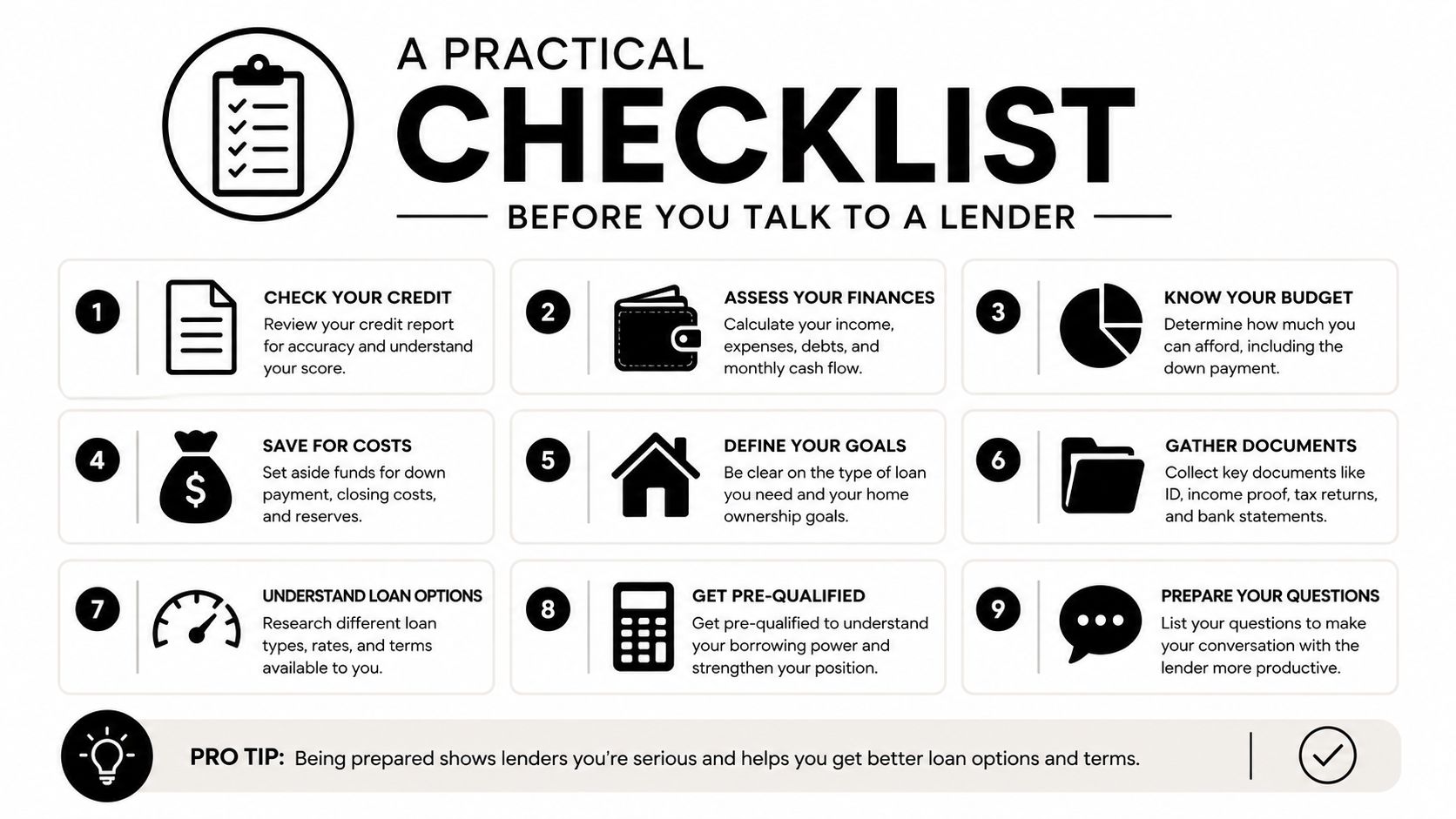
- Pull your tri-merge credit report so you know exactly where you stand before the lender does.
- Gather two years of W-2s and your most recent pay stub.
- Confirm CalHFA income eligibility before you fall in love with a property.
- Ask your district about employer homebuyer assistance and whether it requires a service commitment.
- Verify your exact job title is eligible, not just “teacher” in the broad sense.
- Ask whether summer pay, stipend income, or multiple school W-2s can be counted in your file.
- Check the occupancy requirement length and write it down.
- Find out whether the assistance is a grant or a forgivable lien.
- Run the five-year worst-case scenario if you refinance or sell early.
- Compare the offer against FHA, conventional 3% down, and USDA before you decide.
The lender you want is the one who closes teacher loans in California every week, not the generic call center that handles everybody the same way. Bring this checklist, get straight answers, and don't sign until you understand exactly what you'd owe if life changes sooner than planned.
Questions California Teachers Ask Before They Apply
Can a California teacher combine CalHFA assistance with a HERO-style rewards program on the same loan? Sometimes layered assistance works, but only if the lender and each program allow it. The safe move is to confirm order, occupancy rules, and whether one program counts as a conflict before you lock the file.
How long after starting a teaching job in California do you qualify for occupation-based pricing? There isn't one universal clock. Programs vary by lender, district, and whether the deal depends on current employment, so the lender needs to verify your status and not just your job title.
Are charter school teachers eligible for the same deals as public school teachers? Sometimes, but not always. Some programs are limited to public school districts, while others include accredited private, charter, and college employees. Always check the exact employer rule before you apply.
What happens if you change districts or leave teaching during a forgiveness period? That can trigger repayment if the assistance is tied to continued employment or occupancy. If the benefit is a forgivable lien, the forgiveness clock matters, so ask for the written payoff rules before you close.
California Loans for Heroes can help you compare teacher-specific financing with standard low-down-payment options and figure out which structure saves money over time. If you want a straight answer on layering assistance, down payment help, and lender credits in California, visit California Loans for Heroes and start with a lender who knows educator loans inside and out.