
You bought the house. The keys are finally in your hand. Maybe you used a California HERO-focused homebuying path because every dollar mattered, and you wanted to do this the smart way. Then, a few weeks in, the air conditioning quits during a heat wave, or the water heater gives out right before a long shift.
That's the moment a lot of new homeowners realize something fast. Owning the home is one budget. Keeping it running is another.
If you're a veteran, first responder, nurse, teacher, law enforcement officer, firefighter, pilot, or public employee, you already know how to plan for what can go wrong. That mindset helps with homeownership too. Home warranty coverage isn't magic, and it won't fix every problem. But when you buy the right plan, read the contract carefully, and use it correctly, it can take a nasty repair surprise and turn it into a manageable service call.
Your California Home and Its First Unexpected Hiccup
You get home after a long shift, walk into the house you worked hard to buy, and something already fails. The dishwasher will not drain. The garage door opener stalls. The furnace stays dead on a cold Central Valley morning.
That first repair hits differently in a new home. You are still settling in, still rebuilding savings after closing costs, insurance, escrow, and the rest of the paperwork California buyers know too well.
For California HERO program buyers, the pressure is often sharper. You bought with discipline in one of the toughest housing markets in the country. You followed the rules, tracked the numbers, and got to the finish line. A surprise repair bill right after closing is more than annoying. It can throw off the whole plan.
The importance of early planning
A house does not wait for your budget to recover. Heating and cooling systems fail on their own timeline. So do water heaters, electrical components, and kitchen appliances.
Your job is to protect cash flow early, especially if your work already demands odd hours, overnight shifts, or fast response times. If the air conditioning quits during a Southern California heat spell, or the water heater dies before a 5 a.m. shift, you need a repair path that is clear and affordable.
California adds another layer. Sellers and home warranty companies operate under state consumer protection rules, and contracts can differ in service fees, coverage caps, response times, and exclusions. HERO buyers should pay attention to those details from day one, because the right contract can limit a small home crisis from turning into a budget problem.
Practical rule: If a broken system or appliance would force you to dip into emergency savings, miss work, or scramble for a last-minute contractor, price out a home warranty before the first breakdown happens.
That is a key reason many California buyers look at warranty coverage early. They want a plan for the first hiccup, not a lecture after the bill arrives.
What Is Home Warranty Coverage Really
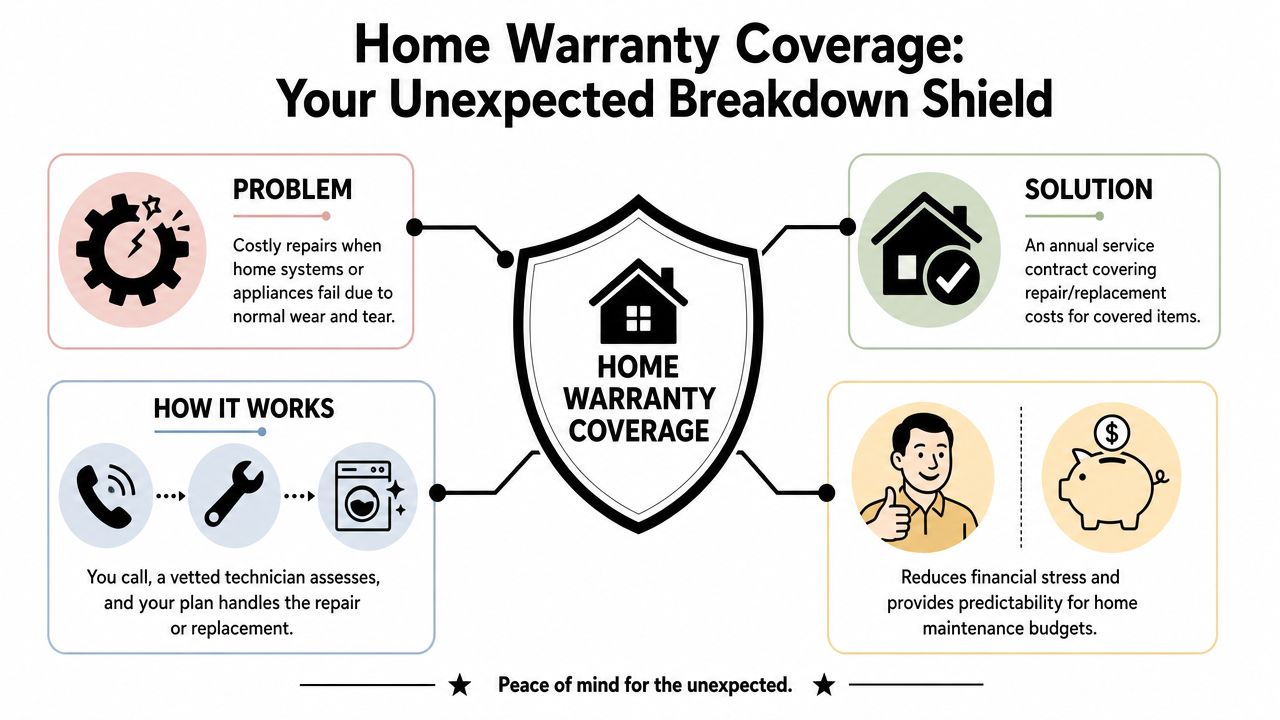
A home warranty is best understood as a service contract for breakdowns, not a catch-all promise for every home problem. Consider it a repair plan for the major working parts of the house.
It exists for the stuff you use every day. Heating. Cooling. Electrical. Plumbing. Appliances. When one of those covered items fails from normal wear and tear, you file a claim, pay the service fee required by your contract, and the company sends a technician from its network.
The simplest way to think about it
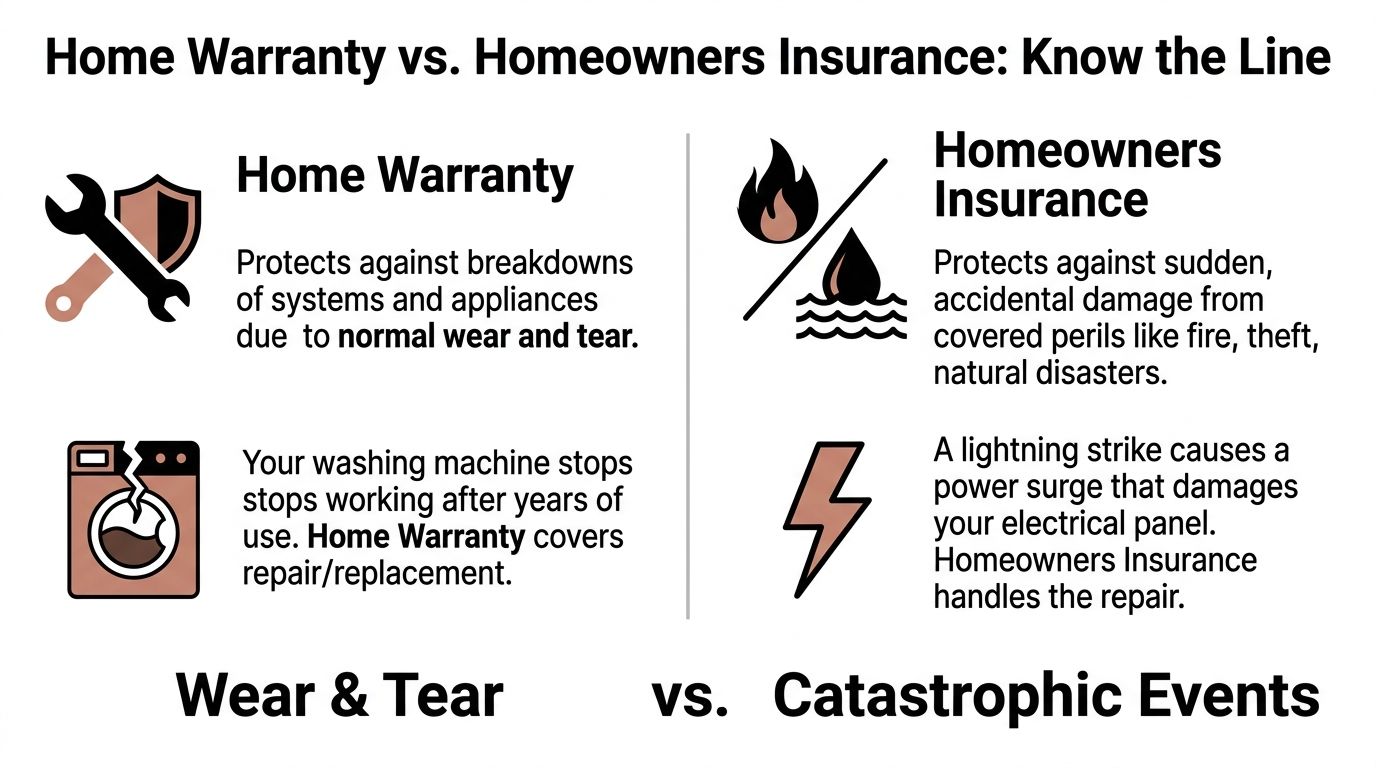
If homeowners insurance is for disaster, a home warranty is for wear and tear on covered systems and appliances.
That distinction matters because people often buy a warranty expecting broad protection, then get angry when a claim falls outside the contract. The contract is the product. If the item isn't covered, or the failure is excluded, the warranty company doesn't owe you a repair just because the timing is bad.
Why many buyers still choose it
The value isn't that every claim gets approved. The value is that many ordinary mechanical breakdowns can become more predictable to budget for.
Here's the financial logic:
- Known annual cost: A plan often has a fixed yearly or monthly price.
- Known service fee: You usually pay a set fee each time a technician comes out.
- Less volatility: Instead of taking every repair hit at full retail cost, you shift some risk into the contract.
That budgeting appeal is one reason the market keeps expanding. The U.S. home warranty industry reached $3.9 billion in revenue in 2023, after an average annual growth rate of 3.4% from 2018 to 2023, according to ConsumerAffairs home warranty statistics.
A good home warranty doesn't replace an emergency fund. It protects that fund from getting drained by the first avoidable breakdown.
What it is not
It's not a maintenance plan. It won't reward neglect. It won't usually cover upgrades, cosmetic fixes, or unrelated damage caused by the breakdown. And it won't make an old house act like a new one.
If you go in expecting a limited but useful contract, you'll judge plans correctly. If you go in expecting a superhero cape for the whole property, you'll buy the wrong thing.
What Is Covered and What Is Not
Buyers often get tripped up. Most plans look broad in the ad and narrow in the contract. Read the contract.
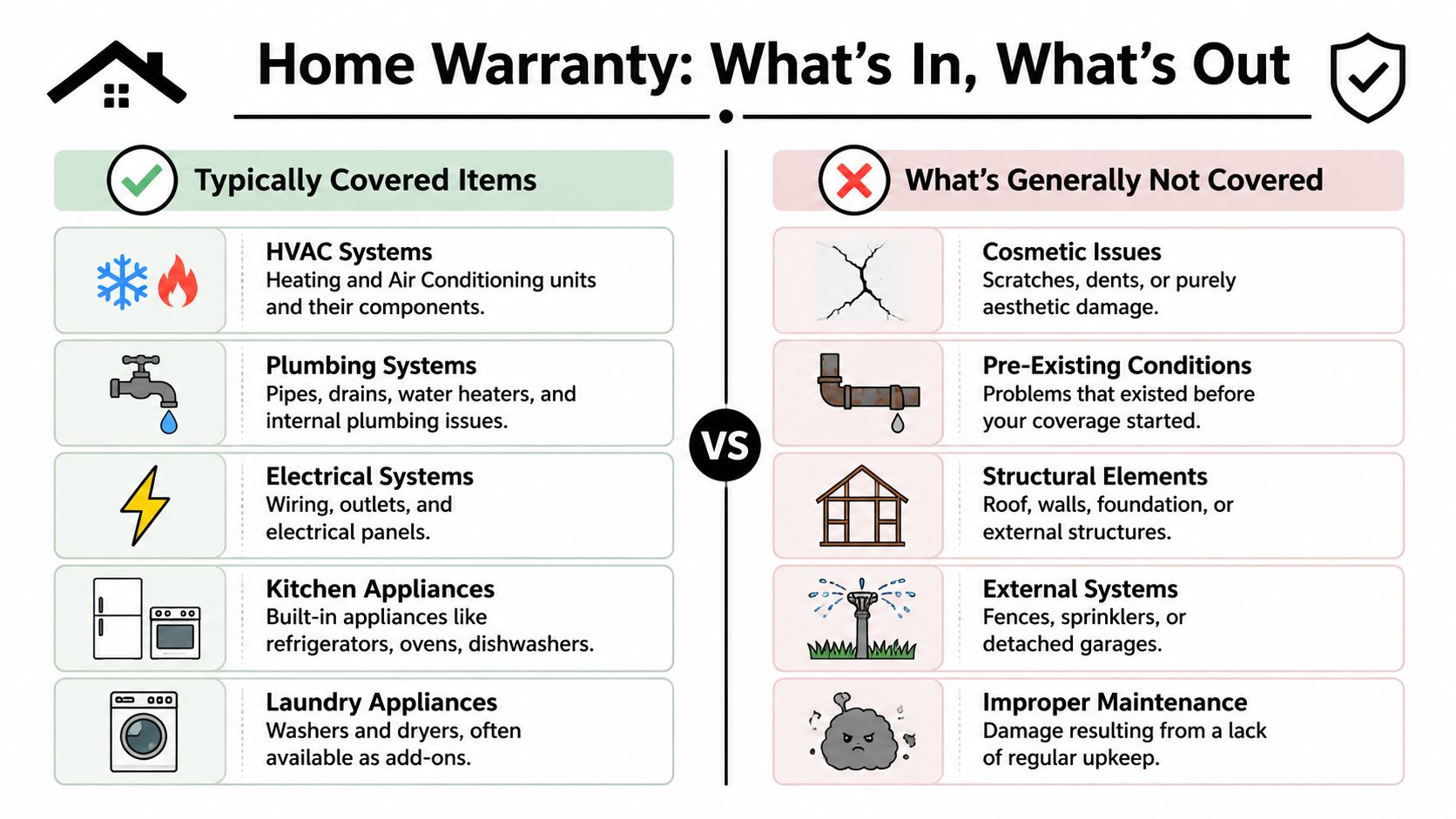
Standard home warranty coverage usually centers on the home's core operating systems and major appliances. That often includes HVAC components, plumbing systems, electrical systems, and kitchen appliances. Some companies also offer optional coverage for laundry equipment, roof leaks, pools, septic systems, or other extras, but those usually aren't automatic.
What usually falls inside the fence
Here's the practical version of what many plans are built around:
| Area | Typical focus |
|---|---|
| HVAC | Heating and air conditioning components |
| Plumbing | Internal plumbing issues and water heater-related items |
| Electrical | Wiring, outlets, and serviceable electrical components |
| Kitchen appliances | Oven, dishwasher, built-in microwave, garbage disposal, refrigerator in some plans |
| Laundry | Washer and dryer, often as optional coverage |
That doesn't mean every provider covers each item the same way. It means these are the categories most buyers should inspect first.
What usually gets excluded
The expensive surprises often sit outside standard coverage. Common trouble spots include cosmetic damage, structural issues, exterior items, code upgrades, and damage tied to poor maintenance.
Pay attention to these red flags:
- Cosmetic damage: Scratches, dents, chipped finishes.
- Structural elements: Foundation, walls, framing, and often roof-related issues unless added separately.
- Exterior systems: Sprinklers, detached structures, outdoor lines, and fencing.
- Secondary damage: If a covered appliance causes water damage to floors or cabinets, that resulting damage often isn't part of the warranty contract.
- Maintenance neglect: Dirty filters, ignored leaks, and long-term wear that points to lack of upkeep can trigger denial.
The pre-existing condition trap
This is the clause that burns a lot of first-time buyers.
Pre-existing conditions are almost never covered unless the contract explicitly says otherwise. That's not a small technicality. It's one of the biggest reasons buyers misunderstand what they're purchasing. According to Dwellness guidance on questions to ask home warranty companies, 30% of first-time buyers ask whether pre-existing conditions are covered, and most providers exclude them as a standard clause.
If an HVAC unit was already failing before coverage started, don't assume the warranty will bail you out. Get the exact exclusion language in writing.
What to verify before you buy
Use this checklist when reviewing any contract:
- Coverage caps: Ask how much the plan will pay per item, per repair, or per contract term.
- Waiting periods: Find out when coverage starts.
- Excluded components: A plan may say it covers air conditioning but exclude parts you assumed were included.
- Maintenance requirements: Keep records for filter changes, servicing, and upkeep where relevant.
- Replacement rules: Some contracts repair first and replace only when repair isn't practical.
The best buyers aren't the ones who buy the cheapest plan. They're the ones who know exactly what they bought.
Home Warranty Versus Homeowners Insurance
These products solve different problems. Mixing them up is one of the easiest ways to waste money and file the wrong claim.
A home warranty handles covered breakdowns caused by ordinary use over time. Homeowners insurance handles sudden damage from covered perils such as fire, theft, or certain weather-related events. One is about mechanical failure. The other is about property loss and damage.
Side-by-side reality check
| Situation | Likely first stop |
|---|---|
| Oven stops heating after years of use | Home warranty |
| Water heater fails from wear and tear | Home warranty |
| Fire damages the kitchen | Homeowners insurance |
| Storm damages the roof | Homeowners insurance |
| Theft of personal property | Homeowners insurance |
| Lightning-related electrical damage | Homeowners insurance |
Why confusion gets expensive
A lot of new owners blur the line. According to 2-10 Home Buyers Warranty guidance on common warranty questions, 45% of new homeowners confuse routine system repairs with storm or fire damage, and 60% of warranty denials in 2026 stem from this confusion.
That number should get your attention. Denials aren't always about fine print tricks. Sometimes the claim was aimed at the wrong product.
The clean rule to follow
Ask one question first: Did this fail from use, or did it get damaged by a covered event?
If it failed from age, operation, or wear, your warranty may be relevant. If something sudden damaged the home itself, insurance is usually where the claim starts.
Buy both with different expectations. Insurance protects the structure and major losses. A warranty can protect the systems and appliances that keep daily life moving.
California buyers should also know there's another category that sometimes enters the conversation with new construction or builder protections. Structural warranty coverage is different from a third-party home warranty. Don't lump them together. Read each contract on its own terms.
Understanding Costs and Contracts in California
You close on the house. Two months later, the air conditioner quits during a California heat wave. Now the question is simple. Did you buy a contract that helps, or one that only looked cheap on paper?
That matters for California HERO buyers. You already have enough to track between the mortgage, taxes, insurance, and any energy-related improvements tied to the property. A home warranty should reduce surprise repair costs, not add another bad financial decision.
A warranty usually costs you in two places. You pay the premium, either monthly or annually. Then you pay a service call fee each time you request service for a covered issue.
What California buyers should expect to pay
As noted earlier in the article, combo plans that cover both systems and appliances often fall into a mid-range annual price band, and service fees commonly sit somewhere between a lower and higher per-visit charge. Use that as a rough baseline, not a buying signal.
A very low advertised price usually means one of three problems. Higher service fees, tighter exclusions, or lower payout caps.
Read the sample contract before you sign.
What changes the price
Several contract choices push the cost up or down:
- Home size and system count: More square footage and more covered equipment usually mean a higher premium.
- Plan type: Appliance-only and systems-only plans cost less than combo plans because they cover less.
- Optional coverage: Pool equipment, roof leak protection, well pumps, and other add-ons raise the price.
- Service fee structure: Some companies offer a lower premium if you accept a higher fee each time a technician comes out.
That last point gets expensive fast if an older home needs multiple visits in the first year. California buyers using HERO financing should be especially disciplined here. Keep enough cash in reserve for repeat service fees, because even a good warranty does not eliminate every out-of-pocket cost.
California contract details worth taking seriously
In California, home protection contracts are regulated products. Before you buy, verify the company's license and complaint information through the California Department of Insurance home protection contracts page. The department also lists the consumer help line, 1-800-927-4357.
Do not skip that check.
For first responders, veterans, and other public servants, my advice is blunt. Buy from a provider that is properly licensed in California, gives you a readable sample contract, and states its coverage caps in plain English. If a company makes you hunt for exclusions, move on.
A better way to budget for it
Put the warranty beside the rest of your first-year ownership costs. If you are still mapping that out, this breakdown of California homebuying closing costs helps you see where a warranty belongs in the full budget.
Use this three-part test:
- Can I pay the premium without squeezing the rest of my monthly budget?
- Can I handle more than one service fee in a bad month?
- Would a major system or appliance failure hurt more than the cost of the contract?
If the third answer is yes, a well-written contract can be a smart layer of protection.
Cheap plans lose their appeal the first time a claim hits a low cap or a broad exclusion. In California, contract terms matter more than the teaser price.
Choosing the Best Plan for California Heroes
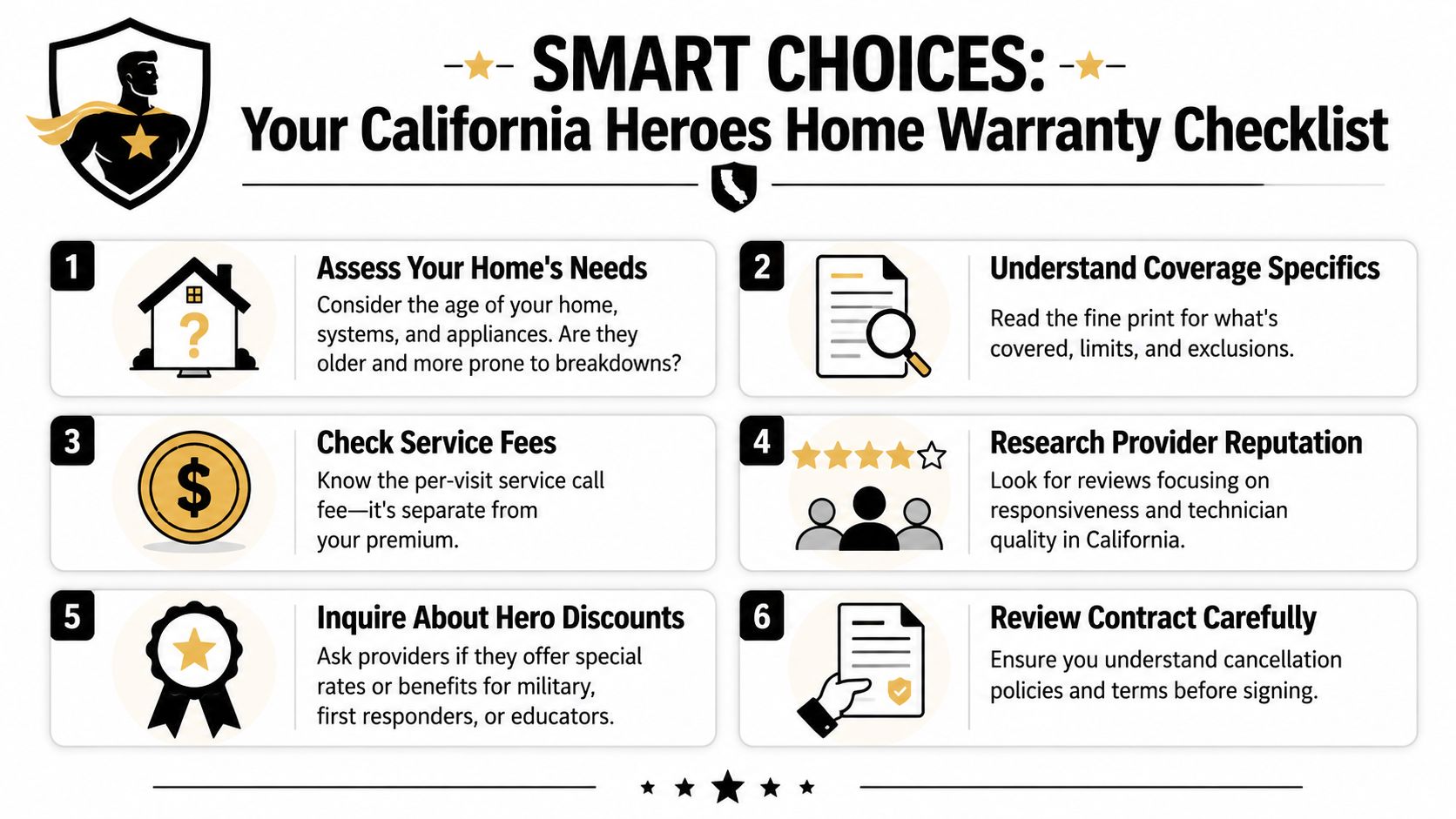
California buyers need a plan that matches the house, not a generic national ad. Start with the age of the property, the age of the HVAC system, and the condition of the appliances. If the home has older equipment, a stronger contract with better limits usually makes more sense than a bargain plan built to win on price.
If you want a practical starting point, two names stand out in California for different reasons. American Home Shield is recognized as a top provider in California, with plans starting as low as $29.99 per month, according to Forbes Advisor's California home warranty review. For buyers focused on bigger payout potential, Old Republic Home Protection offers up to $7,000 in coverage for extensive plans, which gives it the state's highest coverage limits in that evaluation.
My recommendation for HERO buyers
Don't shop by brand first. Shop by risk.
If your home has older systems, prioritize coverage caps and major-system protection. If the systems are newer but the appliances are questionable, compare appliance coverage details more aggressively. If you know you hate surprise bills, pick a contract with terms you can explain back to someone else.
Questions worth asking every provider
- What are the payout limits for HVAC, plumbing, and electrical claims?
- What exactly counts as a pre-existing condition under your contract?
- Do you require maintenance records for covered systems?
- How do you decide between repair and replacement?
- Who chooses the technician, and what happens if the first repair doesn't hold?
- Are there cancellation penalties or waiting periods?
One more smart move. If you're still early in the buying process, review these steps to buying your first home in California so the warranty decision fits into the larger ownership plan instead of becoming an afterthought.
One California-specific point
Some companies tailor plans for this state, and details can vary. HWA, for example, offers a Premier plan and a Premier Plus plan in California, with the Premier Plus plan covering more than 30 additional items according to HWA's California plan page. That's the kind of detail you should compare directly against your home's actual risks.
A strong plan doesn't need flashy marketing. It needs clear terms, solid limits, and a service process you can live with.
Making Your Warranty Work When You Need It
The time to learn your warranty process isn't when water is on the floor and you're already late for work. Know the playbook now.
What to do when something breaks
Start with the contract. Confirm the item is covered and check whether the failure sounds like a covered event under the plan language. Then contact the warranty company through its official claim channel and be precise when describing the issue.
Keep your report simple and factual:
- Name the item clearly: “Built-in oven won't heat.”
- Describe the failure: “Turns on, but doesn't reach temperature.”
- Note timing: “Stopped working yesterday.”
- Mention urgent impact if real: “No hot water in the home.”
How to avoid creating your own denial
Don't hire your own repair company first unless the contract allows it. Don't authorize replacement work before the warranty company responds. Don't exaggerate what happened. Stick to observable facts and save any maintenance records you have.
If the problem involves a system that was flagged during inspection, review that paperwork too. This guide to the VA home loan home inspection process is a useful reminder that inspection findings and warranty expectations are related, but they are not the same thing.
What to expect during service
A technician usually diagnoses the issue first. If the problem falls inside coverage, the company approves repair or replacement under the contract terms, and you pay the service fee required by your plan. If the claim is denied, ask for the exact contract language behind the decision.
Keep a file with your contract, claim confirmations, technician notes, invoices, and maintenance records. If a dispute comes up, documentation gives you leverage.
Good home warranty coverage won't eliminate every headache. It can still keep one breakdown from turning into a financial setback. Used correctly, that's enough.
California Loans for Heroes helps veterans, active-duty military, first responders, nurses, teachers, law enforcement, firefighters, pilots, and other public service professionals through the homeownership process with clarity and savings in mind. If you want one-on-one guidance on buying or refinancing in California, explore the California Loans for Heroes program and see how their team helps HERO buyers move forward with confidence.