
You've probably done this already. You finish a long school day, open Zillow or Redfin, type in a California city you'd want to live in, and then start mentally crossing out every listing that feels out of reach. By the third or fourth listing, it's easy to assume homeownership just isn't built for teachers here.
That assumption is usually too pessimistic.
California is expensive. That part is real. But a lot of teachers don't hit a hard affordability wall. They hit an information wall. They hear about grants, down payment help, silent seconds, forgivable loans, and HUD programs, and the options blur together. Then they either give up or start house hunting with the wrong budget in mind.
Your Dream of Homeownership Is Closer Than You Think
A teacher in California can look financially responsible on paper and still feel stuck. Solid job. Predictable income. Savings started. Debt mostly under control. But when closing costs, prepaid taxes, insurance, and down payment money all show up at once, the upfront cash needed can feel bigger than the monthly payment problem.
That's why I want to clear up the most common mistake immediately. A grant is not the same thing as down payment assistance. If you mix those up, your plan falls apart before you even apply.
Think of it this way. Your down payment is one bucket. Your closing costs and prepaid expenses are another bucket. Many people assume one program fills both. Often, it doesn't. Research shows 70% of educator-focused grants are specifically designated for non-down-payment costs like closing fees, which is exactly why so many buyers underestimate what they need at closing.
Practical rule: If a program says “grant,” don't assume it covers your down payment. Check what expense category it actually covers before you build your budget around it.
That distinction matters more in California than almost anywhere else. In a high-cost market, even a good income can get squeezed by cash-to-close requirements. The upside is that first time home buyer teacher grants can take real pressure off the upfront side of the purchase when you use the right mix of programs.
Why this confusion hurts buyers
When teachers read a headline about “up to” a certain amount of assistance, they often count that whole number toward the money they need to buy. Then they find out part of it can only be used for closing costs, or part of it is a deferred loan instead of a grant.
That doesn't mean the help isn't valuable. It means you need to sort the tools correctly.
- Closing cost grants help with lender fees, title charges, appraisal costs, and prepaid items.
- Down payment assistance helps with the money applied toward the purchase itself.
- Deferred or forgivable loans can still be excellent, but they aren't the same as free cash.
Once you separate those categories, the path gets clearer fast. That's when homeownership starts looking less like a fantasy and more like a process.
National Grant Programs Available to California Teachers
A national program can look great on paper and still be a poor fit for a California teacher trying to buy in Sacramento, the Inland Empire, or anywhere near the coast. High prices change the math. That is why I tell buyers to treat national programs as useful tools, not automatic solutions.
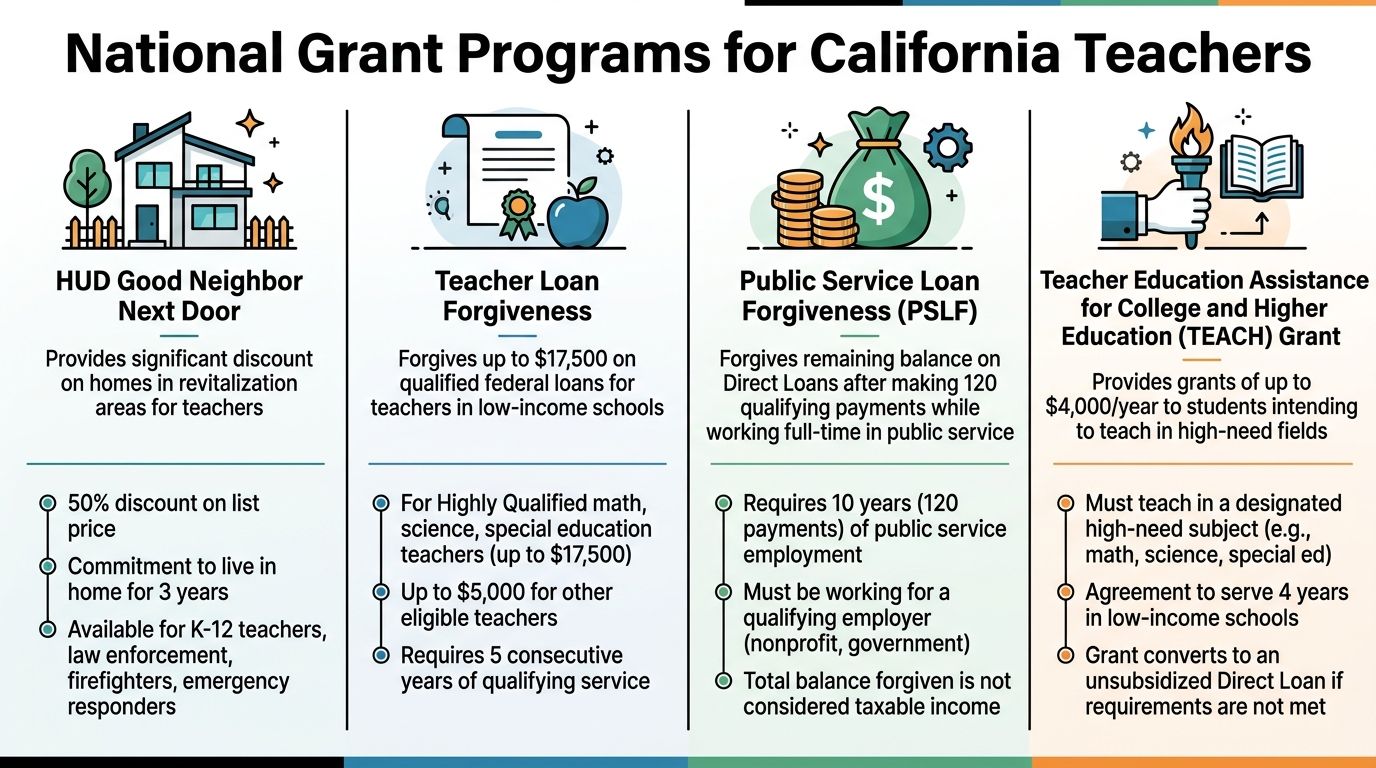
The best use of these programs is usually to reduce upfront cash pressure while you compare them against stronger California-specific options. If you need a clearer breakdown of how assistance is typically structured, review these down payment assistance options for teachers in California before you choose a program based on a headline number.
Teacher Next Door
Teacher Next Door gets attention because it combines more than one type of assistance. Eligible Pre-K through 12th-grade educators may qualify for a non-repayable grant of up to $9,000 for closing costs and separate down payment assistance that can reach up to $24,000, according to Teacher Next Door housing grant details for educators.
That split matters. A closing cost grant helps with the expenses that hit right before closing. Down payment assistance helps with the money tied directly to the purchase. California buyers need to keep those buckets separate or the budget falls apart fast.
There is also a California-specific Teacher Next Door page showing a non-repayable grant of up to $9,000, with a minimum grant of $1,000 for eligible Pre-K through 12th-grade teachers, administrators, and staff, according to California Teacher Next Door grant information.
My view is simple. This program is worth checking early because it can reduce upfront strain, but you still need to verify availability, property fit, and how the assistance applies to your transaction.
Good Neighbor Next Door
Good Neighbor Next Door gets the biggest reactions because the headline benefit is dramatic. Eligible full-time teachers can receive a 50% discount on the list price of certain homes in HUD-designated revitalization areas, with a three-year residency commitment.
A Key Limitation for California Buyers
For California teachers, this program is often more restrictive than it first appears. It only works if a qualifying home is available in a location that makes sense for your commute, school district, and daily life. In many California markets, that inventory problem is the whole story.
So yes, the discount is impressive. But availability decides whether this is a real option or just an interesting program you will never be able to use.
Ignore the splashiest headline. Focus on the program you can actually use in the city where you need to live.
National Homebuyers Fund grant
The National Homebuyers Fund is often more practical for California teachers because it is tied to the financing structure rather than a narrow property search. LendingTree notes that eligible buyers may receive up to 5% of the mortgage loan amount as a non-repayable grant for down payment or closing costs, and the program can be used with FHA, conventional, VA, and USDA loans, according to LendingTree's guide to home loans for teachers.
That flexibility is useful in California, where buyers often need options that fit different price points and loan types. It can also help teachers who are buying again, since this program is not limited to first-time buyers.
I like this one better than the property-restricted national programs for many California teachers. It is easier to fit into a normal home search, and that makes it far more usable in real life.
California Specific Home Buyer Programs for Teachers
Many California teachers, despite having a reliable income and consistent savings, struggle with housing affordability. Therefore, conventional advice proves inadequate for their situation. Effective solutions must include programs that account for California's home prices, income qualifications, and the fact that educators often require significant assistance with cash to close.
Start with one rule. Do not lump every assistance program into the word “grant.” In California, some options are true grants, some are deferred second loans, and some are forgivable if you stay in the home long enough. If you misunderstand that distinction, you can pick the wrong program before you even apply.
CalHFA STEAP
The CalHFA School Teacher and Employee Assistance Program, or STEAP, is one of the more practical options for California educators. CalHFA describes it as a deferred-payment junior loan for school employees that can help with down payment or closing costs when paired with a CalHFA first mortgage.
That wording matters. STEAP is not a grant. It is a silent second loan. You do not make monthly payments on it, which helps with approval and monthly budget pressure, but repayment is deferred until a future trigger such as sale, refinance, or payoff of the first loan.
I recommend teachers look closely at STEAP when the main problem is upfront cash. That is often the main barrier in California, especially in higher-cost counties where the monthly payment is only part of the challenge.
Why STEAP works for many teachers:
- No monthly payment on the junior loan
- Deferred repayment instead of immediate amortization
- Designed specifically for school employees using CalHFA financing
Forgivable Equity Builder can be the better deal
If you meet the income and first-time buyer rules, CalHFA's Forgivable Equity Builder program is usually the option to check first. CalHFA states that this program provides forgivable assistance for eligible low-to-moderate income first-time buyers, with forgiveness tied to owner occupancy over time.
That is a much better structure than a standard deferred second if you qualify. A forgivable program can reduce what you owe later. A deferred second postpones repayment.
My advice is simple. Put forgivable assistance at the top of your list before you settle for repayable assistance. In a high-cost state, the long-term math matters just as much as getting in the door.
Some California programs are more flexible than teachers expect
A lot of teachers assume every assistance program is for first-time buyers only. That is not always true. Some California programs are stricter, while others are more flexible about prior ownership, occupation type, or income structure.
That matters for teachers who owned years ago, divorced, relocated, or are trying to buy again after renting. Those buyers often get bad information because national articles flatten every program into the same checklist.
If you want a practical breakdown of teacher down payment assistance programs in California, look at options side by side before you choose a loan path. It is the fastest way to separate true grants from second-lien assistance.
California Teacher Home Buyer Program Comparison
| Program | Assistance Type | Max Assistance | Forgivable? | First-Time Buyer Required? |
|---|---|---|---|---|
| Teacher Next Door California | Non-repayable grant | Up to $9,000 | Yes, because it's a grant | Not stated here as a first-time-only program |
| CalHFA STEAP | Silent second deferred junior loan | Based on current CalHFA program limits | No | Program rules apply |
| CalHFA Forgivable Equity Builder | Forgivable down payment assistance | Based on current CalHFA program limits | Yes, if occupancy requirements are met | Yes |
| CalHERO | Assistance program | Varies by structure | Depends on structure | May not require first-time buyer status |
| CalTAP | Assistance program | Varies by structure | Depends on structure | May not require first-time buyer status |
| GSFA Platinum SELECT | Assistance program | Varies by structure | Depends on structure | May not require first-time buyer status |
My recommendation for California teachers
Use a simple order.
Check forgivable assistance first. Then review deferred-payment options like STEAP. After that, look for grant money you can layer in without creating a payment problem later.
California buyers do better when they choose the program that fits their county, income, and time horizon in the home. The best option is rarely the flashiest one. It is the one you can qualify for and use without regret.
A Step-by-Step Checklist to Apply for Teacher Grants
It's 9:30 p.m. You finished grading, opened three tabs on teacher home buyer help, and now everything sounds the same. Grant. Assistance. Silent second. Forgivable loan. For California teachers, that confusion costs time and sometimes pushes buyers into the wrong program.
Use a checklist instead. It keeps you focused on the programs you can apply in a high-cost state, not the ones that sound good in a national article but do little for your real monthly payment.
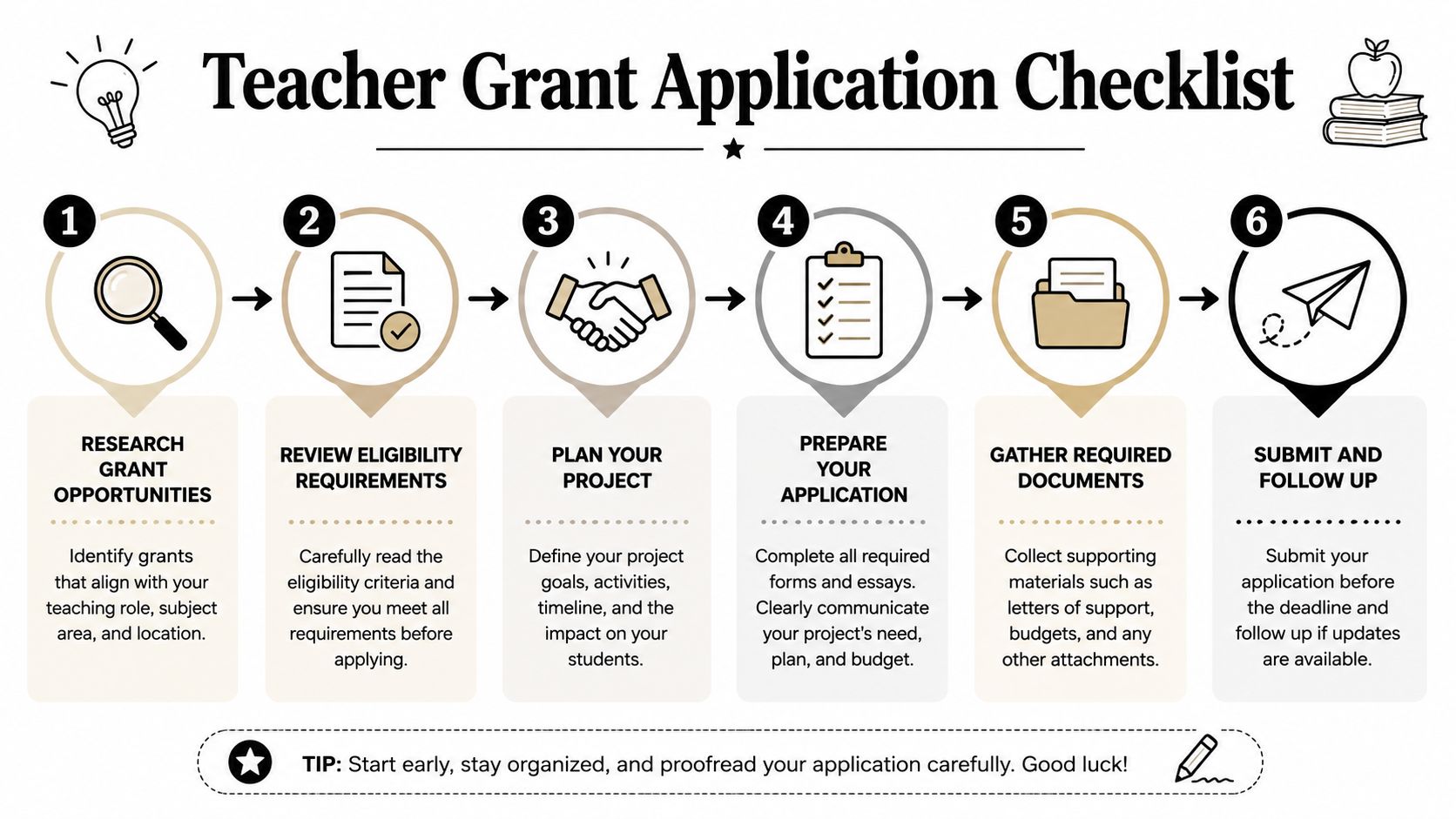
1. Build your file before you look at homes
Start with documents. Always.
Pull together recent pay stubs, W-2s, bank statements, ID, and an employment verification letter from your district or school. If you earn extra income from summer school, coaching, department chair work, or stipends, ask how that income will be counted before you rely on it.
Also confirm your buyer status under the program rules. In California, some programs still treat you as a first-time buyer if you have not owned a home in the last three years. That one detail can change which options stay on the table.
2. Separate true grants from assistance you may repay later
This is the part many teachers get wrong.
A grant does not need to be repaid if you meet the terms. Down payment assistance may come as a deferred second loan, a forgivable loan, or another junior lien. Those can still be excellent tools, but they are not the same thing. If you want a clearer breakdown, read this guide on how to get down payment assistance in California.
Your goal is simple. Know exactly which bucket each program falls into before you apply.
3. Cut your list to programs that fit your real life
Do not apply based on a catchy program name. Apply based on fit.
Focus on four filters:
- Buyer status: first-time buyer only, or open to repeat buyers
- Cash need: down payment help, closing cost help, or both
- Location: county, city, or eligible property area near your school
- Occupancy rules: how long you must live in the home
California teachers need to be especially strict here because housing costs are higher and commute tradeoffs are real. A program is not useful if the property rules push you far from work or leave you with a payment that strains your budget.
4. Get pre-approved with a lender who knows layered assistance
A plain pre-approval is not enough if you plan to combine a first mortgage with teacher-focused help.
Ask direct questions. Which programs can be paired together? Which funds are grants, and which create a second lien? What income limits apply? Are there homebuyer education requirements? If the lender answers vaguely, keep shopping.
You need a lender who can structure the file correctly the first time. That reduces delays, avoids last-minute surprises, and gives you a realistic price range instead of a hopeful one.
5. Shop for homes that match the program rules
Do not choose a home first and check eligibility later. That is how buyers lose time and money.
Once you know which programs you are using, search within those boundaries from day one. Confirm occupancy rules, property standards, price limits if they apply, and any timing deadlines tied to the assistance. In California, where good listings move fast, that prep matters. It helps you write offers on homes you can close.
6. Review the final numbers before you sign
Before closing, read the assistance documents with the same attention you give the mortgage terms.
Confirm how much money is coming in, whether any part must be repaid, when repayment could be triggered, and whether forgiveness depends on staying in the home for a set period. If a teacher grant, deferred loan, and first mortgage are all in the stack, each one should make sense to you in plain English.
That is the standard. If you do not understand the structure, pause and ask until you do.
Tips to Strengthen Your Application and Boost Approval Odds
Approval doesn't come down to luck. It comes down to whether your file looks organized, stable, and easy to underwrite. That's especially important when you're using layered assistance programs.

Clean up your credit and timing
Don't wait until you're in escrow to care about your credit. Review it before you apply. If there are errors, dispute them. If balances are high, pay down what you can. If you're planning a car purchase or a new credit card, postpone it.
Small moves before pre-approval are usually much easier than damage control during underwriting.
Protect your debt-to-income picture
Your debt-to-income ratio can make or break program eligibility even when your salary is steady. That means your behavior matters in the months before application.
- Avoid new monthly obligations: Financing furniture, electronics, or a car can hurt more than buyers expect.
- Keep account activity boring: Underwriters love stable finances. Large unexplained deposits create extra paperwork.
- Stay employed in the same role if possible: A job change during the process can complicate verification.
Act early, not perfectly
A lot of teachers delay pre-approval because they want every detail to be perfect first. That usually backfires. A strong pre-approval shows you where you stand and which issues need fixing now, not after you've found a home.
Get reviewed early. You can improve a file once you know what's in it. You can't improve guesswork.
Don't sabotage your own closing
The most common self-inflicted problems are simple. Buyers change jobs, open new accounts, move money around without documentation, or stop responding quickly to lender requests.
Do the opposite. Be fast, clear, and consistent. If underwriting asks for the same item twice, send it twice without turning it into a debate. That mindset saves deals.
How California Loans for Heroes Supports Teacher Home Buyers
Teacher home buying in California isn't just about finding a mortgage. It's about matching the right loan with the right assistance, then making sure the structure still works in a state where prices can stretch even solid borrowers.
That's where specialized guidance matters. General mortgage advice often breaks down when grants, deferred seconds, forgivable assistance, occupancy rules, and educator eligibility all intersect.

A California-focused team can help teachers sort through the practical questions that generic online articles usually leave unanswered. Which assistance fits a first-time buyer best? Which options may still work for a repeat buyer? When does a forgivable structure make more sense than a deferred one? How should you think about high-cost counties where conventional affordability assumptions fall apart?
That kind of support matters because the best solution usually isn't a single program. It's a coordinated strategy.
Where specialized help makes the difference
A strong advisor should help with more than rate quotes. They should help you:
- Identify usable programs: Not just interesting ones.
- Separate grants from repayable assistance: So your budget is realistic.
- Build a clean approval strategy: Before you start making offers.
- Understand tradeoffs: Especially around occupancy terms and future repayment triggers.
Teachers looking for a California-specific lending partner can explore the home loans for heroes program, which is built around public-service professionals including educators.
Your Path to Homeownership as a California Teacher
You finish a long school day, open a home search app, and close it five minutes later. The prices look impossible. That reaction is common for California teachers, especially in high-cost counties where generic first-time buyer advice falls apart fast.
Here's the truth. Homeownership usually does not happen because you found one perfect grant. It happens because you matched the right loan, the right assistance, and the right price range from the start.
For some teachers, that means a true first-time buyer program. For others, it means a repeat-buyer option that still offers meaningful help. As noted earlier, some California teacher programs can work for buyers who have owned before, while others are limited to people who have not owned a home in the past three years. That distinction matters because many teachers rule themselves out too early.
It also helps to clear up one of the biggest points of confusion. A grant is not the same as down payment assistance. A grant does not usually require repayment. Assistance may come as a deferred second or a forgivable loan with occupancy rules and repayment triggers. If you do not know which one you are using, you cannot judge the cost of buying.
The next move that matters most
Get your financing plan in place before you tour homes.
Focus on these three decisions first:
- Which programs fit your buyer profile
- Whether the money is a grant, deferred loan, or forgivable assistance
- What payment still works in your county after taxes, insurance, and HOA dues
That last point is where California teachers need sharper advice than national articles usually give. A payment that looks manageable on paper can get stretched quickly in places where home prices, insurance costs, and monthly expenses run high. You need a purchase plan built for your local market, not a generic affordability formula.
Once that piece is clear, the process feels far less chaotic. You stop chasing listings outside your real budget. You stop guessing which program name sounds best. You start making offers with a financing structure that fits your income and your goals.
Owning a home as a California teacher is hard. It is still achievable. The teachers who succeed usually start early, get clear answers, and follow a plan that matches the realities of California, not advice written for cheaper markets.
If you're a teacher trying to make sense of grants, down payment assistance, and loan options in California, California Loans for Heroes can help you map out a no-pressure plan. You'll get guidance specific to your role, your budget, and your county, so you can stop guessing and take the next step toward homeownership with confidence.