You finish a long shift, sit in your car for a minute, and scroll through listings in Riverside, Orange County, Los Angeles, or San Diego. The numbers look brutal. Even if your income is solid, the cash needed to get in the door can feel out of reach. That's where most firefighters get stuck. Not because they can't afford a payment, but because California punishes buyers upfront.
Then the internet makes it worse. You'll find generic advice aimed at buyers in low-cost states, recycled first-time buyer tips, and vague claims about “special programs” that never explain what applies to firefighters in California. That advice wastes time.
If you're looking for home loans for firefighters, you need a practical plan built around real loan options, real down payment help, and real California programs. That's the difference between browsing homes and buying one.
Your Path to Homeownership in California
A lot of California firefighters are in the same spot. They've got stable work, a career with real earning power, and a clear reason to buy. They want to stop renting, build equity, and get their family into a place that feels permanent. But they hit the same wall fast. The home price is one problem. The cash to close is usually the bigger one.
I've seen buyers assume they need a massive down payment before they even talk to a lender. That's often the wrong starting point. For firefighters, the smarter move is to look at the full stack: loan type, down payment assistance, grants, county programs, and whether military service opens the VA path.
What usually trips buyers up
Most firefighters don't fail because they're irresponsible. They get tripped up by three things:
- Bad assumptions: They think they need perfect credit or a huge savings balance.
- Bad guidance: They talk to lenders who don't understand first responder programs.
- Bad timing: They wait until they've found a house before learning what they qualify for.
You don't need a perfect file. You need the right strategy.
California makes this more urgent. In a lower-cost market, you can get sloppy and still recover. In this state, weak prep gets expensive fast. If you're serious, stop treating the mortgage as a single product. It's a package decision.
What matters most in California
The key question isn't just “Can I get approved?” It's “Which combination gives me the best shot at buying without wrecking my cash reserves?”
That's where California-specific guidance matters. Some firefighters qualify for meaningful local assistance. Some can use a VA loan. Others are better off pairing an FHA or conventional loan with targeted support. And some buyers who think they're not ready are one credit clean-up cycle away from being competitive.
This is the route forward: understand how credit is really viewed, choose the right loan, and stack the right California assistance. That's how homeownership starts feeling possible instead of theoretical.
The Truth About Credit Scores and VA Loans
You get off shift, check your credit, and see a 550. Your first thought is usually, “So I'm out.” That's the wrong conclusion.
A 550 score makes the path narrower, especially in California where sellers and lenders both punish weak files. It does not automatically kill a VA loan. The VA does not set a universal minimum credit score. Individual lenders set their own score cutoffs and approval standards. That's why one lender can decline the file while another tells you exactly what to fix.

VA policy and lender reality
If your firefighting career includes eligible military service, VA should be one of the first options you review. In California, that matters even more because preserving cash after closing matters just as much as getting approved.
Credit score is only part of the file. Lenders also look at what caused the score. Recent late payments, maxed-out cards, collections, charge-offs, and thin credit history all affect how your application is read. A firefighter with a lower score but stable recent payment history can look stronger than a buyer with a slightly higher score and fresh damage.
That is why you should stop asking, “What is the lowest score that works?” Ask, “What in my file is stopping approval right now?”
You also need to compare lender overlays, pricing, and program fit before you commit. Start by reviewing current California police and fire mortgage rates with a lender who works with first responders.
What to do if your score is low
Do not wait six months hoping the number fixes itself. Read the file and attack the problems in order.
- Pull all three credit reports and identify key issues. Look for late payments, disputed accounts, collections, and card balances that are too high.
- Get every account current and keep it current. Recent payment history carries weight.
- Pay down revolving debt first. Credit cards often hurt approval more than buyers realize.
- Do not create new debt before applying. A car loan or new credit card can make a tight file worse.
- Keep whatever reserves you can. In California, lenders and underwriters like to see that you can handle payment shocks, repairs, and normal ownership costs.
My advice: Do not obsess over the score by itself. Have a lender review the full report and tell you which changes will actually improve approval odds.
A low score does not mean you are done. It means your loan choice, timing, and lender choice matter more. For California firefighters, that is the difference between wasting months with the wrong lender and getting into position to buy.
Choosing the Right Loan for Your Mission
The right loan depends on your profile, not on marketing. For firefighters, the three main paths are usually VA, FHA, and conventional. Each solves a different problem. Pick the one that fits your situation, not the one that sounds best in a headline.
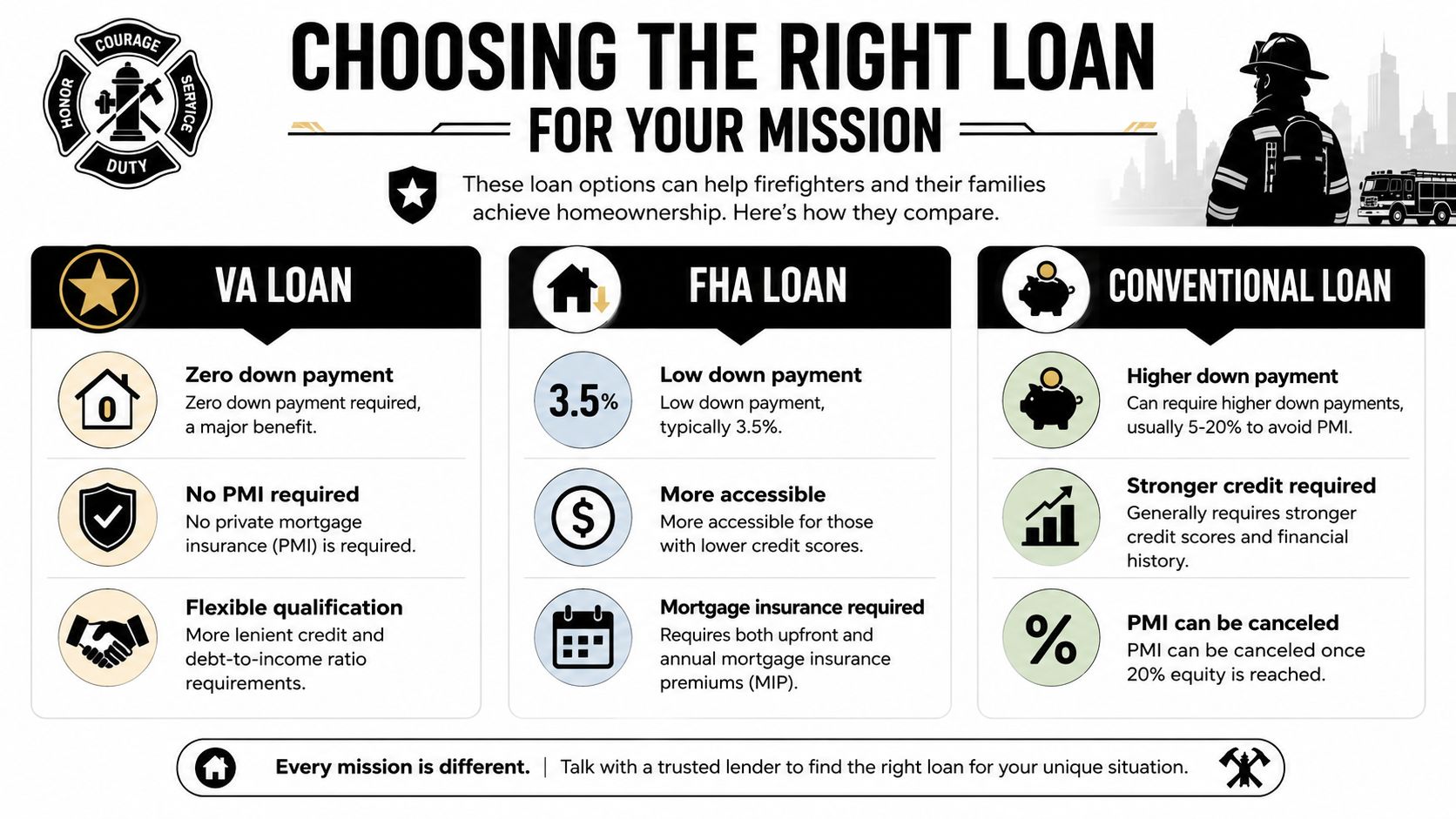
Side-by-side loan priorities
| Loan type | Best fit | Main strength | Main caution |
|---|---|---|---|
| VA | Firefighters with eligible military service | Strong affordability and low upfront burden | You still need a lender that can approve your file |
| FHA | Buyers with weaker credit or limited savings | Flexible entry point | Mortgage insurance is part of the cost structure |
| Conventional | Buyers with stronger credit and cleaner finances | Can be a strong long-term fit | Usually less forgiving on credit and profile weaknesses |
When VA is the clear winner
If you're eligible for VA, start there. It's usually the most efficient path for buyers who want to preserve cash. It's especially useful in California, where keeping reserves matters after closing because ownership costs don't stop at the down payment.
VA is also a strong fit for firefighters who want breathing room. You may qualify with less strain on upfront cash than you'd face with other loan types. If you're comparing options, review current mortgage rate options for police and fire buyers with a lender who understands hero-focused lending.
When FHA makes more sense
FHA is often the right move when credit is the issue, not income. If your score or recent history keeps making lenders nervous, FHA can be the practical lane. It's not glamorous, but it gets people into homes.
The verified program guidance also notes that FHA loans can require as little as 3.5% down when paired with qualified financing structures through first responder guidance programs, as noted by the Firefighter Next Door loan guidance page. If your main problem is cash to close, that matters.
When conventional wins
Conventional financing is best when your file is already strong. If your credit is clean, your debts are under control, and you've saved enough to make the structure work, conventional can be a smart choice.
This isn't the “hero loan.” It's the “you're already financially sharp” loan. For some firefighters, that's exactly where they are. For others, trying to force conventional too early just slows down the process.
How Your Service Strengthens Your Application
A lot of buyers fixate on one number and ignore the rest of the file. Lenders don't. They're looking for reasons to believe you can handle the payment month after month. Firefighters often bring several strengths to that review.
What lenders actually like about firefighter borrowers
First, your job tells a story. It shows stable employment, structured income, and a profession with public accountability. That matters. A lender would rather review a borrower with explainable credit issues and a dependable career than a borrower with a decent score and unstable work.
Second, firefighters often have income patterns that make sense once they're documented correctly. Base pay, overtime, shift structures, and long-term employment history can help your application when they're presented clearly.
Third, many firefighter buyers are disciplined with savings even if they haven't piled up a huge down payment. That discipline counts. A lender wants to see that you manage obligations consistently.
Strong employment history can offset weaknesses that look worse on paper than they are in real life.
Compensating factors that matter
If your score isn't ideal, these factors can strengthen the file:
- Stable employment: A consistent track record in the fire service supports reliability.
- Manageable debt: Even with credit blemishes, lower debt pressure can help.
- Cash reserves: Savings after closing show that one surprise bill won't sink you.
- Clear explanations: If there was a temporary setback, document it cleanly and move on.
This is why home loans for firefighters shouldn't be treated like standard retail mortgage applications. Your profession is part of the underwriting story. Use it.
Don't undersell your file
A weak application is often just a poorly presented one. If your income has overtime, get it documented correctly. If an old credit issue is no longer active, make that clear. If your job history is stable, lead with it.
Lenders don't approve “scores.” They approve borrowers. Your file needs to read like a borrower who can sustain homeownership in California.
California Hero Programs and DPA Grants
You find a house in Orange County. The payment works. The problem is cash to close. That is where California-specific assistance can decide whether you buy now or keep renting.
Generic national advice does not help much here. California firefighters deal with higher prices, tighter timelines, and county programs that change from one line on the map to the next. You need to know what kind of assistance you are using, how it gets repaid, and whether it still makes sense if you sell or refinance in a few years.

Start with statewide programs
The California Firefighter Down Payment Assistance program deserves a hard look. According to the California Firefighter Down Payment Assistance program details, eligible firefighters and fire department employees may receive 3% to 3.5% of the purchase price as a silent second that can be used for down payment or closing costs, with repayment deferred for up to 30 years.
That structure can work well in California, where the down payment is often the biggest obstacle. But a silent second is still debt. If you expect to refinance quickly, transfer, or sell sooner than planned, read the repayment terms before you treat it like free money.
If you want to see how assistance can pair with military benefits, review these VA home loan down payment assistance options in California.
County programs matter more than buyers expect
County help can change your buying range, your cash strategy, or whether the deal works at all. It can also disappear, change guidelines, or run out of funds. Check the county rules before you write an offer, not after.
The California first responder assistance program summary lists county-level programs including Orange County HERO grants of up to $7,500, Riverside County HERO grants of up to $7,500, Los Angeles County SmartBuy assistance of up to $15,000, and San Diego Home Loan Assistance of up to $15,000 for down payment and closing costs.
Here is the practical takeaway. Do not assume your friend's program in Riverside applies in Orange County. Do not assume Los Angeles assistance works the same way in San Diego. California is not one market, and firefighter buyers get in trouble when they shop with a statewide mindset and a county-level budget problem.
San Francisco is its own case
San Francisco deserves separate attention because the numbers are on a different scale. The San Francisco First Responders Downpayment Assistance Loan Program offers up to $500,000 for first responders buying market-rate homes in the city.
For a firefighter trying to buy in San Francisco, that is not a small perk. It can be the difference between staying priced out and having a workable plan.
My recommendation on grants, forgivable aid, and silent seconds
Take the cleanest money first.
A true grant is usually the best option because it gives you help without adding another lien or future payoff issue. Forgivable assistance can also be strong if you are confident you will stay in the home long enough to satisfy the forgiveness period. Silent seconds come after that. They can still be useful, especially in California, but they deserve more scrutiny because they affect your flexibility later.
Read three things every time. Repayment trigger. Forgiveness timeline. Refinance restrictions.
Firefighters move for promotions, department changes, family reasons, and commute relief. Pick assistance that fits that reality, not just the biggest headline amount.
Your Action Plan From Call to Keys
You finish a 24-hour shift, check your phone, and see three new listings in Riverside County. One looks affordable until the tax bill, insurance, and commute hit the payment. That is how California buyers get trapped. The right move is to build the loan plan first, then shop inside it.
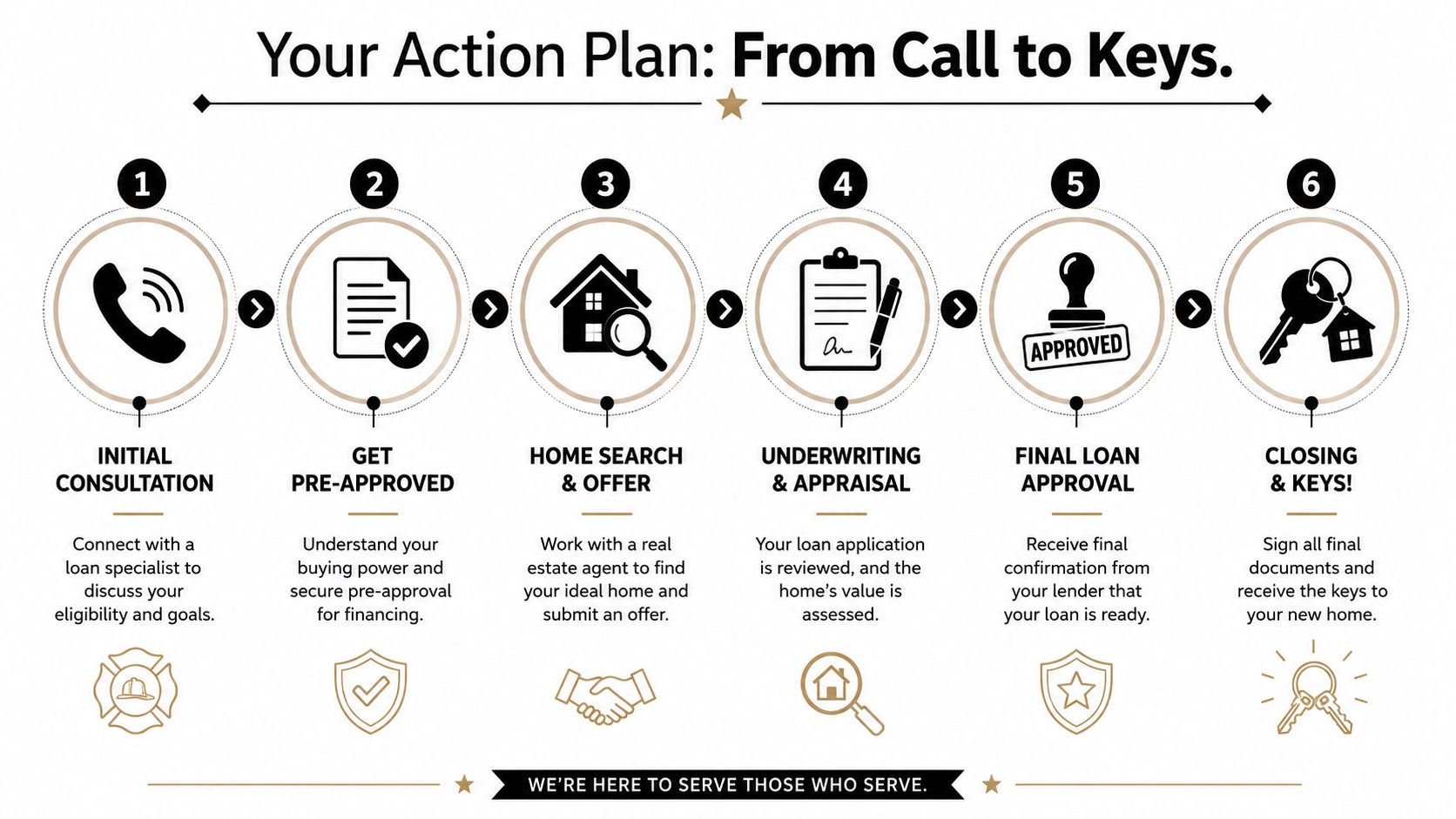
Step one and step two
Start with your file. Pull your credit, list every monthly debt, confirm your income documents, and decide how much cash you can bring to closing without wiping out your reserves. In California, buyers who skip this step waste time looking at homes that do not fit their actual payment.
Get a lender involved before you talk yourself into a price range. A good pre-approval review should tell you three things fast. Which loan fits your situation. Whether your credit needs work before you apply. Which California assistance options are worth your time.
Step three and step four
Get pre-approved before you tour seriously or write offers. In a competitive California market, a vague budget is useless. You need a payment target, a max cash-to-close number, and a lender who can move quickly when the right property shows up.
Then build the right team. Pick a loan officer and agent who understand firefighter schedules, overtime income, pension questions, and local pricing pressure. A generic national approach is not good enough in California.
If you are buying your first place, read this step-by-step guide to buying your first home before you start writing offers.
Step five and step six
Once you are in escrow, protect the approval. Do not open new credit cards. Do not finance a truck. Do not move money between accounts without a clear paper trail. Underwriting gets messy fast when your bank statements stop making sense.
Confirm your assistance structure before closing, not after appraisal and not a week before signing. If you are using down payment help, review the occupancy rules, repayment triggers, refinance limits, and timeline for any forgiveness. Earlier, I pointed out why that matters so much in California. Firefighters change departments, move for commute relief, and adjust family plans. Your assistance should fit real life, not just look good on a flyer.
“Pre-approval is a planning meeting. Done right, it shows you the cleanest path to approval and the payment you can actually live with.”
The checklist I'd follow
- Audit your file first: Credit, debts, income, assets, and reserves.
- Set your budget: Base it on full payment, cash to close, and county-specific costs.
- Pick the loan lane early: VA if eligible, FHA if you need flexibility, conventional if your file is strong.
- Get pre-approved before shopping: It keeps your search focused and your offer credible.
- Choose California-specific help carefully: Read repayment terms and refinance restrictions before you commit.
- Keep escrow boring: No new debt, no unexplained deposits, no job or account changes you cannot document.
That is the path from call to keys. Clear plan first. House second.
Frequently Asked Questions for Firefighters
Do I have to be a first-time homebuyer to use firefighter programs
No. California firefighter programs are not all built the same, and that is exactly why generic advice fails here. Some assistance options require first-time buyer status. Others allow repeat buyers, including firefighters who sold a home years ago, relocated for a better schedule, or are buying again after divorce.
Check the rulebook before you rule yourself out.
Can I use these programs if I already own and want to move
Yes, in some cases. The deciding issue is usually whether the new home will be your primary residence and whether the program allows repeat ownership. In California, that matters a lot because firefighters often move to cut commute time, switch departments, or buy closer to family support.
Do not assume you are disqualified just because you already own a home.
What happens if I move or get transferred after using down payment assistance
That depends on how the assistance is structured. A true grant is different from a deferred second mortgage, and both are different from programs that require repayment after a sale, refinance, or early move-out.
Read the repayment triggers first. If a program punishes you for a likely career move, it is the wrong fit, no matter how attractive the upfront help looks.
Is there meaningful help for firefighters buying in San Francisco
Yes, but you need to treat city-specific programs as early-stage planning tools, not last-minute add-ons. As noted earlier, San Francisco has first responder assistance that can materially change your buying power if you qualify.
In a market like San Francisco, that kind of help can determine whether you buy now or keep renting.
Are national firefighter housing programs worth considering
Sometimes. They are usually narrower than California buyers expect, but a narrow program can still be useful if it matches your situation.
One example is the federal Good Neighbor Next Door program. It can offer steep discounts on certain HUD-owned homes for eligible firefighters, but the property must qualify and the occupancy rules are strict. This is not a broad California buying strategy. It is a targeted option worth checking if you are flexible on location and property type.
If you want help sorting through California-specific loan options, grants, and down payment assistance without the usual generic advice, talk with California Loans for Heroes. Their team focuses on helping California firefighters and other public service professionals manage competitive markets, compare the right financing paths, and move from pre-approval to closing with a clear plan.