
You're probably in one of two places right now. You've started browsing homes after school and wondering whether buying in California is even realistic on an educator's income, or you're holding off because the upfront cash feels like the wall you can't get past.
That hesitation is normal. A teacher first time home buyer in California usually isn't dealing with just one obstacle. It's credit, student loans or car payments, rising housing costs, closing funds, and the confusing stack of state, local, and federal programs that all seem promising until you read the fine print.
The good news is that teachers do have real advantages. The catch is that the best outcomes usually come from layering programs correctly, not from relying on one headline benefit. That's where many generic guides fall short. In California, especially in higher-cost areas, strategy matters as much as eligibility.
Building Your Financial Foundation for a California Home
A lot of teachers assume the first step is touring homes. It isn't. The first step is knowing exactly what your file looks like to a lender.
If you think of homebuying like lesson planning, your budget is the unit plan. The property search is just the classroom delivery. If the plan is loose, the rest gets harder fast.
Start with credit health
Credit doesn't need to be perfect, but it does need to be clean and explainable. Lenders usually care less about one old blemish than they do about current patterns. Late payments, high revolving balances, and new debt taken on right before pre-approval are the issues that most often slow a teacher's file down.
Focus on what you can control over the next few months:
- Pull your credit early: Don't wait until you've found a house. Early review gives you time to dispute errors, pay down balances, and avoid surprises.
- Lower card utilization: Even if you pay in full most months, a high reported balance can hurt your profile at the wrong moment.
- Avoid opening new accounts: A store card for classroom supplies or a new car loan can change your approval picture quickly.
- Document anything unusual: If you had a leave of absence, payroll change, or temporary hardship, get your paperwork together now.
Practical rule: A mortgage file is easier to fix three months before pre-approval than three days before underwriting.
A strong credit profile also gives you more flexibility when pairing assistance programs with your main mortgage.

Get serious about debt management
Many buyers focus only on salary. Lenders don't. They look at how your monthly obligations fit together.
That's why debt-to-income ratio matters so much. If your housing payment, student loans, car payment, minimum credit card payments, and other recurring debts already take up too much of your monthly income, the file gets tight even if your salary is stable. For teachers with good job history but limited savings, debt often matters more than people expect.
Use a simple review:
- List every recurring monthly debt.
- Add the estimated future housing payment.
- Compare that total against your reliable monthly income.
- Identify which debt can realistically be reduced before you apply.
For many California teachers, the fastest improvement comes from paying off a small monthly obligation rather than trying to radically increase savings overnight.
Build savings with the right buckets
Saving for “a house” is too vague. Break it into separate buckets so you know what you're solving for.
- Down payment funds: Teacher assistance programs are often most beneficial for this.
- Closing costs: Buyers often underestimate how much cash they'll need beyond the down payment.
- Reserves: Even when not strictly required, having money left after closing makes your file stronger and your first year easier.
- Move-in costs: Appliances, repairs, deposits, and basic setup costs hit quickly.
For many educators, the best move isn't waiting until you can cover everything alone. It's combining your own savings with assistance options designed for teachers. A good starting point is reviewing California teacher down payment assistance options and then matching them to your local market and timeline.
Homebuying gets easier when you stop asking, “Can I save enough for everything myself?” and start asking, “Which costs can I cover, and which costs can a program help me reduce?”
Unlocking Teacher Home Loan Programs in California
A common California teacher scenario looks like this. You have stable income, decent credit, and enough saved to feel close, but not enough to comfortably cover the down payment, closing costs, and reserves in a market like Sacramento, San Diego, or the Inland Empire. That is where program fit matters. The right combination can make a purchase workable. The wrong one can add restrictions that create problems later.
Teacher programs serve different jobs. Some reduce cash needed upfront. Some delay repayment until you sell or refinance. Some sound impressive but are hard to use in high-cost parts of California because of inventory limits, price caps, or narrow eligibility.
California Teacher Homebuyer Program Comparison
| Program Name | Assistance Type | Maximum Benefit | Key Requirement |
|---|---|---|---|
| CalHFA STEAP | Deferred-payment junior loan | Up to a set percentage of the purchase price, subject to program caps | Must meet CalHFA first-time buyer rules and use an eligible first mortgage |
| Good Neighbor Next Door | Purchase price discount | 50% discount on eligible HUD homes | Must buy a HUD home in a designated revitalization area and occupy it as primary residence for 36 months |
| Teacher Next Door | Grants, down payment help, closing cost help | Varies by program and loan structure | For eligible education employees, with rules that vary by lender and program |
| San Francisco Teacher Next Door | Local down payment assistance | Program benefit depends on current city terms | Program-specific local eligibility tied to San Francisco rules and available funding |
Where STEAP often makes sense
For many teacher first-time buyers in California, CalHFA STEAP is practical because it addresses the upfront cash problem without adding an immediate monthly payment. That matters more than the headline amount. In my experience, teachers often qualify for a payment before they have enough liquid cash to close, especially after rent, retirement contributions, and classroom spending have eaten into savings.
STEAP works best when we pair it carefully with the first mortgage, your available funds, and any local assistance. A file can look strong on paper and still fall apart if the combined program rules create timing issues, appraisal gaps, or repayment triggers you did not expect.
The federal option people often misread
Good Neighbor Next Door gets attention for obvious reasons. HUD offers a major discount, but the practical limitation is supply. You have to find an eligible HUD-owned property in a designated revitalization area, win that property, and meet the owner-occupancy rule. In many California counties, that inventory is thin or inconsistent. HUD explains the program details on its Good Neighbor Next Door program page.
For the right buyer, it can be a strong fit. For a teacher who needs to live near a specific school district, commute corridor, or childcare arrangement, it is often too narrow to build a full plan around.
Layering is how California buyers gain an advantage
This is the part generic homebuyer articles usually miss. In California, one program alone often does not bridge the gap. The better strategy is to combine the assistance that fits your market, your loan type, and your timeline.
A practical example helps. A teacher buying in a moderately priced area may use CalHFA STEAP to reduce upfront cash, then add a local educator grant or credit union benefit if the guidelines allow it. A buyer in a high-cost market may find that a large advertised benefit is less useful than a smaller local program with cleaner terms and fewer property restrictions. You can review current home loan programs for teachers in California to see which options may work together.
Here is the framework we use with teachers:
- Use STEAP when your main obstacle is cash at closing.
- Add local assistance only after confirming the programs can be combined without conflicting rules.
- Treat Good Neighbor Next Door as an opportunity, not a foundation, unless you have already identified eligible inventory.
- Read the repayment terms for every second loan or deferred note before you commit.
The trade-off is simple. More assistance can reduce your upfront cash need, but each added layer can also add conditions, paperwork, occupancy rules, or limits on refinancing later.
Key takeaway: The strongest California teacher homebuying plan usually comes from combining the most usable programs, not chasing the biggest advertised benefit.
One caution matters here. Some programs follow first-time buyer rules strictly, while others are more flexible. If you owned a home before but have been out of ownership long enough to qualify again, your options may be better than you think.
Navigating Eligibility and Your Documentation Checklist
Approval depends on more than income. It depends on how cleanly you can prove your eligibility, your employment, your assets, and your program fit.
Think of this as your loan portfolio. The stronger and more organized it is, the less likely your transaction gets delayed while someone asks for one more document the week before closing.
Know what first-time buyer actually means
A lot of educators disqualify themselves too early because they assume “first-time buyer” means never having owned anything. In many assistance programs, it means you haven't owned a home in the past 3 years. That distinction matters. It can reopen options for buyers who sold previously, went through a divorce, or moved back into renting for a while.
Program rules still vary, especially in California. Some teacher-focused options are strict on first-time status, while others are more flexible. You also need to watch income limits where they apply, because county-by-county rules can change whether a program is usable even if your credit and employment are solid.
Build your file before you shop seriously
Gather the standard items first, then add the teacher-specific pieces.
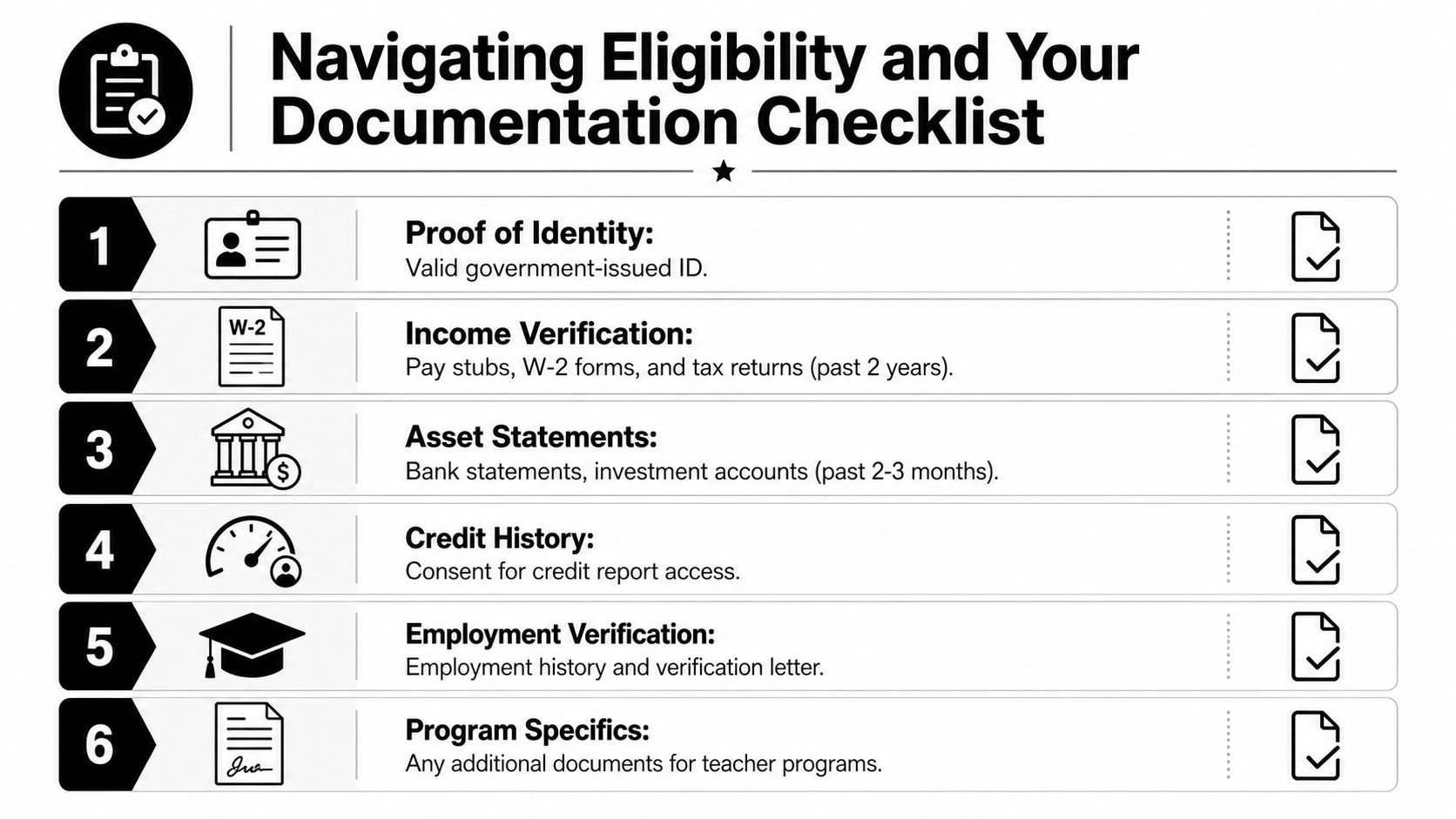
A clean checklist usually includes:
- Proof of identity: Government-issued ID and anything needed to verify legal name consistency.
- Income documents: Recent pay stubs, W-2s, and tax returns if requested.
- Asset statements: Bank statements and any accounts being used for closing funds.
- Employment verification: School district or employer documentation confirming active employment.
- Program documents: Teaching credential, school ID, or any forms tied to a specific assistance program.
- Credit authorization: Consent for the lender to review your credit profile.
If you're using gift funds or a local grant, expect another layer of paperwork. Don't treat that as a problem. Treat it as normal.
Watch for the hidden eligibility blockers
The most common issue isn't usually income alone. It's a technical rule the buyer didn't see coming.
A clear example is credit. The Extra Credit Teacher Program requires a minimum 640 credit score, which is lower than the typical 660 to 680 often associated with conventional financing, but it can still exclude educators with thin files or recent delinquencies, according to this San Francisco Teacher Next Door report.
Other blockers are less obvious:
- Homebuyer education requirements: Some programs won't move forward until the course is complete.
- Processing delays tied to program rules: Added requirements can slow an otherwise standard closing.
- Repayment triggers: Sale, refinance, title transfer, or employment changes can matter depending on the program.
- Income caps: A salary that works for a mortgage may still fail a program's separate income test.
Don't wait for escrow to find out you're missing a class certificate, an employment letter, or a program-specific form. Those are avoidable delays.
If you're sorting through several aid options, a broader review of California first-time home buyer assistance programs can help you identify which paths are worth documenting for first and which ones are likely dead ends for your county, income range, or ownership history.
Assembling Your Expert Homebuying Team
A teacher can get pre-approved with a generic lender and start touring homes with a generic agent. That happens every day. It also creates some of the most avoidable problems in California purchases.
The difference shows up when the file gets layered. Assistance program timelines, local grant rules, school employment verification, and seller expectations all need to line up. A team that doesn't work with educator buyers regularly may miss details that don't seem important until they become expensive.

What a specialized lender changes
A lender who understands teacher programs won't just quote a rate. They'll spot whether a program is applicable with your loan type, your timeline, and your county.
That matters even more now because demand is high. Teacher Next Door recorded a 172% surge in applications, which shows how many educator buyers are competing for specialized assistance, according to this Teacher Next Door application update. When demand rises, paperwork mistakes and slow responses cost buyers opportunities.
What to ask your lender and agent
Interview both sides of the team. Don't assume experience with first-time buyers means experience with teacher buyers.
Ask questions like:
- How often do you work with teacher assistance programs in California?
- Which layered program combinations have you successfully closed?
- How do you handle program timelines when writing offers?
- What documents do you want from me before I begin making offers?
- Have you worked in my target city or district area before?
A good team doesn't just help you buy a home. They help you avoid choosing a financing structure that looks affordable on day one and becomes awkward later.
The right agent also matters because offer strategy in Sacramento isn't the same as offer strategy in San Diego, and neither is the same as a condo purchase in San Francisco. Local experience and financing fluency need to exist together.
Making an Offer and Managing the Closing Process
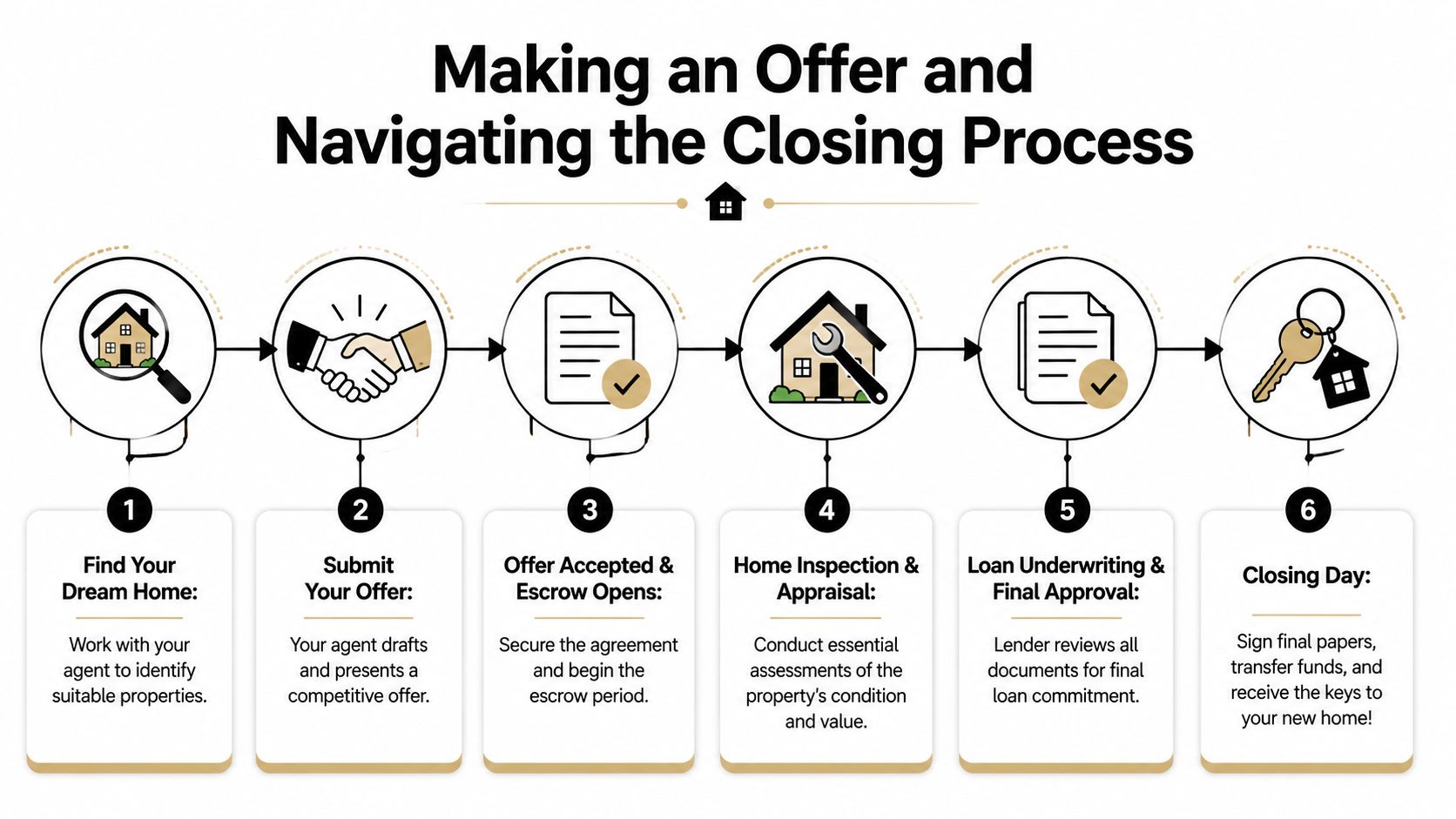
You find a condo near your school in Anaheim, or a small house within commuting distance of Sacramento. The monthly payment works on paper. Then the real question starts. Can your offer hold together with your loan, your down payment assistance, and the seller's timeline?
That is where teacher buyers in California need more than a standard offer strategy. If you are layering CalHFA, STEAP, or a local city or county program, your contract terms need to match the financing structure. A strong offer is not just about price. It is about writing terms you can close.
Writing an offer that fits your financing
Your agent will help with price, contingencies, deposit amount, and timing. Your lender should be part of that conversation before the offer goes out, especially if your assistance funds have approval steps or document conditions that affect closing speed.
In higher-cost California markets, buyers sometimes feel pressure to strip out protections to compete. I do not recommend doing that blindly. Inspection, appraisal, and loan contingencies each protect you from a different kind of problem. If the home appraises low, if the inspection finds major defects, or if a layered assistance program hits an approval issue, those contingencies can keep a stressful deal from turning into an expensive one.
The trade-off is real. Fewer contingencies can make an offer look cleaner to a seller. They also shift more risk onto you. Teacher buyers using multiple assistance sources usually need to be more careful here, not less.
Once the seller accepts, escrow moves fast
Escrow is the period where the contract gets tested. Title work, disclosures, inspections, underwriting, and program conditions all need to line up.
Use that window deliberately:
- Read every disclosure package carefully: California sellers often disclose a lot. Pay attention to roof age, plumbing, foundation issues, HOA documents, and past repairs.
- Book inspections early: You want time to review findings, request repairs or credits, and still make decisions before contingency deadlines expire.
- Answer lender and program requests quickly: Assistance layers often mean extra forms, education certificates, or updated paperwork.
- Keep your bank activity clean: Avoid new debt, large undocumented deposits, or sudden account transfers that create underwriting questions.
- Track timelines in one place: Deposit deadlines, contingency removal dates, and funding conditions can stack up fast.
Watch the program details during closing
Closing problems usually come from details buyers assumed were already settled. I see this with assistance layering all the time. One program may allow a certain property type while another has tighter rules. One may permit a longer closing timeline while the seller wants a faster one. A local grant may also require its own approval or borrower education certificate before funds can be released.
Review your closing disclosure closely and compare it against the structure you expected. Check your rate, monthly payment, cash to close, credits, and every subordinate loan amount. If something changed, ask why before signing.
If you are considering Good Neighbor Next Door, read the occupancy rules carefully on the HUD Good Neighbor Next Door program page. Eligible buyers must live in the home as their primary residence for 36 months. In practice, that matters a lot for teachers who may later transfer districts, move for a credential program, or assume they can convert the property to a rental right away.
Calm closings usually come from active buyers. The file does not move itself.
On signing day, you will finalize documents, wire or deliver your funds, and wait for recording. Once the county records the transfer, you get the keys.
Your First Year as a Teacher Homeowner
The mindset shift after closing is simple. You're no longer trying to qualify. You're trying to stay stable.
That means your first year should be less about furniture upgrades and more about protecting your cash flow. Rebuild savings, track your full housing payment, and create a maintenance category in your budget even if the home looks move-in ready. Homeownership rewards discipline more than speed.
Three habits make a big difference early on:
- Rework your monthly budget immediately: Include mortgage, taxes, insurance, utilities, and a repair cushion.
- Keep your paperwork organized: Store loan documents, tax records, insurance information, and any assistance-program paperwork in one place.
- Review your program obligations: Occupancy requirements, deferred loan terms, and forgiveness conditions don't disappear after closing.
This matters even more if you bought using a program that sounded generous at first glance. In California's higher-cost urban markets, not every well-known teacher benefit is equally practical. A major example is Good Neighbor Next Door. While the program offers a 50% discount in designated revitalization areas, recent analyses found that only 12% of California's urban teacher-dense counties have active HUD foreclosure inventory eligible for the program, making it far less available in places like Los Angeles or San Francisco than many buyers expect, according to this California teacher financing guide discussing HUD inventory limits.
That's why smart buyers don't just chase the biggest advertised discount. They build a plan that still works after move-in, after the first repair, and after the excitement wears off.
If you're a California educator trying to turn “maybe someday” into a workable buying plan, California Loans for Heroes is built for that conversation. Their team helps teachers and other public service professionals explore home loan options, buyer rewards, and assistance programs with one-on-one guidance suited for California markets.