
The last bell rings, papers are stacked, and you're finally walking out to your car or commute home, thinking about more than lesson plans. Maybe you're wondering whether you can buy a place close to school, or whether today's mortgage rates for teachers have pushed that goal farther away than it used to be. For many educators in California, the answer depends less on a single headline rate and more on how the loan is structured, what discounts are available, and whether a program can help with upfront costs.
Introduction to Mortgage Rates for Teachers
A teacher's paycheck doesn't always line up neatly with the housing market. Even when income is stable, the combination of home prices, interest rates, and limited savings can make a standard mortgage feel out of reach. That's why educator-focused programs matter, especially in California where local support can make a real difference.
The key idea is simple. Teacher mortgage pricing is often not a separate magic rate, but a targeted benefit layered onto ordinary loan products. In practice, that can mean a small rate discount, help with down payment hurdles, or looser borrowing rules that make the numbers workable.
Practical rule: a lower headline rate is helpful, but a loan that fits your deposit, monthly payment, and long-term plans is usually more valuable than a teaser rate that looks nice on paper.
A California teacher may be comparing the same home against several different paths, a conventional loan, an educator program, or a specialized support option through California Loans for Heroes. Each one changes the math in a different way. Some reduce the rate a little, some reduce fees, and some help with the cash you need at closing.
That's why a clear, step-by-step approach helps. If you understand how rates are quoted, how teacher programs work, and where the hidden savings sit, you can judge the offers without guessing.
Understanding Key Concepts
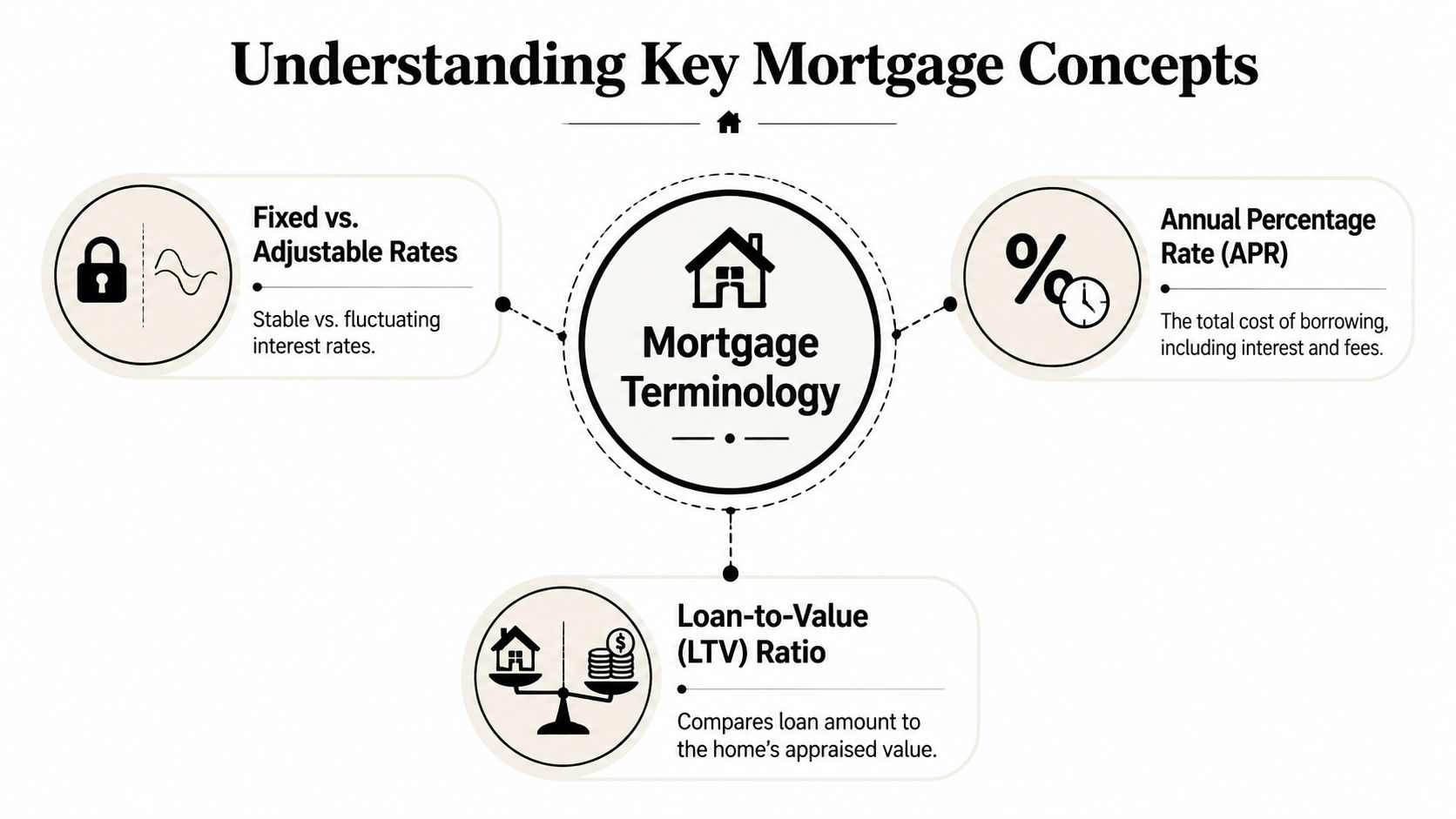
Mortgage terms can sound technical, but the main ideas become clearer once you connect them to everyday spending choices. A mortgage works a bit like a big school supply order. The listed price matters, yet the actual cost also depends on fees, the payment structure, and how long you keep the loan.
Fixed rates, adjustable rates, and APR
A fixed-rate mortgage keeps the interest rate the same for the loan term you choose, so your principal and interest payment stays predictable. An adjustable-rate mortgage can change later, which means the payment can move up or down depending on market conditions. For teachers who value steady budgeting, fixed-rate loans usually feel easier to plan around.
APR, or annual percentage rate, is different from the note rate. APR tries to show the broader borrowing cost, including certain fees, so it gives a fuller view than the headline number alone. If a lender advertises a low rate but adds more upfront charges, APR helps show that tradeoff.
Loan-to-value and why deposit size matters
Loan-to-value ratio, or LTV, compares the loan amount to the home's value. A larger down payment lowers LTV, which often improves pricing and may reduce risk in the lender's eyes. A smaller down payment preserves cash, but it can come with a higher rate or stricter terms.
That same comparison shows up in classroom budgeting. The cheapest-looking option is not always the lowest-cost choice if it needs replacing sooner or brings extra fees. A mortgage works the same way, especially when you compare conventional loans with teacher-focused support, including the kind of help available through California Loans for Heroes home loan programs for teachers.
Redfin reported that, as of late September, the average U.S. schoolteacher could afford only 20.4% of homes for sale across 32 major U.S. metro areas, down 14.3 percentage points since 2012. In California, teachers could afford only 17% of homes on average, with 30-year fixed rates at 6.66% and 15-year fixed rates at 6.04% at that point in the analysis, which shows why rate structure and affordability tools matter so much for educators (Redfin's teacher affordability analysis).
Teacher Loan Programs and Benefits
A teacher loan program usually matters in two places at once, the rate on the note and the way the loan is put together. That can include down payment help, waived fees, or small pricing adjustments that sit on top of a standard fixed-rate mortgage. For a California educator, the key question is not whether a program sounds special. It is whether it makes the purchase easier to close and easier to carry after moving in.
What teacher programs actually change
Some educator programs lower the published rate by a small amount instead of creating a separate loan type. That matters because the savings may show up as a modest adjustment rather than a dramatic headline cut. It also helps explain why two teacher offers can look similar at first glance while still leading to different monthly costs and different cash needs at closing.
Teacher-specific products can also reduce friction at closing. Some offerings waive arrangement and application fees, which can matter just as much as the rate itself when savings are tight. A program that protects your cash reserves may be more useful than a slightly lower teaser rate if it keeps your emergency fund intact.
California educators should also look at state-focused support alongside lender discounts. California Loans for Heroes offers a California-specific route for teacher borrowers who want homeownership support in addition to rate pricing.
A loan with a modest rate discount and lower upfront costs can be easier to live with than a “special” rate that comes with heavy fees.
The broader lesson is that teacher benefits come in different forms. Some reduce the rate, some reduce cash needed at closing, and some improve the borrowing structure itself. The strongest fit is the one that matches your savings, your timeline, and your plans to stay in the home.
How Mortgage Rates Are Calculated and Compared
A rate quote can look straightforward and still leave out important details. One lender may show a lower headline rate, while another builds the offer around lower fees or a cleaner loan structure. Comparing mortgage rates for teachers means looking at the full package, not only the number in bold.
Reading a rate sheet without getting fooled
Start with the note rate, the interest rate used to calculate the monthly payment. Then check whether the loan includes points, lender credits, or fees that change the true cost. After that, compare the APR and the lock period so you can tell whether the quote looks good because of the rate itself or because the fine print shifts costs in another direction.
The deposit size matters too, because a larger deposit usually lowers risk and can improve pricing. Teacher programs often present choices by LTV instead of one fixed offer for everyone. A 95% LTV loan and an 80% LTV loan may seem similar on paper, but they can lead to very different monthly costs and upfront cash needs.
| Rate Examples by Loan Term and Deposit | ||
|---|---|---|
| Loan Term | LTV | Headline Rate |
| 2 or 5 years | 95% | 5.99% |
| 2, 3, or 5 years | 90% | 5.59% |
| 5 years | 80% | 5.29% |
Those examples from Teachers Building Society show the basic pattern clearly, lower deposit, higher rate, and vice versa (Teachers Building Society mortgage examples). The same lender also publishes teacher-specific products with no arrangement fee and no application fee on several offers, which changes the comparison further because fees matter alongside the rate (Teachers Building Society fee-free teacher mortgages).
Teacher-specific products often layer targeted rate incentives onto standard fixed-rate mortgages, with discounts measured in fractions of a percentage point rather than large cuts. That is why a careful side-by-side review matters more than chasing the lowest-looking teaser. For a practical method, see how to compare mortgage rates.
California teachers should also look past rate changes alone. California Loans for Heroes can help borrowers compare how teacher-focused support, pricing, and loan structure fit together, which matters when the lowest rate is not the same as the strongest overall offer.
Actionable Steps to Qualify for the Best Rate
The best pricing usually goes to borrowers who look organized, stable, and low-risk on paper. That doesn't mean perfect credit or a huge savings account. It means presenting a file that makes the lender confident about your payment history, your reserves, and your income.
Build the strongest version of your file
Improve credit habits early. On-time payments matter most, especially if you're juggling student debt and other recurring bills. Lenders want to see that your monthly obligations are under control, not just that your income is steady.
Increase savings where you can. A larger down payment can improve pricing, and extra reserves can keep you from feeling stretched after closing. Even if you choose a higher-LTV product, having cushion helps if something unexpected comes up.
Organize documentation before you apply. Pay stubs, employment verification, tax records, and asset statements should be ready before a lender asks for them. Teachers often have predictable income, but predictable paperwork still makes the process faster.
Compare borrowing power carefully. Specialist lenders may extend maximum borrowing to 5.0 to 5.5 times salary for teachers, compared with 4.5 times salary at standard lenders, which can increase the loan size when income is the main constraint (Albion Forest's teacher borrowing analysis).
That last point matters because affordability is not only about rate. A slightly higher borrowing limit can be the difference between settling for a compromise property and buying the home that fits your commute, family, and long-term plans.
For California teachers buying their first place, a dedicated path like California Loans for Heroes' teacher first-time home buyer support can sit alongside those standard preparation steps. The application still rewards the basics, credit discipline, cash reserves, and clean documentation, but the right program can make those efforts go further.
Refinancing Options for Teachers
A refinance only makes sense if it improves your actual situation, not just your interest rate on paper. Some teachers want lower monthly payments. Others want to tap equity for repairs, debt consolidation, or a move into a better-fit home.
A rate-and-term refinance replaces the old loan with a new one that may have a better rate, a different term, or both. This is the cleanest option if your goal is to improve affordability without taking out extra cash. A cash-out refinance changes the calculation because you're borrowing against your equity, which can be useful but also increases loan balance and closing complexity.
For teachers, the key question is break-even timing. If closing costs are high, a refinance only pays off if you stay in the home long enough for the savings to outrun the fees. If you expect to move soon, a lower monthly payment may not justify the cost.
Some specialized programs aim to reduce friction with lender credits or more favorable fee structures, which can make a refinance easier to justify. That matters in a market where monthly affordability is already tight and teachers may not want to tie up cash in unnecessary expenses. In practice, the best refinance is the one that lowers stress, not just rate.
Before you refinance, compare the new payment, the total cost to close, and how long you plan to keep the loan. If those three don't line up, the refinance probably isn't working hard enough for you.
Sample Scenarios and Next Steps
A few examples make the tradeoffs easier to see. The goal is not to copy one quoted rate into your own plan. It is to see how deposit size, term length, and program choice change the monthly payment, the cash needed at closing, and the room you keep in reserve for life after the move.
Scenario one, a first-time buyer
A teacher buying a first home may choose a lower-deposit route and accept a slightly higher rate so more cash stays available for moving costs, repairs, and day-to-day expenses. As noted earlier, published first-time-buyer examples from Teachers Building Society show 5.99% at 5% deposit, 5.59% at 10% deposit, and 5.29% at 20% deposit. The pattern is easy to follow, a larger deposit usually improves pricing, but the better choice still depends on how much cash you want left after closing.
Scenario two, a teacher moving up
A teacher who already owns a condo may use equity from the sale to reach a stronger deposit tier on the next home. That can move the quote into a more favorable range and reduce monthly pressure. If the new home is closer to school or better suited for a family, that benefit can matter as much as the rate itself. California teachers sometimes compare that tradeoff with local support programs, including direct help from California Loans for Heroes, because the overall value is often wider than a simple rate cut.
Scenario three, a refinance decision
A teacher with an existing mortgage and a steady plan to stay put may prefer a refinance that makes the budget easier to manage. If the new loan lowers the monthly payment, shortens the term, or lets the borrower use equity for a necessary project, the closing cost may be easier to justify. If those pieces are missing, keeping the current loan can be the better choice.
The common thread is simple. Teacher mortgage decisions become clearer when you compare the full picture, not just the interest rate. California educators who want hands-on help can start by sorting their goals, then matching those goals to the right program and lender process.
Frequently Asked Questions and Next Steps
A teacher comparing loan choices often starts with the same set of questions. Can you pair down payment help with a lower rate, do educator programs expect perfect credit, and is a fixed loan better than an adjustable one? The answers usually depend on the loan structure, your credit profile, and how long you plan to stay in the home.
Can teachers combine down payment help with rate discounts? Yes, many programs treat those as separate parts of the loan. One feature may reduce the cash you need at closing, while another may improve the interest rate.
Do teacher mortgage programs always require perfect credit? No. Lenders usually look at the whole picture, including credit history, steady income, and how much debt you already carry. Stronger credit can help, but a spotless score is not the only factor.
Are adjustable-rate mortgages available for teachers? Sometimes they are. Many educator borrowers still choose fixed-rate loans because the payment is easier to plan for month to month, like having the same school schedule instead of a changing timetable. The right choice depends on how long you expect to stay in the home and how much payment stability you want.
Where should a California teacher start? Start with a lender or support program that understands teacher income, loan terms, and the pressure of California housing costs. Then compare the monthly payment, the fees, and the amount of cash needed to close before you decide.
Teachers in California who want help with a first purchase, a refinance, or a move-up home can look at educator-focused support from California Loans for Heroes, including home loan guidance, rate options, and down payment assistance pathways that fit this topic. Visit the site to review the teacher loan resources and start a conversation about your next move.
If you are ready to compare mortgage rates for teachers in California, California Loans for Heroes can help you review educator-focused loan options, down payment support, and refinance paths in one place. Visit California Loans for Heroes to see how their home loan support for teachers can fit your budget and your homebuying timeline.